
Florida’s mail voting works. Is that why Republicans want to make it harder? | Editorial
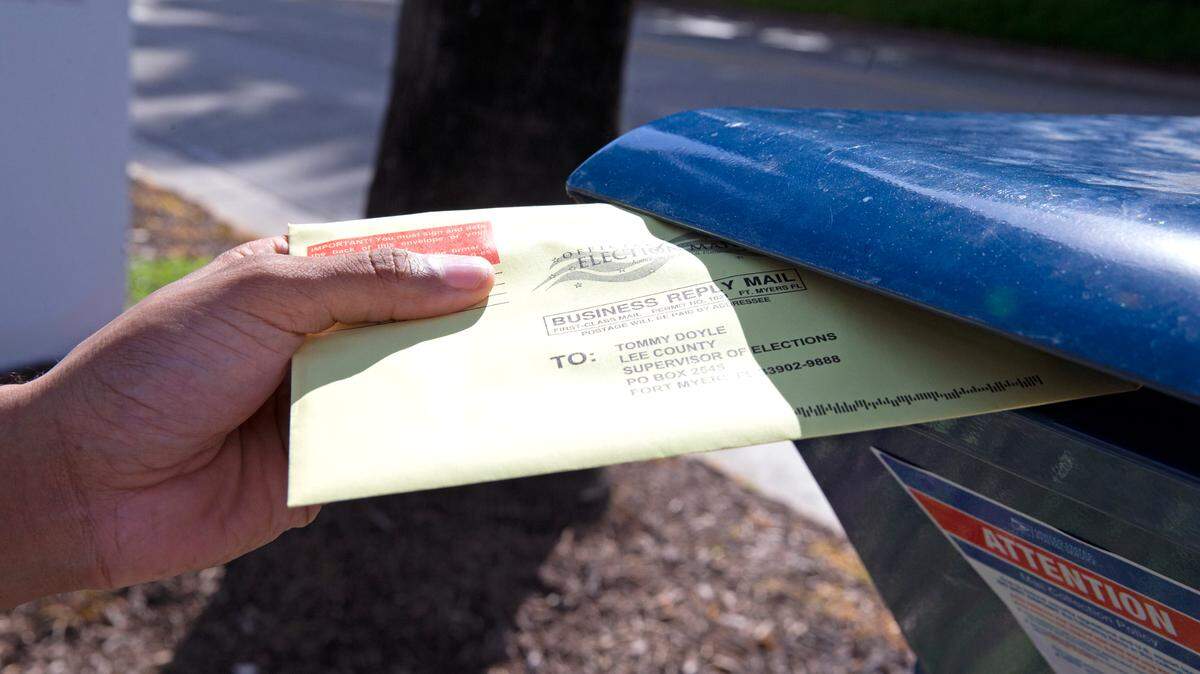
“Vote by mail was a success and it was operated successfully.”
As Sen. Dennis Baxley of Ocala explained during a Tuesday Senate hearing, Florida’s experience with mail voting helped the Sunshine State — once the nation’s poster child for voting issues — set the example on how to run elections during a pandemic.
If Florida’s mail voting system is running so well, why are Baxley and fellow Republicans trying to make it more cumbersome for voters?
Baxley is the sponsor of Senate Bill 90, which would invalidate current requests for mail ballots ahead of the 2022 elections. Right now, the law allows such requests to remain current for two general election cycles. The bill would limit vote-by-mail applications to one cycle, meaning requests made in 2020 would no longer be valid in next year’s gubernatorial election. The Senate Committee on Ethics and Elections approved the bill along party lines Tuesday.
Republicans’ rationale here seems to be, “If ain’t broke, that’s the problem.” In 2020, 4.8 million Floridians voted by mail, the majority of whom were Democrats. Of course, that wasn’t enough to stop Donald Trump from increasing his winning margin in the state and Democrats from losing seats in Miami-Dade County. But Democrats’ mail voting strategy might be enough to worry the GOP in 2022, when Gov. Ron DeSantis, who won election in 2018 by a mere 32,000 votes, is running again.
If that’s the reasoning behind SB 90, we advise Republicans to rely on Democrats’ internal turmoil and propensity for self-sabotaging instead of adding an obstacle to voter access.
Despite Florida’s unprecedented number of mail ballots and Trump’s attempts to vilify vote-by-mail as prone to widespread election fraud, there’s no evidence that happened in Florida.
If you don’t trust us, ask the state’s top election official, Secretary of State Laurel Lee, a Republican appointee. She told the Senate ethic committee Tuesday that “I’m not personally aware of” election fraud in 2020. She added that if law enforcement received complaints, she wasn’t informed.
Baxley said he’s concerned about a voter moving after requesting a ballot, but existing law already prevents the post office from delivering a ballot to an address where someone no longer lives. Requests are canceled when any first-class mail sent by the county supervisor of elections is returned as undeliverable.
According to Baxley’s predictions, vote-by-mail has worked in Florida but “over time, you’re going to have a hard time protecting” elections. That’s nonsensical given that current law has been in place with no major issues since 2007. That year, the Legislature expanded the amount of time over which a ballot request is valid to mirror what’s allowed for certain military and overseas voters.
Senate Bill 90 isn’t entirely awful. It would allow counties more time to process mail ballots: 35 to 40 days before an election instead of 22 days. That provision would put into law an executive order DeSantis signed in 2020 that allowed Florida to deliver presidential election results ahead of many states that had to wait until Election Day to start the process.
But the rest of this legislation belongs in the paper shredder. While not solving any real problems, it would force supervisors of elections to scramble to comply and notify voters, costing counties hundreds of thousands of dollars.
Above all, this smacks of a partisan attempt to confuse voters and catch them off guard in next year’s election.
This story was originally published February 18, 2021 at 6:00 AM.