
‘Gator Bait’ chant is gone. Now give FSU’s offensive ‘tomahawk chop’ the ax | Editorial
It must have been a surprise to many to learn of the racist foundation of the University of Florida’s “Gator Bait” chant. Still, to some, the decision to ban the chant that Gator fans use to taunt their opponents might seem the height of tedious political correctness. It is anything but.
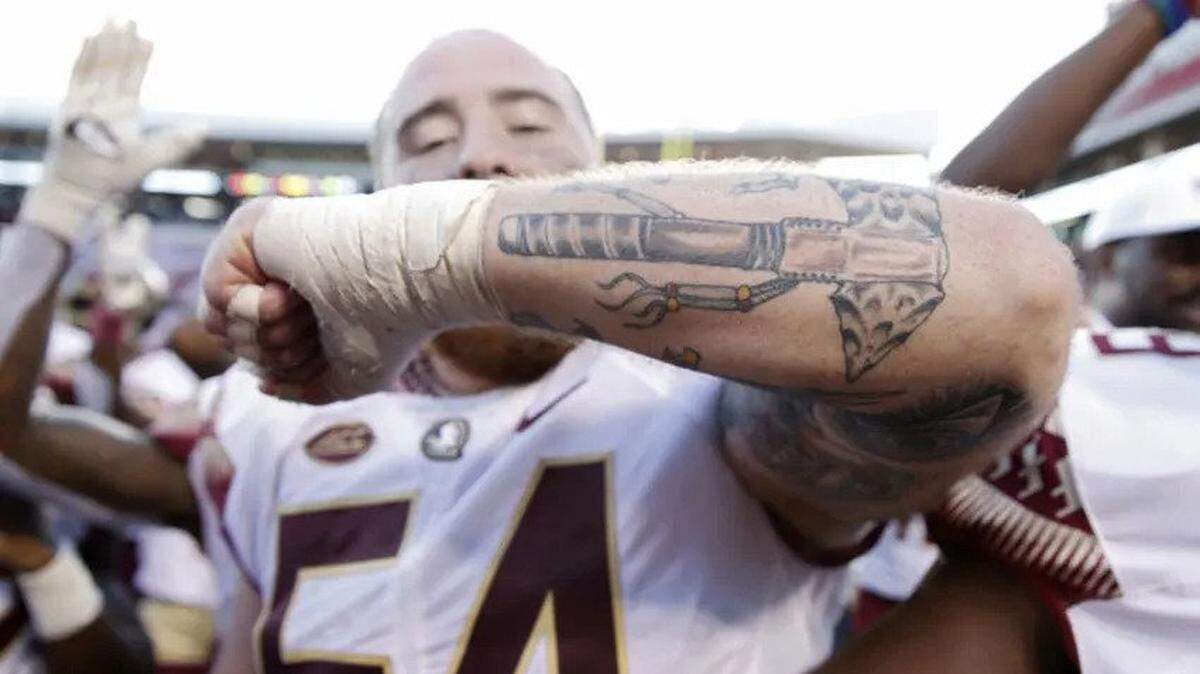
UF President Kent Fuchs was right to ban the school’s “Gator Bait” cheer at games. Now Florida State University President John E. Thrasher should do something similar and get rid of the “tomahawk chop” at Seminole games.
After all, the more we as a society learn about the deep-rooted racism that, over decades, and centuries, has evolved into what seems innocent fun, the more thoughtful we all can, and should, be in not bastardizing a culture or making light of fellow Americans’ pain.
According to the Associated Press, UF’s Gator Bait cheer’s link to Southern racism comes from news stories like one in Time Magazine in 1923, which said, “Colored babies were being used for alligator bait” in Chipley, Florida.
“The infants are allowed to play in the shallow water while expert riflemen watch from concealment nearby,” the article said. “When a saurian [alligator] approaches this prey, he is shot by the riflemen.”
Back then, the Chipley Chamber of Commerce responded to the Time article by calling it a “silly lie, false and absurd,” the article said, according to AP.
How silly was it, really?
“While I know of no evidence of racism associated with our ‘Gator Bait’ cheer at UF sporting events, there is horrific historic racist imagery associated with the phrase,” Fuchs wrote. “Accordingly, University Athletics and the Gator Band will discontinue the use of the cheer.”
Today, many UF fans said they had no idea the taunt, such a key part of their fan culture, had any racist roots.
But that’s the thing about racism. We see the world through our own life experiences and rarely know how something may affect people who come from a different life experience. Misconceptions and misunderstandings can hurt, badly. And as our nation wrestles anew with its most vexing social problem, we must embrace more openness and more willingness to question what really matters: a sports taunt or a true commitment to inclusion that this country has never fully accommodated.
UF’s step is in the right direction. It will no doubt be hard to enforce among fans. But it sets a standard of what is and is not acceptable, and it is only part of UF’s remediation. Fuchs said the university will require students, faculty and staff to be trained on “racism, inclusion and bias” and will also bring a new focus to the African-American experience in the upcoming academic year.
FSU fans are already wondering if the tomahawk chop and war chant (“You’ve got to scalp ‘em, Seminoles!”) will be next to go. They should be.
Unlike the Gator Bait chant, many are aware of the longstanding discomfort that Native Americans have about sports teams’ names, most notably the Washington Redskins and other mockeries of Native American culture.
Last year, the Atlanta Braves stopped distributing foam tomahawks at its baseball games, silenced the music that would pump up the air-chopping crowd and, basically retired the tomahawk chop — which, by the way, was introduced to Atlanta by some FSU alums in 1991.
It’s time for FSU to give the disrespectful spectacle of the tomahawk chop the ax, too.
This story was originally published June 22, 2020 at 3:01 PM.