
Three boaters were killed in April. Tell us again why lights are unnecessary on the deadly jetty at Government Cut
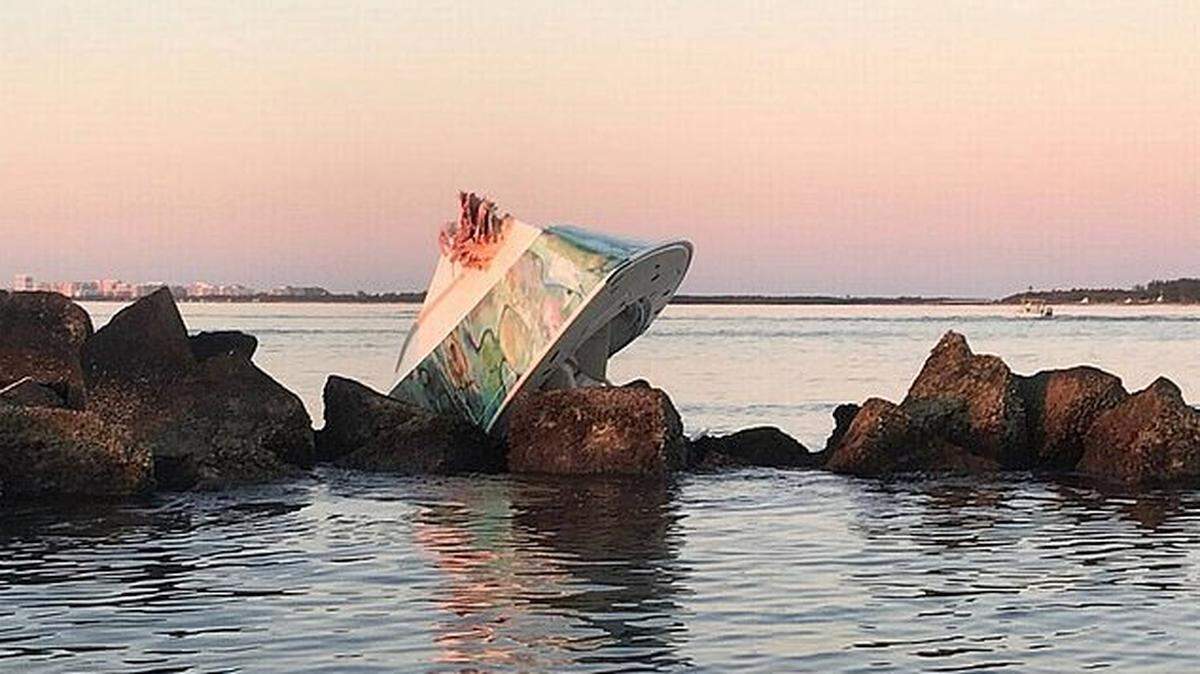
When Miami Marlins star José Fernández and two others died in a nighttime boating accident three years ago, the U.S. Coast Guard determined that lights weren’t needed at the busy Government Cut jetties on the southern tip of Miami Beach.
But it’s time to revisit that conclusion following the deaths of three more people on the same rocks last month.
A Lighthouse Point couple, Christopher and Elisaine Cogan, and a friend from Fort Lauderdale, Jennifer Muñoz Cadavid, died when their center console Cape Horn hit the south side of the north jetty in the early morning hours of April 21. Another man, Troy Forte, suffered critical injuries but is the only survivor of the crash.
The 2016 accident involving Fernández drew numerous calls for improving visibility at the jetty, where the rocks extend about 1,000 feet into the ocean. Among those backing the installation of lights was the Miami-Dade police’s marine unit. “It’s like a land mine,” Jack Garcia, a retired commander from Miami-Dade’s marine-rescue squad, said at the time. “At high tide, the tip of the jetty goes underwater. At night, you’re not going to see it — even if you’re looking.”
Republican U.S. Sen. Marco Rubio also called for a safety review, saying he’d experienced the jetty’s challenges firsthand. Yet in a 2017 report issued after Fernández’s death, Coast Guard officials said existing navigational aids — including flashing red lights about 100 yards southeast of the northern jetty — were sufficient. Previous reviews, conducted every five years with participation by local boaters, marinas and others, had drawn the same conclusion.
Back then, officials said Fernández was operating his powerboat “in a reckless manner, at an extremely high rate of speed, in the darkness of night, in an area with known navigational hazards such as the rock jetties and channel markers.” Toxicology reports showed the Marlins pitcher was drunk and had ingested cocaine. Case closed.
The same report found that Fernández’s was the only fatal incident going back to at least 1998. Nine other accidents involving collisions with rocks resulted in five injuries and no fatalities. In each case, investigators said navigation aids weren’t a factor. But now three more have died on these deadly unlit rocks, six fatalities in three years. That casts serious doubt again on just how sufficient the existing navigation aids are.
Investigators are still piecing together what happened in last month’s crash. The Coast Guard, meanwhile, needs to re-evaluate the case for lights. Given the number of deaths — and the number of boaters who talk about the challenges posed by the rocks where those deaths occurred — it’s hard to understand why lights wouldn’t reduce the likelihood of other boaters and their passengers losing their lives. We just can’t blame inexperienced boaters or even drinking — and let the sharp rocks be their punishment. It’s not humane.
In their previous report, Coast Guard officials said, “Adding additional aids to navigation for the jetties would not conform to navigation standards and could possibly confuse mariners due to existing lighted buoys.”
Certainly, no one wants to propose a remedy that could make the hazards at Government Cut worse. But six deaths are compelling reasons to ask the Coast Guard to justify its conclusion that lights are a bad idea. If lighting up those rocks isn’t the answer, what is? Leaving it to boaters to navigate their way safely in those dark jetty waters isn’t working.
This story was originally published May 2, 2019 at 9:03 PM.