
Miami-Dade Mayor Gimenez can rightly boast about progress during his tenure
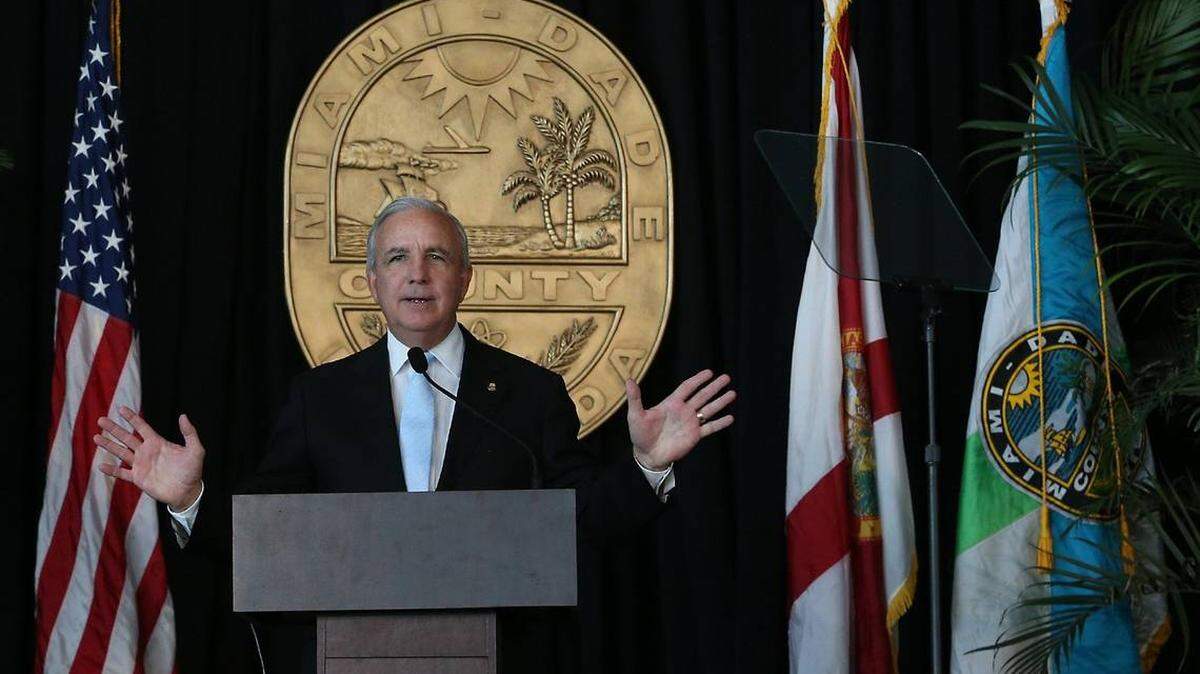
Miami-Dade Mayor Carlos Gimenez used the word “resilient” several times in his State of the County address on Thursday. It was a reminder of the ever-firmer foundation on which the county rests, a credit not just to the mayor but also to the elected officials and administrators who, for the most part, get it right on behalf of residents, business owners, investors and visitors.
Gimenez took office in 2011 in a special election in the midst of the Great Recession. Residents were surly — about being bamboozled by the Marlins stadium deal; about a mayor, whom they recalled, who was tone deaf. They were mad at just about everything.
Gimenez, with some bumps and missteps, steered the county through those hard times, to the point where he could matter-of-factly declare that Miami-Dade County is better positioned now to combat potential economic downturns, pay for a host of infrastructure improvements, build more affordable housing, keep safe streets even safer with enhanced law-enforcement and crime-prevention tactics; reduce the county’s carbon footprint and buffer the community from the effects of sea-level rise. In other words, the county is more resilient. In fact, Miami-Dade is the only county in the United States to take part in the Rockefeller Foundation’s 100 Resilient Cities initiative. Still, in the county’s case, resilience describes a far broader swath of life here.
Gimenez boasted to a audience at PortMiami of the county’s 3.5 percent unemployment rate, the lowest in a decade, he said. And, of course, for so many residents, a job is about more than a paycheck. That paycheck feeds a family, keeps a roof over their heads, even helps kids do better in school. In a community of such income inequality, it’s imperative that the most vulnerable share in this good news. To that end, Gimenez gave Commissioner Barbara Jordan a tip of the hat for her push to get Amazon’s automated warehouse to come to Opa-locka. There, robotics get packages to consumers more quickly, and employees earn at least $15 an hour.
The mayor was in his element in discussing how technology is making life better here. From traffic lights that will make real-time adjustments depending on traffic flow, to a project to introduce autonomous cars.
PortMiami and Miami International Airport continue to be the turbo-charged revenue engines. MIA generated $31 billion in revenue last year, with 425,000 jobs. Bond rating agencies were impressed, raising MIA’s rating to “positive” from “stable.” The timing was great, as $760 million in bonds come on line to fund airport improvements.
Air passenger ridership increased, too. But for those trying to get around on the ground, the endeavor remained a tough one. Gimenez noted the commission’s decision to expand State Road 836 to accommodate commuters in the West Kendall area. It remains a controversial approach given its proximity to environmentally fragile lands. The mayor said that MDX was poised to buy 1,000 acres of adjacent land and that the road would not spur growth west of the Urban Development Boundary — without the vote of a super-majority of the commission.
He doesn’t have a crystal ball, and neither do we. But this remains a developer-friendly county. Once Gimenez leaves office after the 2020 election, his commitment to safeguarding the UDB leaves with him. Still, Gimenez has been a quiet force who likely will leave the county stronger because of his vision and efforts. The trick for voters, then, will be decide who can best continue the progress Gimenez has made.