
Time Magazine’s honor affirms journalists’ vital — and dangerous — work
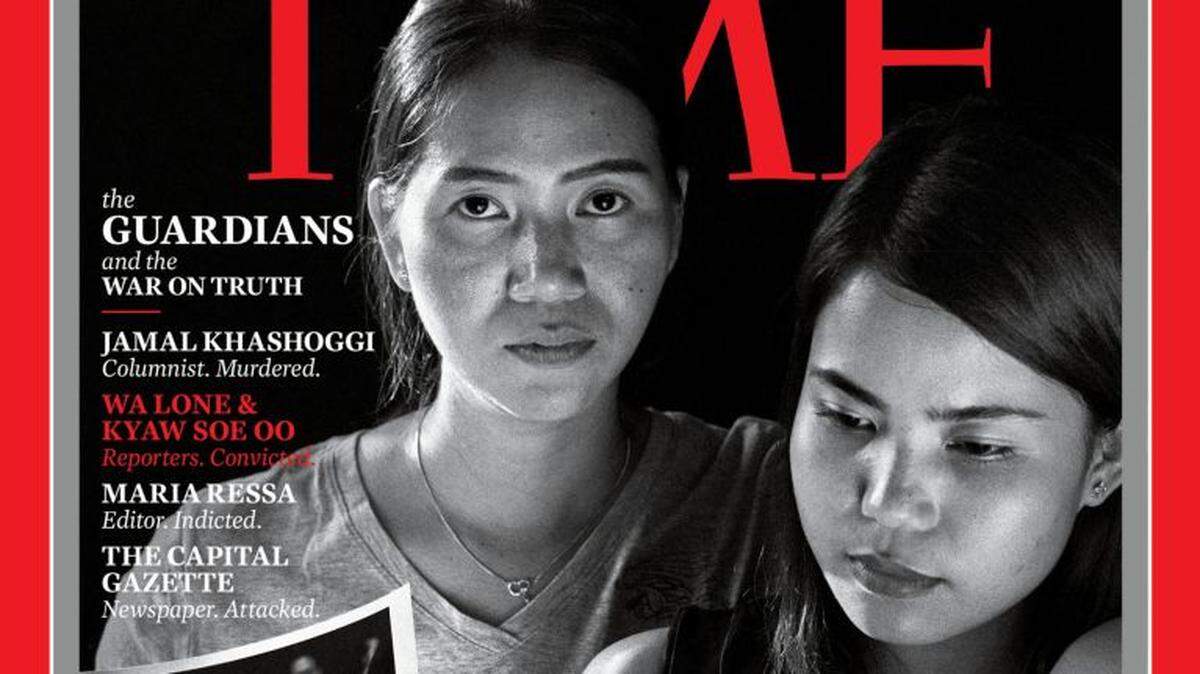
For the first time in its history, Time Magazine honored its own profession as Person of the Year. It is a remarkable choice, a somber recognition of the need to remind people that journalists are the guardians of truth throughout the world.
Time specifically honored Jamal Khashoggi, the Washington Post journalist whom the Saudi Arabian leadership ordered killed (although President Trump questions that); the staff of the Capital Gazette in Annapolis, Maryland, which lost five colleagues to a gunman; Maria Ressa, chief executive of Philippine news website Rappler, who is facing government charges; and Kyaw Soe Oo and Wa Lone, Reuters journalists imprisoned in Myanmar for investigating and reporting the deaths of Rohingya Muslims.
These are glaring, shocking examples of attacks on truth seekers. But they are not unique. According to the Committee to Protect Journalists, governments have jailed more than 250 journalists this year. Bombings and other threats have struck news outlets around the world, including in the United States.
We are in an era of unparalleled global information — true, false and in-between. Yet too often journalists are reviled for doing their job: sorting truth from lies and publishing it so readers, listeners and viewers have reliable information upon which to base their decisions.
As Time wrote, “This ought to be a time when democracy leaps forward, an informed citizenry being essential to self-government. Instead, it’s in retreat.”
America’s own president has declared the news media an “enemy of the American people.” That stunning statement comes straight from the vocabulary of despots. Yet some Americans believe it, which is a far greater danger than Trump’s words alone.
The trap that too many people fall into today is to treat “the media” as monolithic or, worse, to trust only media outlets that reaffirm their existing beliefs. In fact, some publications are more reliable, more credible than others. The best publications and broadcasters correct their errors and follow the truth wherever it leads. They realize that without their credibility, they have nothing.
The Founders knew what they were doing when they put freedom of the press into the Bill of Rights. Democracy is imperfect, inconvenient and slow when carried out in the sunlight of being watched by journalists and the public. Carried out in the dark, with journalists barred or intimidated, democracy is nonexistent.
That is why the Miami Herald devotes tremendous resources to covering South Florida, the state and the nation. That is why reporter Julie Brown dug into and exposed how then-U.S. Attorney for Miami and now-Secretary of Labor Alexander Acosta allowed Jeffrey Epstein to get away with a legal slap on the wrist for committing horrific sex crimes.
And that is why daily and weekly newspapers cover city councils and school boards and other seemingly mundane activities. Thanks to their work, readers know what is going on their communities.
This is not fake news. It might be uncomfortable news. It might irritate the people in charge, especially if it enables the public to hold them accountable. But inconvenient news does not equal fake news.
Journalism is often called the first draft of history. It also is the door to truth, one that humanity must constantly fight to keep open.