
Paving the pinelands
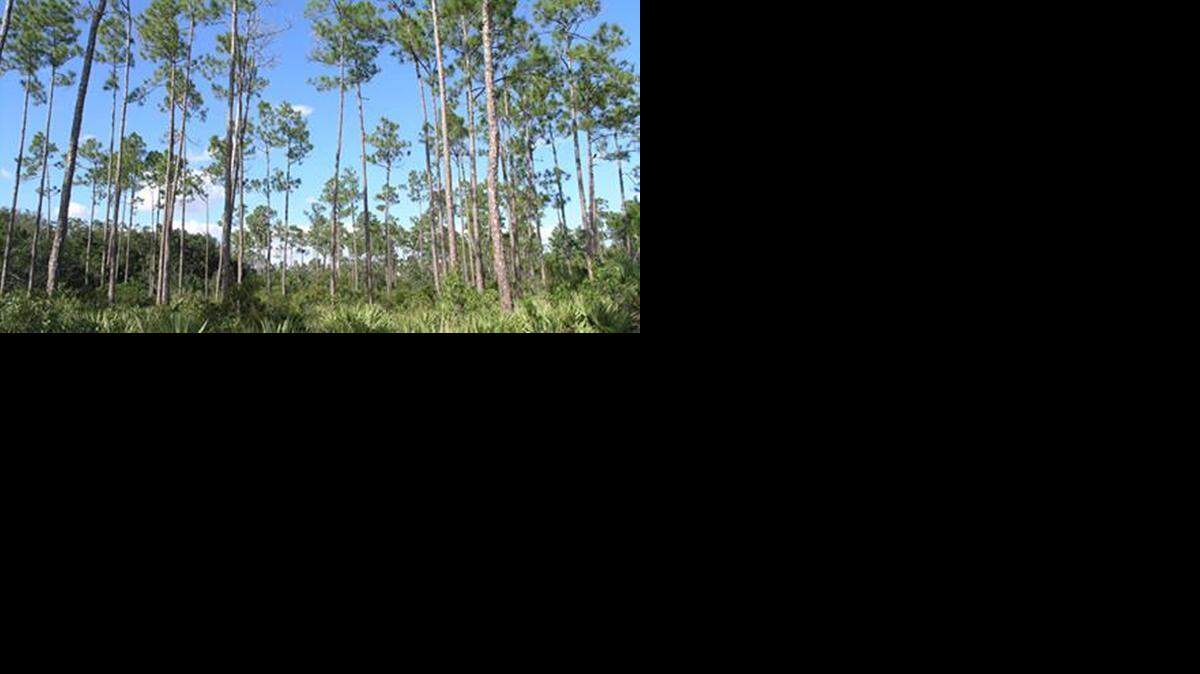
Commend South Florida’s hard-working conservationists for their recent win in the endless struggle to preserve public green spaces and save endangered animals and plants from the threats of neglect and development.
Large tracts of forest surrounding Zoo Miami, an area known as the Richmond Pine Rocklands, are in play. Developers propose an apartment complex and a Walmart with its requisite giant parking lot on a portion of the property. In addition, County Commissioner Dennis Moss envisions a Disney-style water theme park, dubbed Miami Wilds, along Coral Reef Drive.
It all was to come to a head at Tuesday’s commission meeting. A resolution sponsored by Commissioner Moss would ask the commission to declare the area “blighted,” which would clear the way for its clearing. That’s a stretch. It’s hard to imagine how this land can be blighted — no humans live there, only endangered butterflies, beetles and bats.
Reaction was swift and angry, and Mr. Moss tabled the issue. Commend him, too, for that; it was the right response to the blasts of email “from around the world,” the social-media campaigns by the Miami Pine Rocklands Coalition and the 95,000 petition signatures received the commissioner told the Editorial Board.
But the battle is not over. Mr. Moss said that he is “not giving up” and will continue to work to bring job growth to his economically struggling district, a responsible stance. He said he hoped, too, to find a solution that will satisfy both conservationists and developers.
Why are these pine rocklands important? More than a century ago, they were the driest land, and early settlers built along this ridge between what is now North Miami Beach and South Miami-Dade. In other words they are part of our original grid. Conservationists say this is the only large stretch of the historic tract left. And in a community that has been quick to pave over its natural history, the pine rocklands demand more than a passing glance from commissioners.
For years, the wooded parcels were often confused as being part of Zoo Miami and were hardly noticed until they became endangered after the University of Miami sold a parcel donated to it by the federal government.
Mr. Moss realizes that environmental concerns must be addressed. But he believes that a middle ground can be found where developers and conservationists reach consensus; where jobs can be created; the traffic congestion is somehow mitigated; and environmental preservation, too, is a priority, not an afterthought. We wish him luck with that.
“I’m not out to destroy the pinelands, but it’s possible to create an exciting project at that location that respects the environment and creates thousands of jobs,” Mr. Moss said. His resolve is admirable. Developers have also told the Editorial Board they’re willing to work with conservationists.
But Matthew Schwartz, executive director of South Florida Wildlands Association, is doubtful. “I don’t know what they have in mind, but I have a hard time envisioning development that’s compatible with preservation.” He has a valid point.
Neither side should wait for the U.S. Fish and Wildlife Service to complete its habitat-impact report for the proposed projects. They need to hash things out now, including giving all due consideration to some conservationists’ proposal that the land be bought and preserved.
This story was originally published March 4, 2015 at 9:29 PM with the headline "Paving the pinelands."