
The Florida GOP should worry less about the Democrats — and more about this | Opinion
When Florida Republicans gather this weekend at the Hard Rock Hotel in Broward County, the big topic is likely to be how they’re going to keep control of the governor’s mansion in November. But they should be talking about how they’re going to keep Republican voters from straying after the primary.
Republicans have a lot to be very happy about. They have outstripped Democrats in voter registration by 1.5 million. That’s huge. But numbers don’t necessarily equal party loyalty.
Consider David Jolly. He spent years building a political career inside the Republican Party — three terms in Congress and a reputation as a reliable conservative vote. This November, he’s running for governor as a Democrat.
His candidacy tells a larger story: If a former Republican member of Congress can shed a party label that once defined his political identity, voters can, too. Party affiliation is becoming less permanent and more transactional.
That’s a trend the GOP shouldn’t ignore. They should also think about the lessons of two other recent political developments: James Fishback’s controversial campaign and the cancellation of the Sunshine State gubernatorial debate after only one candidate met the criteria.
Fishback’s support in the governor’s race has emerged largely outside of the Republican establishment, though he is a Republican. It grew online, where candidates are now building followings independent of the party structure. The party is right to distance itself from Fishback because of his racist and antisemitic rhetoric. But his campaign contains a warning: the Republican Party no longer controls how its voters find candidates or where they place their loyalty.
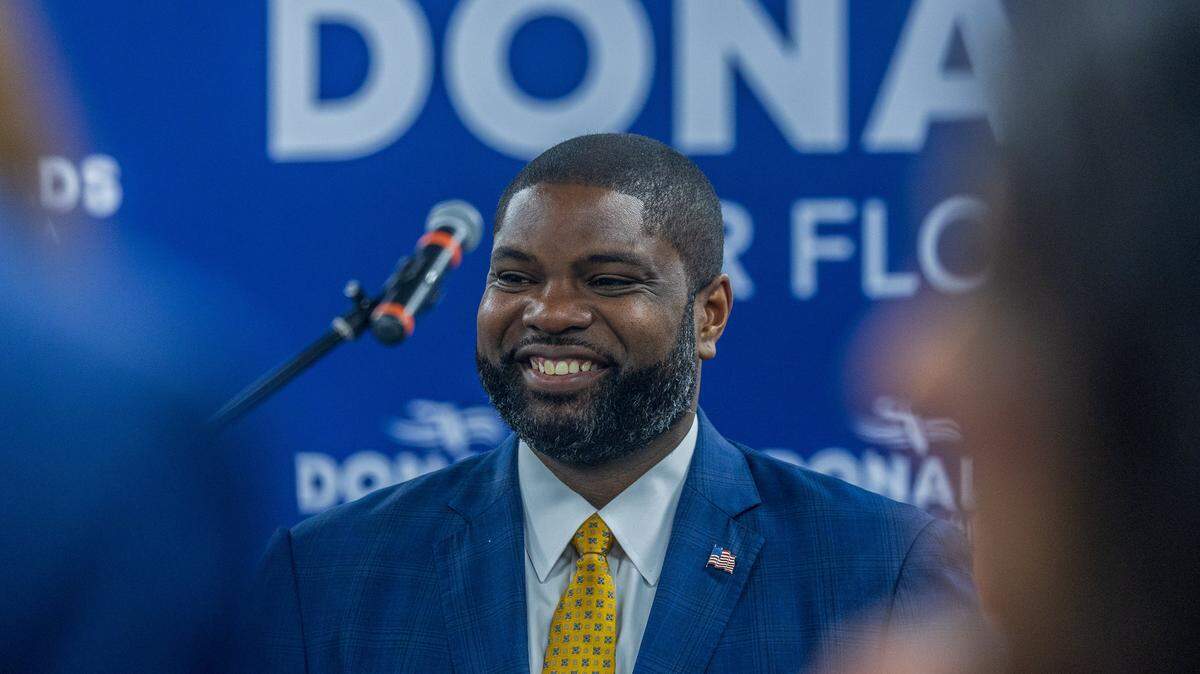
The GOP should keep that in mind, but it’s not. It’s acting like Republican voters are in lock step. Take the Hard Rock event this weekend. It was originally supposed to include a full-on gubernatorial debate. Instead, the RPOF set rules that only U.S. Rep. Byron Donalds met — 10% in polling, $10 million raised and more than 10,000 donors.
Some Republicans, including Gov. Ron DeSantis, criticized the move, saying the decision was trying to “engineer the outcome” rather than letting voters decide. He had a good point. Even though the party’s internal polling showed Donalds with a significant lead, the poll also showed that almost 43% of likely GOP primary voters were undecided. That’s a significant share of Republicans still making up their minds while the party quietly signals the race is effectively over.
Political parties have long helped voters evaluate candidates. But this year, the party is creating the impression that the primary has already been settled.
Both Fishback’s fringe campaign and the Donalds debate controversy point to the same underlying shift — the GOP can’t control their voters the way they once did. Loyalty in politics is increasingly personal before it’s partisan.
President Donald Trump expanded the Republican coalition in 2024 by attracting voters who weren’t traditional Republicans. Many were loyal to Trump before they were loyal to the GOP. Politics has become increasingly candidate-centric, making it harder for parties to command loyalty they once assumed.
That’s why the RPOF shouldn’t confuse electoral success with permanent loyalty. The Florida GOP is more diverse than ever, making it less predictable. For Florida Republicans, that’s both an opportunity and a warning.
The RPOF deserves credit for registering voters and flipping traditionally democratic counties, including Miami-Dade. But registering voters isn’t the same thing as keeping them. The Florida GOP must remind its voters why they registered Republican in the first place.
Mary Anna Mancuso is a member of the Miami Herald Editorial Board. Her email: mmancuso@miamiherald.com