
As we celebrate our 250th birthday, let’s teach all our history to children | Opinion
As we gear up for the nation’s big birthday on July 4, I’ve been thinking about America and what it means to me to be an American.
First, let me say this: I love America. I have always loved my country. I feel blessed to have been born here. While we have never been a perfect nation, I always felt comforted knowing we were trying to get there. In other words, I had hope.
While I still have hope, I don’t feel so secure anymore. The subtle and not so subtle changes in recent years have been alarming. Changes that affect me and people who look like me.
One of the changes is the banning of books, written by African American authors. Another is erasing our history from the books in our schools that are supposed to teach our children — all our children — about our history.
Still another is the inhumane way illegal, as well as some legal immigrants, are being treated.
When it comes to book banning and erasing Black history from our classrooms, I don’t believe this is being done by accident. I believe it is a deliberate act to systematically remove any traces of African American contributions to this country.
Slowly, but surely, Americans will wake up one day and find that we have regressed to the days of Jim Crow and segregation. That is what the slogan, “Make America Great Again” says to me.
You see, America was not so great to some of us in its early years. Slavery had cast a dark blight over the new country, and it took a war, the Civil War, to free the country’s enslaved Black citizens. Still, life after slavery was no crystal stair for America’s newly freed Blacks. But for some reason, there was hope.
The former slaves built on that hope, birthing women like Harriet Tubman, who risked her life leading slaves to freedom, and Sojourner Truth, who fought for the right for women to vote, and Mary Bethune, who founded what would become Bethune-Cookman University with only $2 and six educationally hungry little girls.
And men like Booker T. Washington and W.E.B. Du Bois, Dr. George Washington Carver, who developed the lowly peanut into hundreds of uses, including peanut butter, and later Dr. Benjamin Mays, who was so hungry for education that he worked the cotton fields to earn enough money to buy books for school, attending school whenever he could. He never gave up on his dream of getting an education and graduated from high school at 22, as the valedictorian of his class. I interviewed Dr. Mays a few years before his death in 1984.
In spite of his humble beginnings, Dr. Mays went on to become president of Morehouse College, one of the country’s finest educational institutions, and mentored the late Dr. Martin Luther King Jr., who was a graduate.
In America’s early years, when the doors of establishments and opportunities were closed us, our fore parents started their own, creating entire towns and communities where Black citizens could be free and treated respectively.
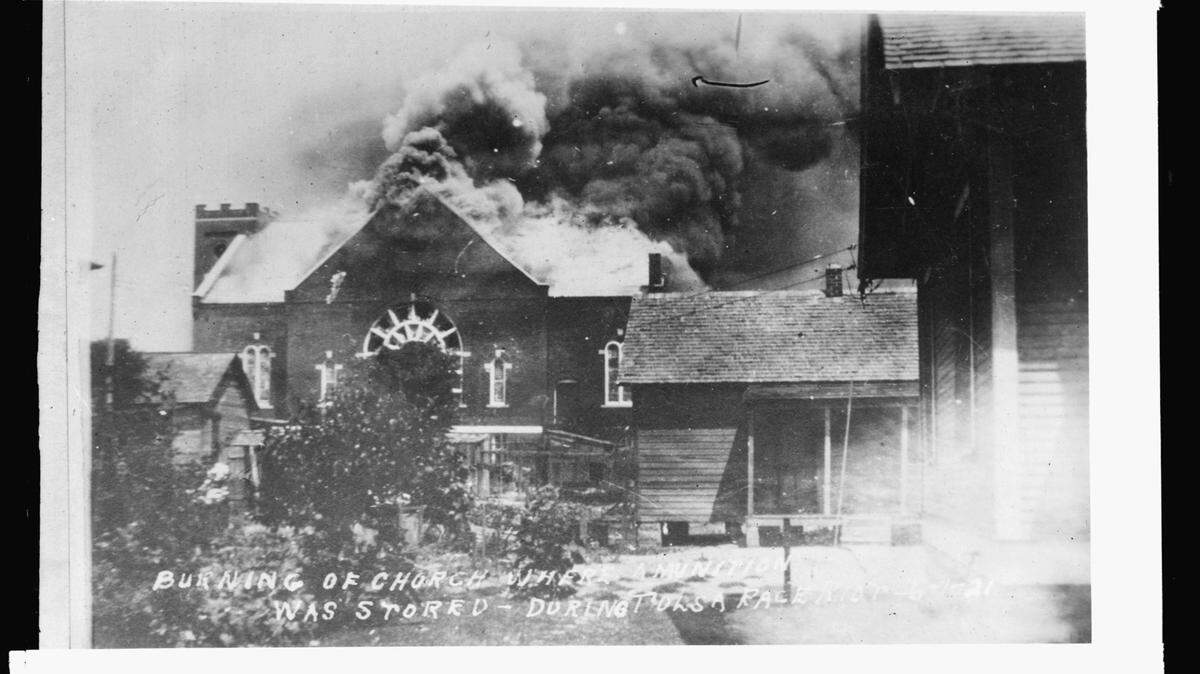
Greenwood (Black Wall Street) near Tulsa, Oklahoma, was one of the places where Blacks created a thriving community of their own, only to have it burned to the ground by hateful, jealous white citizens, killing hundreds of innocent Blacks.
Before it was wiped from the face of the earth, Greenwood was the home of several lawyers, bankers, doctors and businessmen, many of whom were multimillionaires. There were theaters and movie houses, grocery markets and clothing stores and even two newspapers. In fact, Greenwood residents enjoyed many luxuries that their white neighbors did not.
The neighborhood was destroyed during a riot that began when a group of men from Greenwood tried to save a young Black man from a lynch mob. In the early morning hours of June 1, 1921, Greenwood was looted, firebombed and burned down. In total, 35 city blocks were left charred, and 300 Black people had died.
There were other Black American communities destroyed by lies and hate. One noted neighborhood, brought to our attention by Dr. Marvin Dunn, was right here in our own backyard — Rosewood, Florida.
It was a little more than 100 years ago that these atrocities happened to Black Americans. It is my fear that by making America “great again” history can repeat itself.
I say this because I, along with millions of others worldwide, watched via social media, as a white police officer used his knee to choke out the life of a black man (George Floyd). And nobody lifted finger to stop him. He did it because he felt he could get away with it.
After all, America was changing. A Black jogger was stalked and killed in cold blood. And a young Black police officer was killed in what should have been the safety of her own home. Hate was surely on the rise. America seemed to be living out the slogan of making it “great” again. Only not so great for many of its citizens.
Whenever I write a column about how far we have come, while reminding us of how far we have to go, I usually get a bunch of ugly emails. But that’s OK. Over the years, I have grown a tough skin. I am not writing to simply rehash the past ills of America. I simply want us to stay vigilant.
America is a great country. It can be even greater if we lay aside the things that divide us — things like hate and malice and racism — and work together in unity. In fact, I believe America can truly be greater.
As we celebrate our 250th birthday, let’s work on undoing some of the bad mistakes we have allowed to go unchecked. Let’s teach our history to our children, put it back in our classrooms. Let them know that this country became great because people of all colors, creeds and ethnicities worked to make it the great nation it is today.
Let’s teach justice and equal opportunity. Let’s teach unity and respect for each other. When we do this, America will come out from under the dark cloud that is hovering over her. And we won’t become great again. We will become greater.
.JPG "MIA_20231006AD0543BeaHines (6).JPG")