
As we celebrate our 250th birthday, let’s value those who toiled in tough times | Opinion
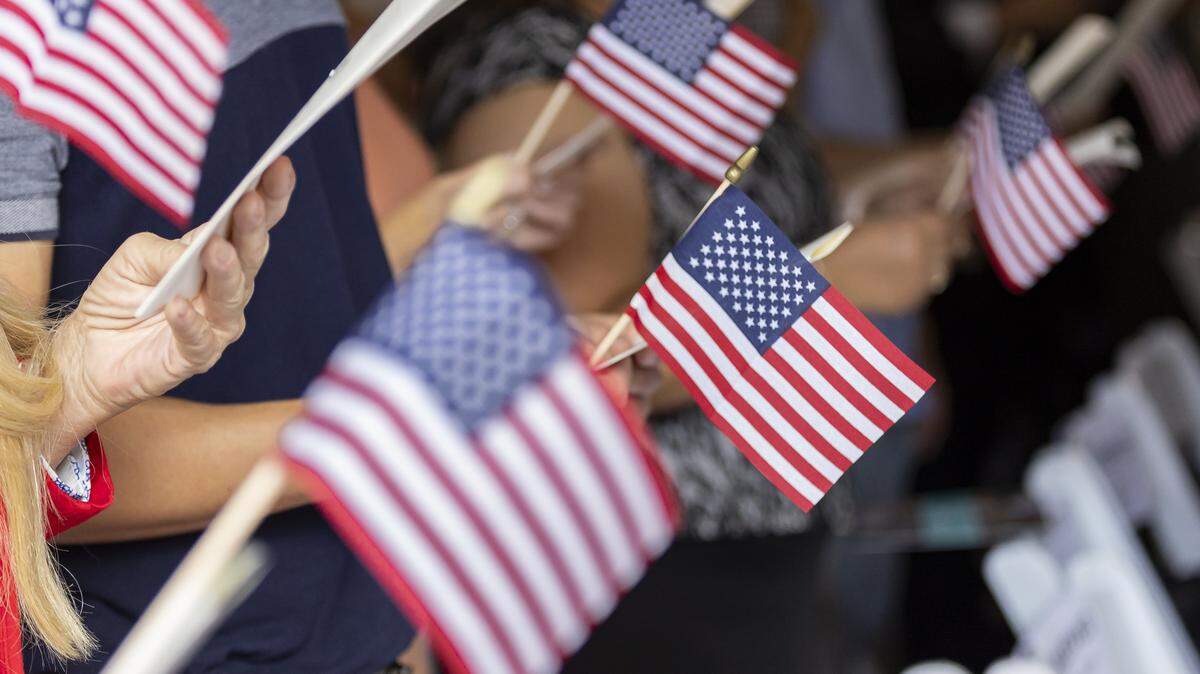
Recently I had a conversation with my longtime friend Bishop Noward Dean. We spoke about America’s upcoming 250th birthday and how far we have come as a nation.
Compared to some other countries, America is a toddler. Yet, we have fought long and hard for the freedoms we now enjoy. While we must never forget the hard-fought wars and battles it took to get us to where we are, we can’t afford to fall asleep. We must stay vigilant, always keeping a “watchman on the wall” of justice.
Bishop Dean understands my sentiments. He was born 84 years ago in Long Island, Bahamas. His father, the late Bishop Herman E. Dean, brought his family of four daughters and a son to this country in 1955.
The young Noward was 13 and entered Dorsey Junior High School in Miami as an eighth grader. He stayed there until he was in the ninth grade and then attended Miami Northwestern High School, where he graduated in 1960.
His dream was to go to college, but while there were at least one college and a university in Miami, neither was open to Black students. The closest college for Blacks back then was Bethune-Cookman College (now university) and it was in Daytona Beach.
“I had already decided that I wouldn’t be able to attend college,” Dean said. “My two younger sisters — twins Anna and Lula – finished high school a year later and had received partial scholarships to Bethune-Cookman. My dad was barely able to help them with his $55-a week salary.
“So, after graduation while working at my part-time job in a butcher shop making 41 cents an hour, I made up my mind to enlist in the U.S. Air Force. But just before I graduated, I learned there was going to be a junior college opening in Miami and there would be a center for Blacks at my high school — Miami Northwestern, and another for whites at Miami Central High.”
Dean said the brochures for the junior college stated there would be courses in pre-engineering, which included building construction, “which was my area of interest,” Dean said.
“Also, tuition was low — $55 per semester — and something I could handle with the salary from my part-time job. I applied and was accepted among the first group of seven Black students. At that time it was Dade County Junior College, and was a part of the Miami-Dade County Public School system,” Dean said. “The superintendent was Dr. Joe Hall.”
Registration for Dade Junior College was held at Northwestern High. And while some Blacks in the community complained at the separation, Dean said he was just happy for the opportunity to attend college.
It wasn’t until after he enrolled and had a chance to review the brochure that he saw that some of the courses he needed in his program of study were not offered at Miami Northwestern. Only courses in general education — such as math, English, literature, humanities, music and physical education — were offered at the Black campus.
Although the Supreme Court ruled in Brown v. Board of Education in 1954 that separating children in public schools on the basis of race was unconstitutional, many states, including Florida, still did business as usual in their schools. It would take a court order, nearly two more decades later, before local schools would be fully desegregated.
So, Dean and other Black students still faced the that ugly and demeaning foe – segregation – when all they wanted was an equal chance to receive an equal education.
“Out of the seven of us, there were four who were interested in the pre-engineering program. So we went to the late David H. Dobbs, who had been appointed dean of the Black center and told him our problem. He told us the courses we needed were not going to be offered at Northwestern, only at Central. So, here we were, interested in courses we couldn’t take, because they weren’t offered at the Black center.”
Dean credits Dobbs for going to bat for him and the other students. He knew that Black administrators in the school system had to walk on thin ice when requesting something for their students. Dobbs told the students that at the next faculty meeting, he would present their requests to the other faculty members.
“It was hard for us to even get books,” Dean said. “The textbooks we needed were only offered at Central, and we were not allowed to go there, not even to buy the books we needed. We got around that hurdle by giving Mr. Dobbs our money for the books and when he attended the meetings, he bought the books for us.”
It was because of Dobbs’ gentle insistence that the Black students were finally able to attend pre-engineering classes at Central, Dean said.
“When we finally were able to attend classes at Central, we had to enter the school grounds through one gate only and leave through the same gate. We were not allowed to walk through the corridors of the school or have the freedom to walk around the campus. We were there only for our classes and when they were over, we had to leave.”
Dean said it was toward the end of the third semester at Northwestern that Blacks were allowed to attend classes at the newly opened 27th Avenue campus, which by then had become Miami-Dade Community College (now Miami Dade College). The new institution was on the grounds of a former air base.
“Some of the old barracks were modified for classrooms and the several old bunkers that were on the grounds were perfect for our classes. The campus was big enough for those of us who were in the pre-engineering program to do surveys, which was a part of our training,” Dean said.
After two years of study at Miami-Dade Community College, Dean transferred his credits to Tennessee State University, where he graduated in 1965. He later earned his master’s degree from Kansas State College of Pittsburg (now Pittsburg State University).
After graduation Dean took a teaching job in Kansas City, and stayed one year before returning to Miami in 1967, landing a teaching job at the then new Charles R. Drew Middle School. The late Dr. Johnny Jones was the principal; he became superintendent of Dade Schools.
That same year, on Aug. 12, Dean married his longtime sweetheart, the former Ruby Johnson. They are the parents of three sons — Kevan, a vice president at the Atlantis Hotel in Nassau; Korey, a project director for the Upward Bound program at Prince George’s Community College in Maryland, and Kendrick, a project designer for FacebooK and a Grammy-nominated music producer.
Dean was at Drew for 10 years before going to work at Miami Lakes Technical Education Center, now a technical college. He became the assistant principal and later the principal.
He retired from the Miami-Dade County School system in 2001 and took on a new role as pastor of The Church of God of Prophecy Miami Church No. 1, 4528 NW First Ave. He retired as pastor in 2017 but still serves as adviser to the Church of God of Prophecy‘s State Bishop Trevor Reid.
Stories such as Bishop Noward Dean’s help us see how far we have come as a nation. Since America was born, we have forged many deep rivers and fought many battles. We have celebrated the end of wars and the abolishment of slavery.
We have celebrated women getting the right to vote and much later, we celebrate the Voting Rights Act of 1965 that gave African Americans the right to vote without fear.
As a nation, we have made, and still make, mistakes. But it has always given me hope to know that while we are not a perfect nation, some of us are still working on making what’s wrong, right.
And while we yet struggle with staying free, there are many more reasons to celebrate America’s upcoming birthday and be thankful that America is still “… the land of the free and the home of the brave…”
.JPG "MIA_20231006AD0543BeaHines (6).JPG")