
Redemption is a conservative value. Byron Donalds should remember that | Opinion
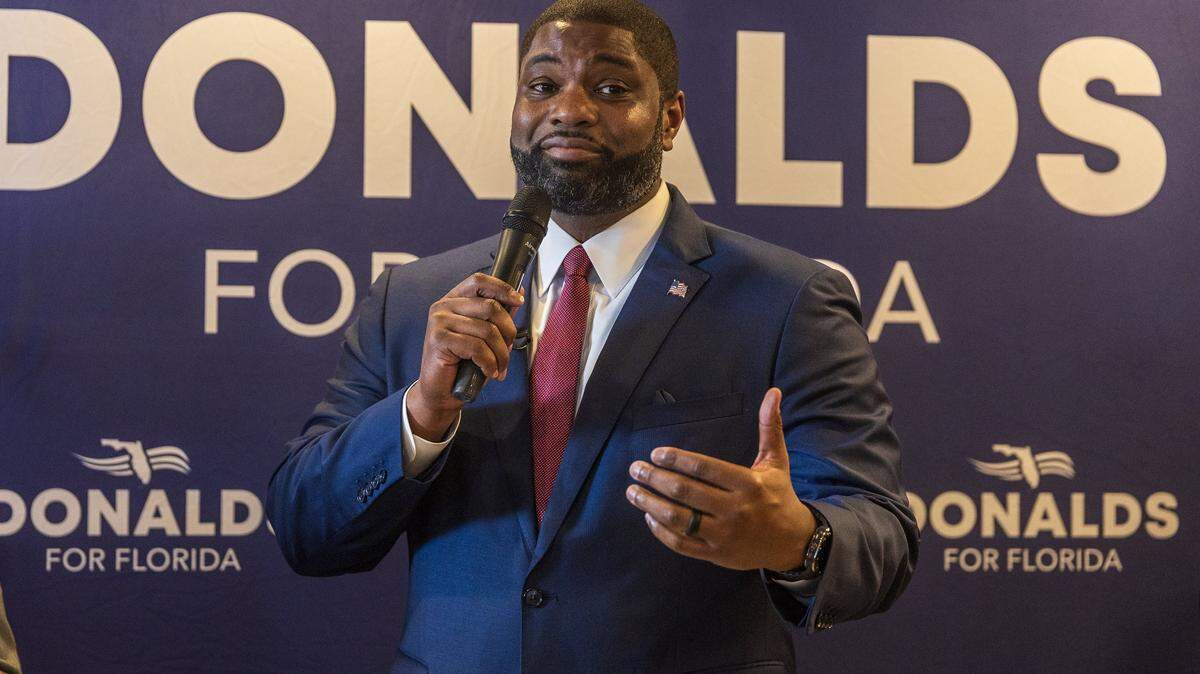
People love a good redemption story. So why is Florida Republican gubernatorial candidate Byron Donalds wanting to deny others the same chance he had?
In a Sunday interview with Jim DeFede on CBS News Miami, Donalds admitted that he dealt drugs “for a period of time, low-level amounts” before he was arrested at 18 years old in October 1997 in Florida for possession of marijuana.
At 20, he was arrested again on fraud charges while attending Florida State University. He pleaded no contest and had his record sealed and later expunged. On the drug charge, he paid $150 fine and entered a pre-trial diversion program. The charges were dropped.
During his interview, Donalds was candid with DeFede. “Eighteen, 19 and 20 were really tough years for me. Made a lot bad decisions that I regret,” he said. “But in life, you’re not who you are at the lowest point in your life…if you examine my life since 20 years old, my life has really been a story of redemption.”
Republicans for the most part have taken Donalds at his word. He’s the frontrunner in the governor’s race, with over $40 million in the bank and President Trump’s endorsement.
His story paints a picture of a candidate who knows what it’s like to struggle, make mistakes and benefit from a justice system willing to offer leniency.
But Donalds doesn’t seem interested in extending the same grace to others.
In Congress, Donalds, a Republican from Southwest Florida, sponsored the D. C. Criminal Reforms to Immediately Make Everyone Safe Act of 2025, which would lower the age for offender protections in Washington, D.C., from 25 to 18. The bill, which passed the House and is now in the Senate, would limit judges’ ability to consider the offender’s age as a mitigating factor — something that could allow young adults who made a poor decision a chance to rebuild their lives. It’s likely the same sort of discretion that worked in Donalds’ favor.
He defended the bill saying, “In Florida, I had to face the music as an adult. In D.C., they were letting 24-year-olds be tried as juveniles, that’s not right.”
His concerns are legitimate. But there’s a difference between holding people accountable for their actions and removing judicial discretion entirely.
The diversion program Donalds completed wasn’t a loophole; it was a structured intervention that required Donalds to take responsibility to earn a second chance. Donalds is hardly the first — or last — person to make mistakes in his late teens or early 20s.
And now he’s running to lead a state with roughly 1.5 million people with felony records — some of whom may have stories similar to his and who are trying to rebuild their lives.
Leaders set the tone for how society views justice. The next governor of Florida will shape how the state approaches crime, punishment and mercy — decisions that affect families and communities across the state.
These aren’t small things. For people praying for second chances, they’re everything.
Donalds’ past can’t be separated from his candidacy. It’s shaped who he is, and now it’s shaping his candidacy. As Florida Republicans prepare for the August primary election, Donalds’ story could be used as an inflection point — not just for his candidacy but for the party deciding on the kind of leader it wants to embrace.
The hypocrisy is glaring. Donalds’ own story contradicts his record on criminal justice reform which he acknowledged in his interview with DeFede: “Florida does have laws around diversion, being able to seal records, and yes, those are things that were afforded to me. And I look back on those days, and I say, you know what, that helped me restart my life, so be it. But in D.C., it was very different.”
Donalds’ own story suggests he believes in redemption — at least that’s what he’s telling voters. And if that’s the case, he should be willing to acknowledge the legislation he championed in Congress may have missed the mark.
His story is powerful because it shows redemption is possible. No one is beyond redemption — and redemption begins with contrition. For Donalds, that means acknowledging his misstep and making sure the grace that changed his life remains possible for others.
Mary Anna Mancuso is a member of the Miami Herald Editorial Board. Her email: mmancuso@miamiherald.com