He was a filmmaker who helped tell the stories of Miami’s Black community
Growing up, my elders had a lot of old-year-out, new-year-in sayings and traditions. Here are a few:
• It’s bad luck to let the New Year find dirty clothes in your house. And it’s worse to wash clothes on the first day of the New Year because you will be “washing away“ somebody in your family (meaning you will be responsible for the death of a family member).
• Never sweep the dirt from your house out the front door on New Year’s Day because you will sweep out your good fortune for the New Year.
• It’s good luck for a woman (or a girl) to be your first visitor on New Year’s Day.
• Eating black-eyed peas and rice (Hoppin’ John) cooked with smoked hog jaws, and/or eating stewed collard greens and fried fish on New Year’s Day will bring good fortune.
But the old saying that I paid the most attention to as I was growing up was the one that said death would “take out its number“ in the last days of the year. Translation: People, ordinary and prominent, and people of all ages will die in vast numbers just before the end of the old year.
Our elders used to say: “... Well, just look for it. Death will come a knocking to take out his number before the year ends. You just wait and see. People you thought would be here for a long time will just up and die during the last days of the old year.“
As a child, that kind of talk used to scare me. But as I grew into adulthood, my friends and I would laugh at the old sayings. But, secretly, we always watched to see if the sayings would come true.
I thought about this old wive’s tale during the last days of 2025, when many of us lost dear friends and relatives, and when several celebrities died just as the year was coming to an end.
I especially thought about it when my dear friend Michael Herbert Anderson died the morning of Dec. 14. He was 58. Shocked is not a good word to describe how I felt when I got the text early that morning that Michael had died. Not our smiling, happy, talented Michael.
Not to sound morbid, but we all know death is inevitable. As my mom said to me as she lay dying in December of 2002, “You know I didn’t come here to stay....“ She was responding to the sad look on my face as I sat by her bedside. She died two days later.
Michael didn’t come here to stay, either. He was born, grew up and found his passion in life and worked at it. Then he was gone. Just like that.
A native Miamian, Michael was educated in Miami’s public schools and graduated in 1986 from Jackson Senior High School. He attended Morehouse College in Atlanta and later transferred to Florida Memorial University in Miami Gardens. He was a devout Christian and a lifelong member of the Historic St. John Institutional Missionary Baptist Church in Overtown.
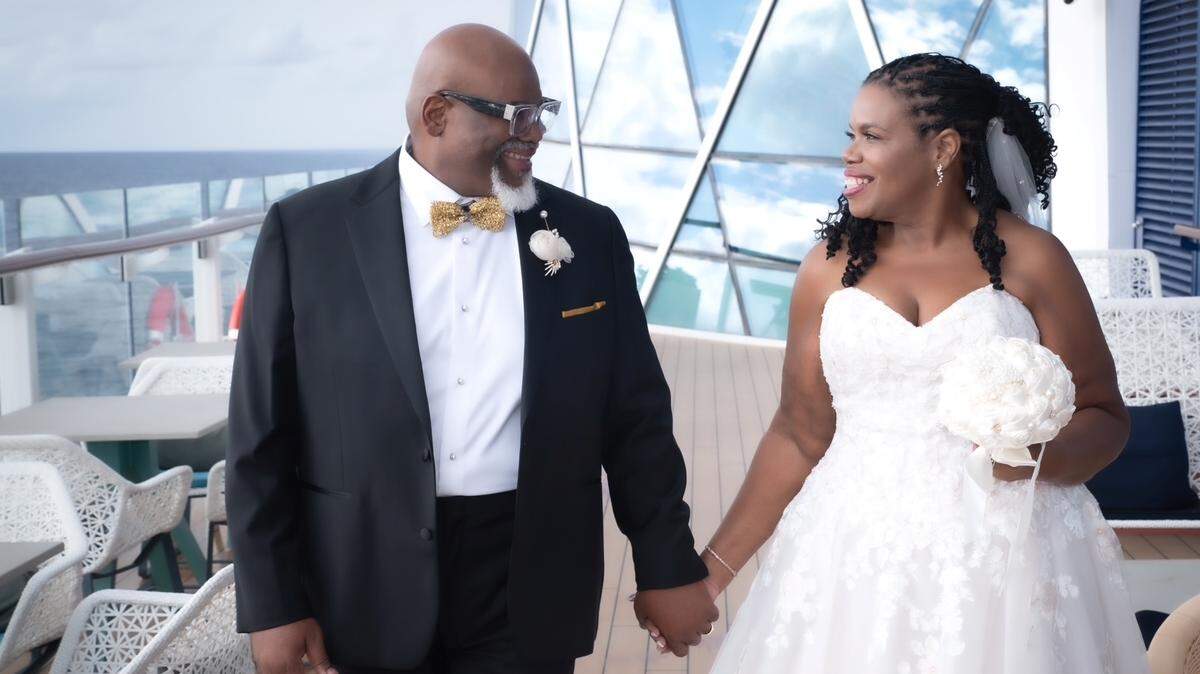
On Nov. 24, 2000, Michael married his soulmate Pamela Gibson. They celebrated their 25th wedding anniversary and vow renewal with family and friends on a cruise less than a month before he died.
“We were surrounded by love throughout the cruise,“ Pamela said. “It was a glorious week... He was a good husband and was good to our daughters and all my friends.”
She said Michael was a doting father to his three daughters — Ashlee Renea Anderson and Alexis Rachelle Anderson from a previous marriage, and Mikayla Janay Anderson from their union.
Michael was a late-in-my-life-gift to me. I knew him for less than 10 years before he died. Born on Sept. 6, 1967, he was six years younger than my younger son, Shawn. And in the short time I knew him, I came to love him like a son.
But loving Michael, who was an award-winning filmmaker and documentary producer, was easy. He embodied the meaning of love. As our mutual friend, Miami attorney Marilyn Holifield, said in her tribute to him:
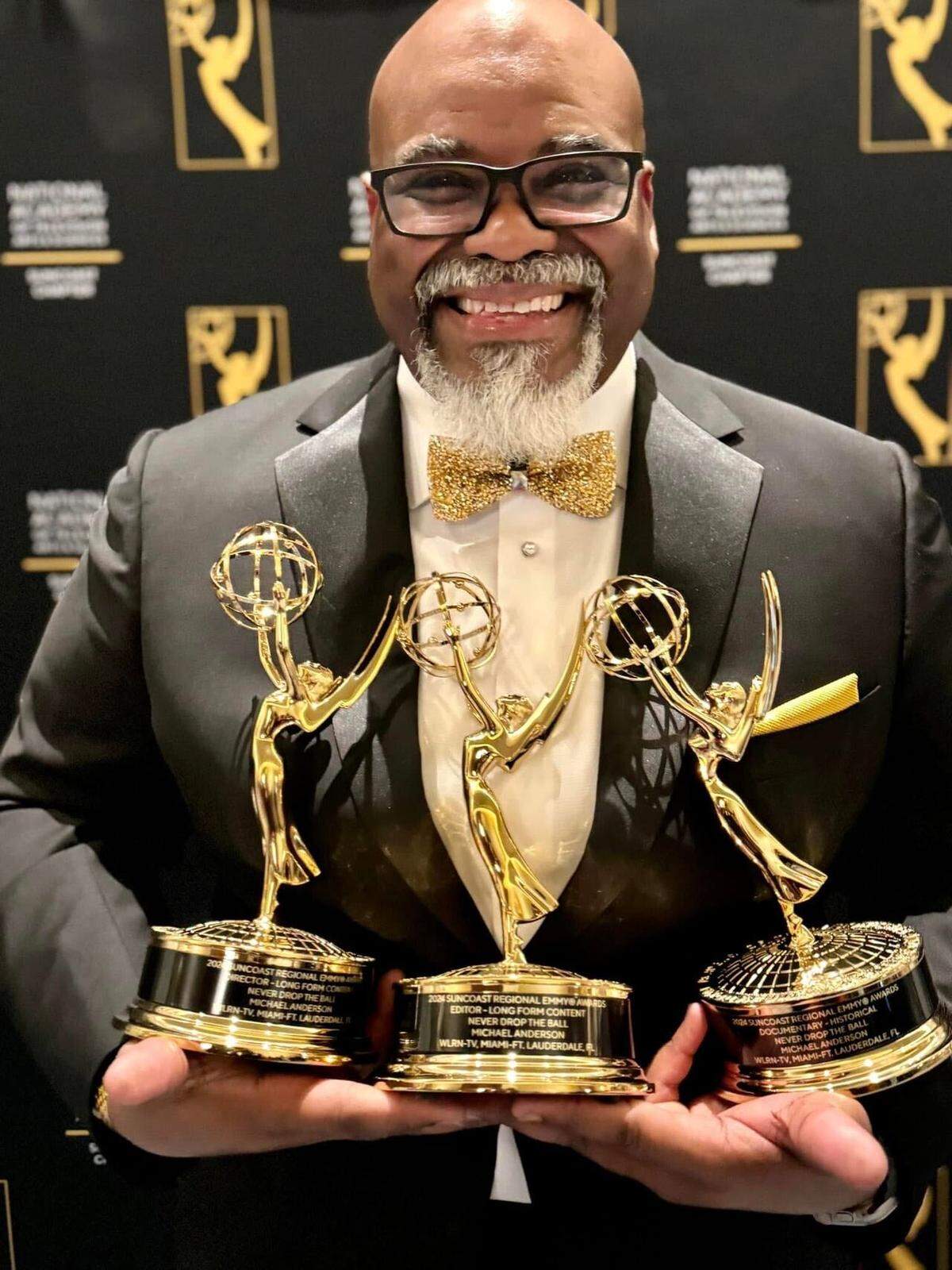
“Michael was love in real time. He loved his family, he loved Miami. He loved community. He absolutely loved his work... And he loved Pam, his wife of 25 years.”
Michael earned seven Suncoast Emmys for his work and was senior director for production services at WLRN.
“He believed in the power of storytelling,“ Holifield said, “not just as art, but as a tool for cultural reservation, education and community building. He had the magnificent gift of understanding how stories shape culture, spark dialogue, and build community.”
Indeed, he had. One of his projects to build community includes the “The Hero of A Thousand Faces“ project, where local men who serve the community unselfishly in various ways are spotlighted.
It was Michael’s passion for the visual arts that brought him together with Holifield and several other art lovers and artists to develop the Miami Museum of Contemporary Art of the African Diaspora (Miami MoCAAD). He became the engine behind the art project.
“Miami MoCAAD was the new kid in the community with little money, no building, and not even a phone. But it had a big vision — creating a museum dedicated to art of the African Diaspora,“ Holifield said. “Michael’s love of Miami MoCAAD’s vision made it possible to merge technology, art and imagination and enable the museum to host hybrid programs featuring artists in person and virtually. By the time the pandemic came, Michael and Miami MOCAAD were already hosting virtual art programs... putting Miami MOCAAD ahead of the virtual art curve.”
Under the museum’s oral-history project, Michael recorded nearly 30 oral histories for Miami MoCAAD’s interactive mural exhibition, “Telling Overtown Stories, Saying Their Names,” of which I am proud to be a part of.
Only weeks before his death, Michael’s video of Miami MoCAAD’s 10th anniversary had its premiere at the Historic Lyric Theater in Overtown. In the video, Michael documented the museum’s growth, its dedication to artists, education and innovation, leaving a visual legacy that will inspire for years to come.
About a month before Michael died, he interviewed and videotaped me for the 10th anniversary documentary. He wanted my opinion about the impact Miami MoCAAD has had in the Miami-Dade community.
It was a busy time for me. I was getting ready to take my annual trip to Indiana to be with my grandson for Thanksgiving. I had a lot to do before leaving. But I am so glad that I found the time to sit one last time with my friend Michael as he filmed me.
On Feb. 7, at the Historic Lyric Theater in Overtown at Northwest Second Avenue and Eighth Street, a community memorial service will be held in Michael’s honor.
.JPG "MIA_20231006AD0543BeaHines (6).JPG")
This story was originally published January 9, 2026 at 8:34 AM.