After mass shooting, Miami Beach play asks: What will we do in the face of hatred? | Opinion
Most of us like to think that, when faced with evil, we would stand up. We imagine using our words or through heroic acts, like the man who tackled a gunman accused of murdering 15 people during a Hanukkah celebration in Australia on Sunday.
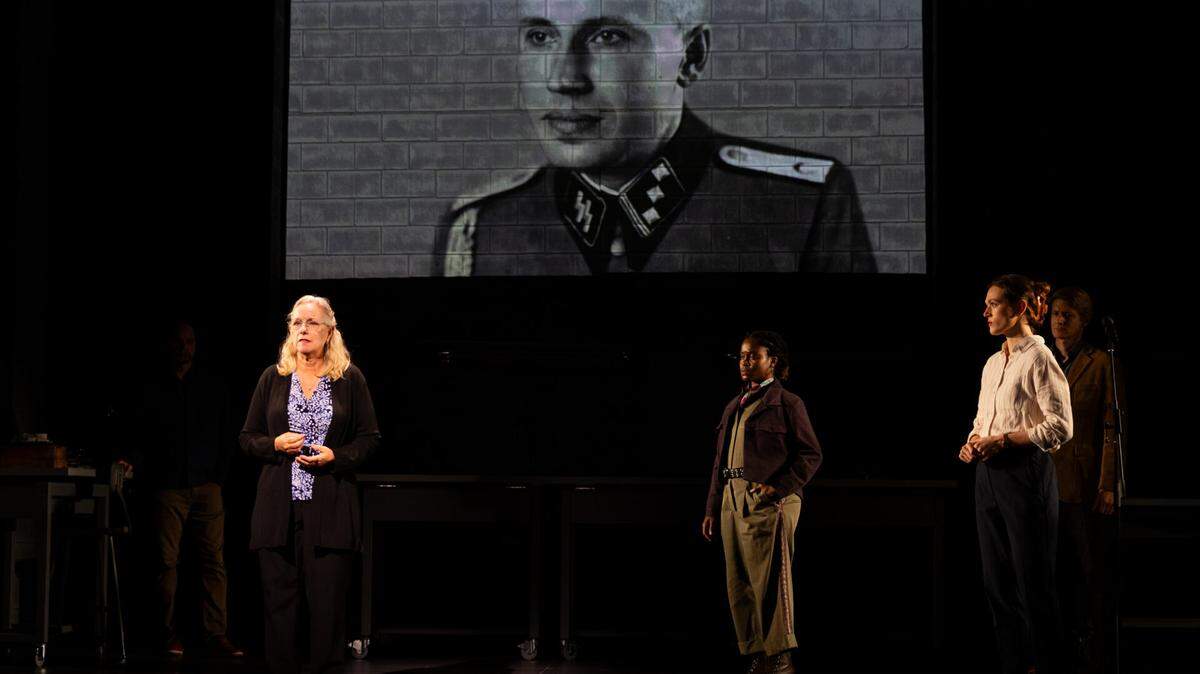
But would we? It’s a question I’ve often pondered over the years. Just hours after the Sydney massacre, as I sat in the Colony Theatre on Miami Beach to watch the play “Here There are Blueberries”, I found myself wondering if I’d have the courage to act.
The play is based on real events and tells the story of a mysterious Nazi-era photo album that arrives at the desk of a U.S. Holocaust Memorial Museum archivist in 2007. The photos show daily life at the Auschwitz concentration camp complex, except there are no pictures of inmates. Depicted are the lives of camp officers, staff and their families as they carried on, tasting fresh blueberries, socializing and enjoying an SS vacation hut a few miles from where more than 1 millions Jews and others were killed.
The album belonged to an SS officer and offers a glimpse at how the perpetrators of the Holocaust chose to remember their role in it. Much of the play is devoted to the discussion of whether the people in the photos, including young women, knew about what was taking place. As the play goes on, it becomes clear: they did.
We learn about the Holocaust as a story with a beginning and an end. But we are in the midst of a rise in hatred and polarization right now, seeing events unfold in real time, not knowing where they will take us. Groups like the Anti-Defamation League have documented a rise in antisemitism since the Oct. 7, 2023, attacks in Israel. As ADL CEO Jonathan Greenblatt said in 2020, “Jews are the canary in the coal mine,” a barometer for further social decay and intolerance.
It’s not just intolerance against Jews; it’s against immigrants, trans people, Muslims, anything that resembles DEI (diversity, equity and inclusion) or people who think or live differently than from us.
It’s comforting to assume that the problem is other people: the man who police say killed Charlie Kirk on a college campus in Utah, or the father and son accused of carrying out the mass shooting in Australia who, reportedly, were motivated by Islamic State ideology. But if we only think of hatred as existing in jihadist groups or in far-left/far-right circles, we have failed.
That SS officer who owned the Auschwitz photo album, Karl Höcker, was a bank teller before World War II and returned to his old job after the war and a stint in prison. Another top camp officer used to be a candy maker. The young women who worked in the camp’s communications room were barely teenagers when Hitler rose to power.
It is true that most people — including bigoted ones — will never commit violence. But we must come to terms with the fact that if bank tellers can run concentration camps, so could our neighbors, family and friends — or even us. The choice, then, is what to do when faced with society’s — and our own personal — ability to dehumanize and marginalize.
We tend to only pay attention when violence erupts. But, as “Here There are Blueberries” explains, genocide does not start overnight. It begins with words, of which the Jewish community has been painfully aware throughout history. And it can also be fought with words that denounce those who insist on dehumanizing certain groups of people.
Just a few blocks from where this season’s last performance of “Here There are Blueberries” took place on Lincoln Road, there was a celebration of the first night of Hanukkah. Dozens of people gathered as police officers monitored the event from the top of surrounding buildings — an unfortunate necessity these days.
The Jewish community continues to persevere, but there’s a perpetual worry about where this current cycle of intolerance the world is experiencing will end. It’s easy to feel helpless. But if bank tellers ran concentration camps, they can also stand up against them.
Isadora Rangel is a member of the Herald Editorial Board. Her email: irangel@miamiherald.com.