
Leaders must lower the temperature, not fan flames, after Charlie Kirk’s death | Opinion
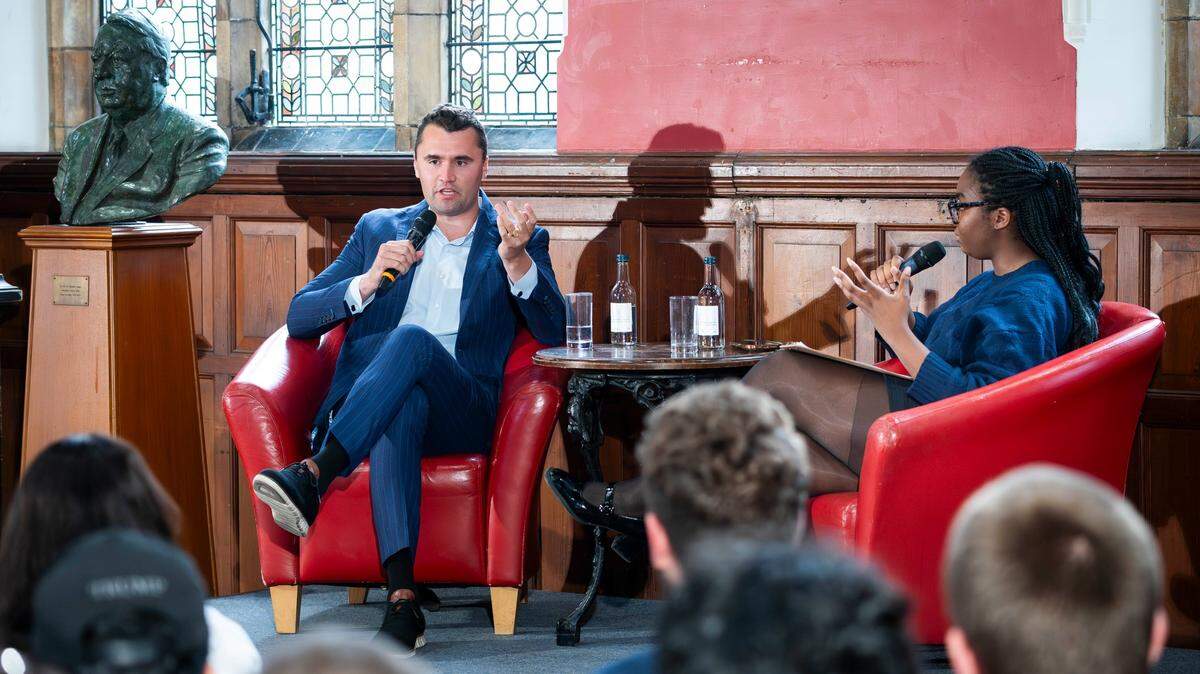
Charlie Kirk didn’t deserve to be killed for his opinions, no matter how extreme they were. That shouldn’t be a controversial statement, but lately it feels that way.
My social media newsfeed has mostly become a space of public mourning for the man who led Turning Point USA. I have seen posts that honored Kirk — but also posts suggesting his political viewpoints justified the violence against him. In Florida, elected officials have been among those sharing their thoughts on Kirk’s death, some lionizing him while others have called him a bigot.
In a since-deleted Facebook post by Palmetto Bay Councilman Steve Cody, he called Kirk’s death “a fitting sacrifice to our Lords: Smith and Wesson. Hallowed be their names.” The post referred to Kirk’s 2023 comments about gun rights: “I think it’s worth to have a cost of, unfortunately, some gun deaths every single year so that we can have the Second Amendment to protect our other God-given rights.” Cody’s post sparked bipartisan calls for Cody’s resignation. Although Cody quickly apologized, the Palmetto Bay council voted 4-1 in favor of a measure to censure him and call for his resignation.
Cody’s comments are protected as free speech under the First Amendment — as were Kirk’s. But I believe elected officials should be held to a higher standard. The true test of a leader is not how they respond when it’s easy to be statesmanlike, but how they conduct themselves when tragedy strikes.
And in those moments, leaders must seek to heal rather than divide.
The First Amendment prevents the government from silencing speech — and that is a basic underpinning of democracy — but it doesn’t absolve leaders of judgment. When political tensions rise as they have now, leaders should model restraint and remind their constituents that differences should be resolved through debate, not political violence.
A real leader seeks to bring the temperature down — not pour fuel on the fire.
Miami-Dade Commissioner Danielle Cohen Higgins had it right when she posted on X Sept 11, “When elected, the people look to you to serve and to represent. The people also look to you to lead by example. When tragedy occurs, the responsibilities of being an elected official are magnified and amplified. It is often during these times that we, as elected officials, reveal our true ability to serve, represent and lead.”
Cody’s comments are protected speech — no matter how reprehensible I may find them — but he isn’t exempt from moral responsibility. Such comments contribute to the climate where political violence can take hold. The danger lies not only in the original violence itself, but in how society responds afterward.
But the councilman isn’t alone. Across the political spectrum, too many leaders default to inflammatory language, from mocking opponents to refusing to condemn violence quickly and clearly. The electorate is watching and taking cues.
This moment, when Kirk’s death is inflaming rhetoric across the political spectrum, is turning into a test of whether American democracy can survive in an era of increasing polarization.
Public office and a social media account aren’t a license for reckless speech. Leaders aren’t just individuals with opinions; they are representatives entrusted to uphold law and order. When they fan the flames instead of cooling them, that trust is broken.
We must acknowledge two truths. First, free speech must remain sacrosanct — especially for voices that spark controversy. Kirk understood this principle and lived it, for better or worse. Second, leaders have an obligation to rise above the fray when the stakes are highest.
Although the motivation of the suspect isn’t fully clear, the appropriate response from our elected leaders when it comes to political violence shouldn’t be justification, but a recommitment to democratic values that the violence seeks to undermine.
In the coming weeks, Florida’s leaders, as well as those across the country, have an opportunity to lower the temperature, insist on civility and recommit to the principle that disagreements in America are part of civic life, but never a justification for violence.
Mary Anna Mancuso is a member of McClatchy’s Miami Herald Editorial Board. Her email: mmancuso@miamiherald.com
This story was originally published September 20, 2025 at 6:00 AM.