
Trump firing labor chief is just the latest in the war on truth | Opinion
What do scientific journals, the Department of Labor and the explosion of AI and social media all have in common? They are parts of a war on reality.
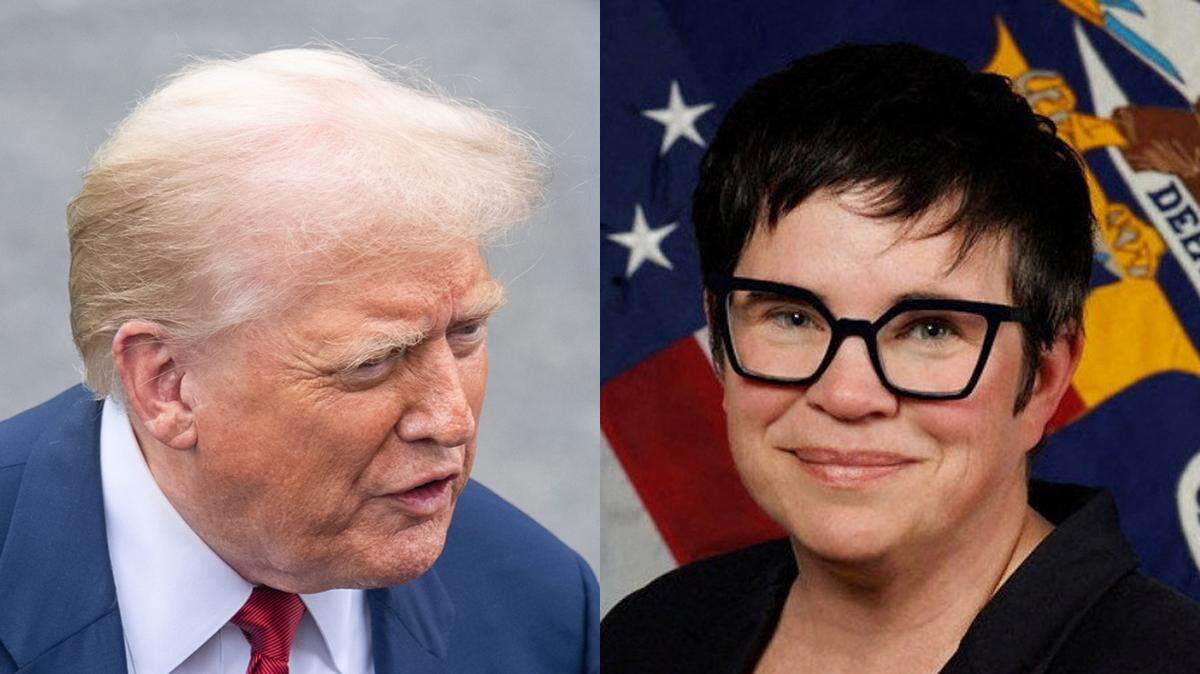
By now everybody knows the role the Trump administration is playing in this war. Donald Trump himself is a gusher of falsehoods, fabrications and fanciful flamboodle of all kinds. His latest move was to fire the Joe Biden-appointed academic who headed the Bureau of Labor Statistics, which reports estimates of employment in the U.S. economy.
Trump fired Erika McEntarfer for the crime of reporting employment figures that made his economic policies look bad or, as he had it, “concocting” them. McEntarfer’s job was hard in the best of times, but with Trump’s unprecedented tax, trade and immigration policies, getting numbers right even without partisan intent was nearly impossible without later revisions as better data comes in.
With the whiff of political interference in the wind, the job of presenting credible data for whomever Trump appoints to this thankless job will be even harder. Those who point out Trump’s authoritarian tendencies say this is not a bug for the president — it is a feature. Authoritarians thrive when tribal loyalty is elevated above any shared reality or common principles.
While that is true, as far as it goes, Trump and his skirmishes with verity are only a symptom of something that is bigger and started before Trump rose to national political prominence promoting the falsehood that Barack Obama was born in Kenya.
I fought my first battles in war as an opinion writer as the nation was embroiled in all the twists and turns of the Bill Clinton-Monica Lewinsky affair. Back then, the fights were low-tech, fought in newsprint and over landlines. The world wide web had only been opened to the public five years before.
The Drudge Report first reported accurate rumors of the scandal before journalists broke the story. When journalists wrote factual stories about it or opinions drawing reasonable conclusions from the facts, a “war room” of Clinton defenders sprang into action fighting over every minor detail of the story, yelling and swearing, calling bosses to complain and denouncing the ethics of every journalist who dared depart the Democratic Party line. The point was to make it too painful for people in the business of the truth to stand up and tell it.
It marked a turning point when Democrats joined Republicans in attacking the credibility of the press. For the first time, this war was fueled by the digital power of the Internet giving more extreme and less factually disciplined voices access to participate in the national discussion.
The rise of 24/7 news, social media influencers
In the following years, market penetration of email and cellphones would skyrocket. The Blackberry would be born combining the two and presaging the smartphone. Each expanded the role of regular Americans in a 24/7 national conversation now on three 24/7 news networks catering to different flavors of reality, conservative, liberal and centrist.
When the George W. Bush administration stretched and distorted intelligence to back a war in Iraq, a preexisting tradition of launching conflicts on a flimsy basis was, for the first time, fostered by the new digital environment. The old political drive to “shape the narrative” had new tools to make its case.
While soldiers were still dying in Iraq, an old mainstream television network nuked its credibility with a false tale of Bush’s pre-presidential service in the Texas Air National Guard built on fabricated documents claiming the future president got preferential treatment that were quickly picked apart by an amateur army of bloggers. Their accusations turned out to be right often enough to end Dan Rather’s decadeslong career.
Not long after came MySpace, Facebook and Twitter, and then the smartphone and the rest of the social media still evolving today. Regular people, then mini-celebrities called influencers, were new voices in the national conversations, promoted from letters to the editor and comment sections onto the front pages of friends’, colleagues’ and strangers’ social feeds.
Into this primal land, where the line between rumor and fact was erased and credibility was earned not with years of toil but with the speed of a winning social media strategy, strode Donald Trump with his stories about a president’s colonial African roots. The algorithms loved him. So did a newly flowering digital partisan press that hated Barack Obama.
AI-driven fakes challenge reality
You all know the last decade’s sorry tale, but the interplay of media, technology and politics is not done with us yet. We’re at the birth of artificial intelligence. Now pictures, video and even the voice of someone you know can be digitally manufactured. What once was limited to entertainment and the movie-stealing exploits of Krypto can be used by anyone to manufacture any reality they want.
Now people aren’t only fooling each other — they’re fooling themselves. Thousands, maybe millions are convincing themselves they can have a relationship with a bot. One poll found a quarter of young people think this could be the future of romance.
Even the core of science is under attack. Publishers are literally closing scientific journals because their human editors can’t keep up with an onslaught of plausible-sounding AI-driven fakes that have been sneaking into print and being withdrawn by the thousands, according to the Proceedings of the National Academy of Science.
So yes, Trump is an authoritarian who thrives when it is hard to tell truth from fiction. But he didn’t start this war and his motives, no matter how nefarious, are not what drives it.
New technology has a history of confusing people. It was newborn radio that terrified thousands with the “news” that we were facing a Martian invasion. Now new technology comes at us at a speed Orson Welles couldn’t imagine.
If you’re worried we’ll be confused by Trump’s changes at the Department of Labor, you haven’t been paying attention. Trump is merely a symptom of the confusion that is about to get a lot worse.
David Mastio is a national opinion columnist for McClatchy and The Kansas City Star.
This story was originally published August 6, 2025 at 8:08 AM with the headline "Trump firing labor chief is just the latest in the war on truth | Opinion."