Rubio defends Latin American democracy — except when his allies land in hot water | Opinion
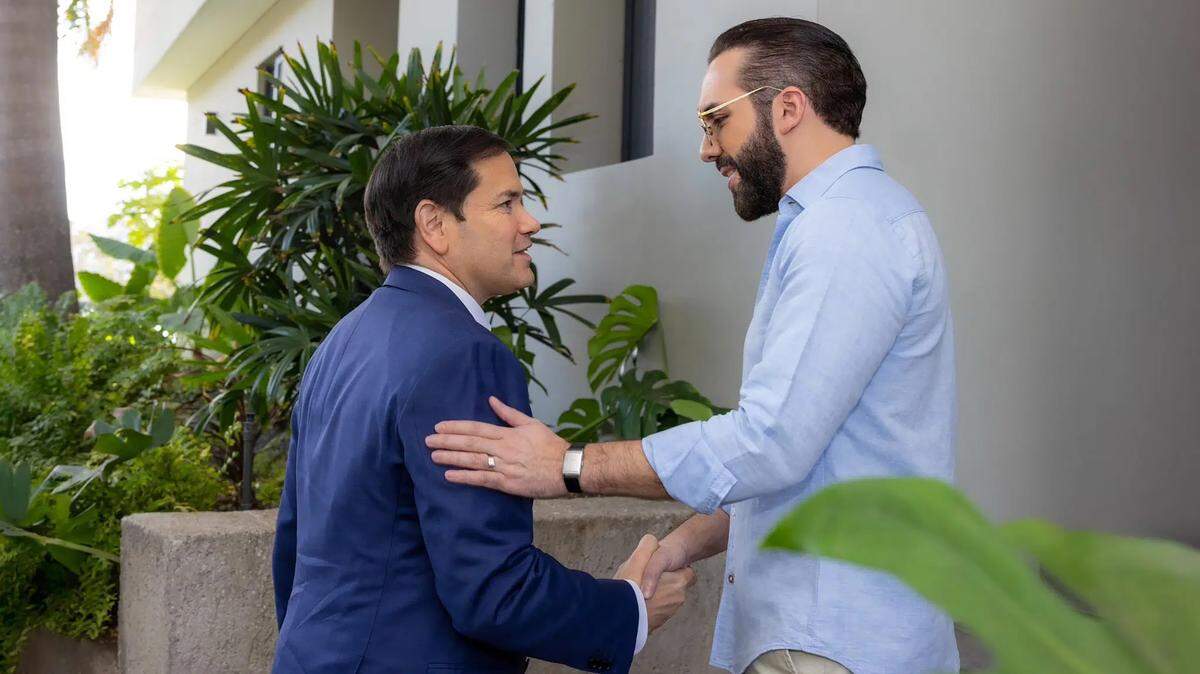
Marco Rubio built his reputation in Miami and the U.S. Senate as a defender of democracy in Latin America, but now, as secretary of state under President Trump, his support for such values has become selective.
Rubio and Trump are using America’s might to interfere in another country’s court system, trying to stop the prosecution of Trump ally and former right-wing Brazilian President Jair Bolsonaro for an alleged plot to overturn his electoral loss in 2022 and assassinate the current president. The U.S. is imposing 50% tariffs on the country’s goods and sanctioned the Brazilian Supreme Court justice in charge of Bolsonaro’s prosecution using the Magnitsky Act, which allows the U.S. to sanction human rights abusers. Rubio wrote on X in July that “judicial robes cannot protect you.”
The Trump administration is treating Brazil as though it’s a dictatorship like Cuba or Nicaragua. However, leftist President Luiz Inacio “Lula” da Silva was elected in a democratic electoral system that’s been functioning for 40 years, despite Bolsonaro’s attempt to undermine it. The country also has an independent judicial system that, as in many countries, hasn’t been immune to accusations of judicial overreach.
Meanwhile, the Trump administration supports its ally in El Salvador consolidating power, despite warnings from international human rights organizations. The country’s lawmakers last week changed the constitution to let President Nayib Bukele run indefinitely. Bukele remains popular for his war on crime, despite criticism that he’s doing away with checks and balances and due process. He’s also cracked down on human rights activists and threatened journalists, forcing some political exiles to flee El Salvador, the Associated Press reported.
No one is surprised that Trump would look at Latin American policy in a transactional way, molding America’s values to fit his needs. But Rubio spent a career acting as the purported voice for righteousness. Is he truly for democracy or merely for ensuring that right-wing leaders run countries in Latin America?
Both the right and the left have created authoritarian regimes. And both have failed to call out autocrats from their side of the ideological aisle. The admiration by some Latin American leaders, including Brazil’s Lula, for Fidel Castro, and their inability to properly call out Venezuela’s Nicolás Maduro are just as problematic.
The difference is that the U.S. is using its power to try to influence a criminal case in a democracy that’s been an American ally.
If Rubio is truly interested in democracy in Latin America, he also should speak up against Bolsonaro’s attempt to discredit Brazil’s 2022 electoral results and condemn Bolsonaro’s supporters who, prodded by his baseless claims of a stolen election, invaded and vandalized government buildings in the country’s capital in 2023. Some Bolsonaro supporters also camped out outside military headquarters asking for an intervention by the armed forces in the elections, in what would have amounted to a coup d’état like the one that started Brazil’s 20-year dictatorship in 1964.
Two years earlier, Trump’s supporters stormed the U.S. Capitol because of a similar belief in a conspiracy theory about stolen elections. Now Trump and Rubio are preaching about democratic values?
In July, when Trump threatened Brazil with 50% tariffs, he called Bolsonaro’s trial a witch hunt that “should not be taking place.” Then, the U.S. sanctioned Brazilian Supreme Court Justice Alexandre de Moraes for what Rubio described as “serious human rights abuse” and attacking free speech.
De Moraes has ordered some social media accounts to be shut down for publishing disinformation, prompting Trump’s media company to sue him. He has imposed several pre-trial restrictions on Bolsonaro, including a curfew and 24-hour surveillance to prevent him from fleeing the country, according to the BBC. Most recently, de Moraes ordered Bolsonaro under house arrest for violating restrictions imposed on him by the Supreme Court as part of his criminal case, including use of social media and cell phones.
His decision has been supported by some as defending the rule of law, but he has also been criticized. The editorial board of one of Brazil’s largest papers criticized Bolsonaro’s arrest, saying he has the right to free speech.
The bigger question is why the U.S. is using its trade and diplomatic power to pressure another country to defend a Trump ally accused of terrible crimes. If Rubio is going to cast himself as a defender of democracy and human rights, then he should be consistent.
Isadora Rangel is a member of the Herald Editorial Board.
This story was originally published August 6, 2025 at 12:39 PM.