
Why Scotland’s protests about Trump should concern every American | Opinion
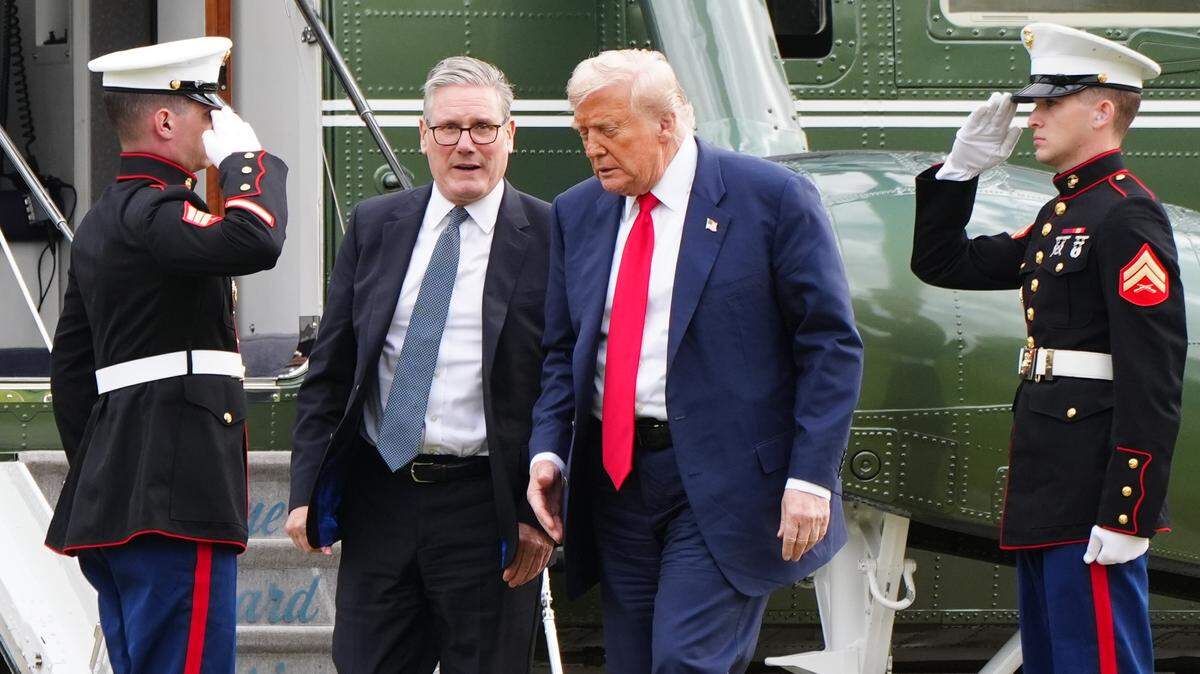
“Convicted US Felon to arrive in Scotland,” read the headline on the front page of Friday’s Scotland’s newspaper, The National.
The headline, referring to President Donald Trump, seemed like a joke, but it was real — and a sad commentary on how the people of Scotland view the president.
I wasn’t disheartened because I felt the paper was inaccurate — it wasn’t. I was disheartened by the lack of respect in those words.
The negativity didn’t end with a headline. On Saturday, Trump played golf at his course in Turnberry, Scotland. Meanwhile, hundreds of protesters flooded the streets of Britain to protest his visit.
The Stop Trump Coalition —“a group of campaigners across the UK determined to resist Trump and Trumpism” — organized the protests Saturday, which included signs protesters waved: “No to Trump,” “Trump not welcome” and “Scotland Hates Trump.”
Some protesters objected to Trump’s policies on immigration, climate change and the war on Gaza — but the overwhelming focus was personal. They didn’t reject the policy alone. They rejected America’s president.
Regardless of your personal feelings for Trump, this chilly reception should give you pause. I get it — Trump is a convicted felon. Yes, there are still questions about his relationship with Jeffrey Epstein. And no, Trump is not the statesman Americans are used to seeing in the Oval Office.
But this disrespect for him extends to the office he holds. And that’s bad for the United States now and in the future.
In fairness, Trump isn’t without culpability. He has spent years making politics personal, insulting opponents and threatening world leaders, often prioritizing personal feuds rather than focusing on policy. The vitriol on display in Scotland didn’t come out of nowhere.
Additionally, his own disregard for presidential decorum has created a permissive structure that allows others to abandon restraint and follow his lead.
But as my mother used to say, two wrongs don’t make a right.
While our allies have previously disagreed with America’s foreign policy, our critics generally respected the office, if not the occupant. During a visit to London in 2003, for example, protesters opposed former President George W. Bush’s policy on Iraq and his relationship with U.K. Prime Minister Tony Blair. The protests were over the Iraq War, not Bush’s character flaws.
A similar protest happened in 1984, when thousands of demonstrators in London rallied against then-President Ronald Reagan’s nuclear policy during an economic summit.
The protest was organized by the Campaign for Nuclear Disarmament, and when asked about its goal, Roger Spiller, a deputy president of the group, said, ‘’This is not an anti-American protest, but one opposing Mr. Reagan’s policies.’’
The protests in Scotland were different. They called Trump a dictator and a felon, focusing on his character and his presence in Scotland, rather than calling for policy changes.
That distinction matters.
When I first started in politics, there was an unspoken rule: Never call your opponent a liar. Now that’s the starting point. And the lack of civility hasn’t just taken hold here in America. It’s been exported.
It’s sad but not surprising that this is where we find ourselves.
Public vilification of the leader of the free world has serious implications. Some may argue that Trump deserves this type of backlash given his checkered history and questionable behavior. But that argument is short-sighted.
When protesters attack the person rather than the policies, they’re diminishing the institution itself. And if we normalize these personal attacks, it sets a precedent that won’t end with Trump’s presidency.
We can — and should — debate policies. That’s a hallmark of a healthy democracy. But when an American president is greeted with public disrespect by from citizens of an allied nation, it threatens something larger: the respect for democratic institutions.
Preserving that institutional respect isn’t about protecting Trump. It’s about protecting the office of the presidency for whoever comes next.
Mary Anna Mancuso is a member of the Miami Herald Editorial Board. Her email: mmancuso@miamiherald.com
This story was originally published July 28, 2025 at 2:24 PM.