Despite his racist rants, Hulk Hogan spoke to me as an essential American icon | Opinion
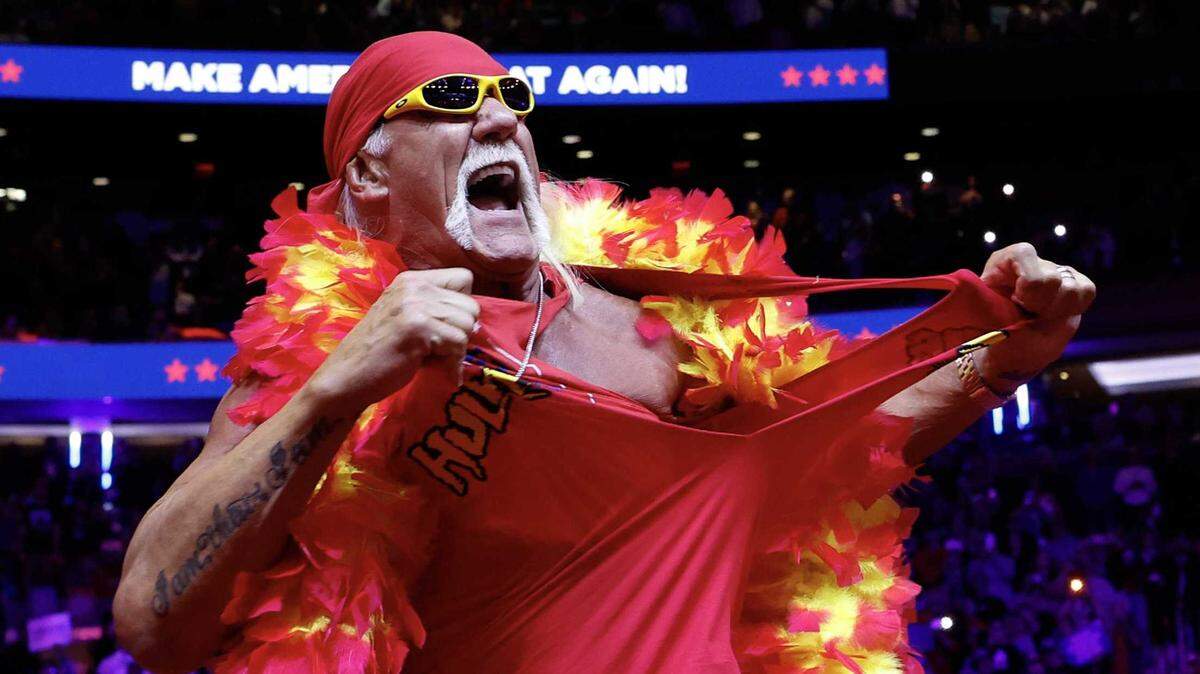
Hulk Hogan’s death on Thursday made me sad. It transported me back to my youth, when his persona and power as the man who took wrestling mainstream filled the voids of loneliness that I sometimes felt in my young life.
This was long before Hogan’s flaws and excesses, his abuse of the N-word and his admiration for President Donald Trump disappointed me almost to the point of swearing off him. Almost.
Life is complicated and despite it all, Hogan was still an icon to me and millions of others. I will explain that in a moment. But first, I have to explain why I admired this gargantuan personality who was so over-the-top to have helped define the era of the ‘80s, when hair and everything else was big, bold and tacky by today’s standards.
At this point in my life, I understand there are interests of mine that are just goofy. These are the things I wait till the third date to tell people, hoping they will give me grace.
My love of professional wrestling, or sports entertainment as some call it, sits at the top of my list of guilty pleasures.
Upon learning of my affinity for men in tights slamming each other in a ring, friends or partners invariably ask some variation of these two questions: “Why do you like it?” “Isn’t it fake?”
I could spend days explaining why wrestling isn’t fake, but that is for another column.
To answer the first question, I always use the icon that everyone inside and outside of wrestling knows: Hulk Hogan.
His real name was Terry Gene Bollea, and he was a staple in the industry for decades. On Thursday, he died after going into cardiac arrest at the age of 71. He was an iconic wrestler who was most famous for his time in two separate wrestling companies, WWE and WCW.
In wrestling, everyone has a gimmick, something that attracts people to their character. Hogan’s was to be bigger, louder, more brash, more funny than anyone.
Wrestling before Hogan was for fans at fairgrounds and bingo halls. After Hulk Hogan, the sport was for fans filling huge arenas. Hogan fit right into his 1980s heyday, where America was experiencing a surge in patriotism after the Vietnam War. He was featured in Rocky III as “Thunderlips, the charismatic and scary wrestler who threw Sylvester Stallone as Rocky Balboa out of the ring in the 1982 film.
Hogan showed the world how this sport could entertain feats of strength performed amid passionate pageantry. Was it real? Was it fake? That didn’t matter, the show mattered and Hogan - whether he played good guy or villain - always put on a show.
A real American
.Everything about Hogan fit the American lifestyle. He wore his iconic bright red and yellow attire like he was born to it. When he walked towards the ring, his iconic song “I am a Real American” boomed from the rafters and the audience was his.
His catchphrase annoyed a generation of mothers whose children would scream “Whatcha gonna do, brotha, when Hulkamania runs wild on you!”
In every iteration, Hogan performed with the same charisma and passion that made him one of the most famous performers in the industry.
Hulk Hogan laid a foundation for pro wrestling
To every kid with a broken home with no sense of stability, the four-sided ring gave that to them a refuge every Monday at 7 p.m. I would be huddled up in front of the T..V. to watch WWE’s flagship show “RAW.” I knew I would see Hulk Hogan finish off his opponents with his atomic leg drop.
Hogan was not perfect. During what would be his last appearance at “RAW,” he was booed by a Los Angeles crowd. They called him a racist because of a past racist rant when his daughter dated a Black man and for his refusal to perform with Black wrestlers.
When I look at his contributions, I see a man who was larger than life. He was committed to his character, because he could tell what it meant to kids and his older fans.
Wrestling will always be a social taboo, at least in my lifetime. But Hulk Hogan will stand as the man who embedded himself in American culture, for better and worse.
This story was originally published July 24, 2025 at 7:05 PM with the headline "Despite his racist rants, Hulk Hogan spoke to me as an essential American icon | Opinion."