
Conservatives know free markets work, not tariffs — even on China | Opinion
I believe American prosperity comes from competition, innovation and the power of choice, not from regulations and government interference. That’s why I couldn’t support President Trump’s onslaught of tariffs on foreign goods. Those tariffs were poised to suffocate the free market and threaten the global economy — especially important in South Florida, where the global economy has direct impact.
On Wednesday, Trump issued a 90-day pause on tariffs for most countries — excluding China — and brought the tariff level back down to a universal 10%. But for Chinese goods, he raised tariffs to a staggering 125%. This partial retreat offers temporary cease fire to the economic war he started, but leaves American businesses and consumers in a state of limbo, including in Florida.
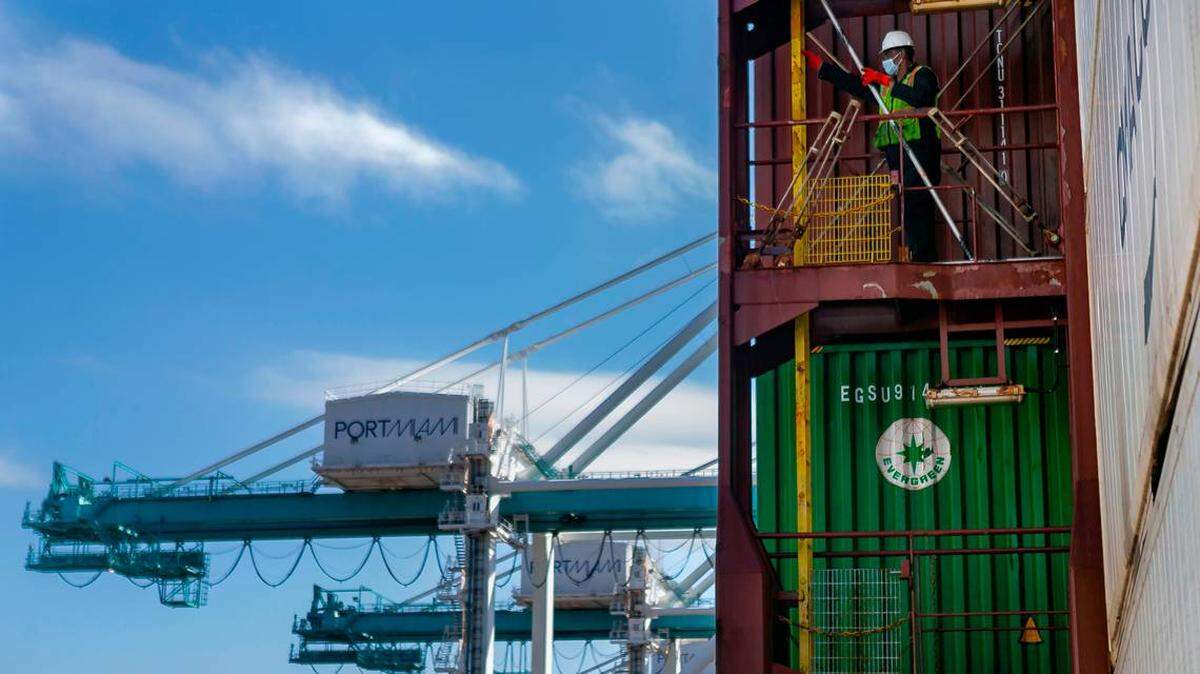
At PortMiami, one of the nation’s busiest sea ports, about $4.6 billion worth of goods flowed to the U.S. from China last year, according to figures provided by the port. You don’t need to be an economist to see that a 125% tariff — even on part of that trade — is serious.
PortMiami is a vital economic engine where cargo from 140 nations flows in and out, including a lot of fruits and vegetables. The port saw a total of $47 billion in goods in 2023, with roughly half from the Caribbean and Latin America. If tariffs disrupted the supply chain, that could increase the cost of goods for American families, especially food.
Food costs are already high, and the imposing higher tariffs threatens to increase the price of groceries, impacting American families even further. Household staples such as “coffee, bananas and toilet paper are likely to become more expensive should the Trump administration’s tariffs go into effect,” CNBC reported. And the high tariffs on Chinese goods such as steel and aluminum will increase the price for canned goods like vegetables and soda, as reported by NPR’s Up First. These aren’t luxury items. They’re everyday items, and families will feel it in their wallets.
Tariffs imposed on countries exporting their goods into the United States will cause businesses to pass the cost along to the consumer. Tariffs won’t be paid by foreign governments, no matter what Trump says. They will be paid by hardworking Americans.
Imposing these kinds of tariffs isn’t traditional conservative economic thinking. In fact, it represents a drift toward protectionism — the practice of shielding a country’s domestic industries from foreign competition by taxing imports — that conservatives have historically opposed.
Free market principles dictate that voluntary exchange of goods and services benefits both parties. Trump’s reciprocal tariffs were an abandonment of conservative economic policy that defined fiscal conservatism for generations. Until recently, Republicans were united in their opposition to tariffs. Former president Republican Ronald Reagan understood tariffs are taxes that hurt hardworking Americans. In 1987, Reagan warned during a radio address that “high tariffs inevitably lead to retaliation... Markets shrink and collapse; businesses and industries shut down; and millions of people lose their jobs.”
We’ve already seen markets react with concern.
The irony is not lost on me that Trump, who campaigned on tax cuts and turbocharging the economy, is willing to implement the largest tax increase on consumers in recent history. Lower-income and middle-class families, many of whom helped re-elect him, will be hit the hardest as they’ll spend a higher portion of their income on goods impacted by tariffs.
Even with a 90-day pause, PortMiami may feel the impact of baseline tariffs and the high Chinese tariffs. And that impact could ripple across Florida’s economy, shrinking household budgets and slowing economic growth.
Plain and simple: tariffs are taxes. Competition, not protection, drives innovation.
Our economy, state or national, shouldn’t be sacrificed on the altar of economic populism. When governments use tariffs to pick winners and losers, consumers end up being the biggest losers.
Mary Anna Mancuso is a member of the Miami Herald Editorial Board. Her email: mmancuso@miamiherald.com
This story was originally published April 10, 2025 at 4:33 PM.