
Plan to add pavement to Miami’s Morningside Park is a mistake | Opinion
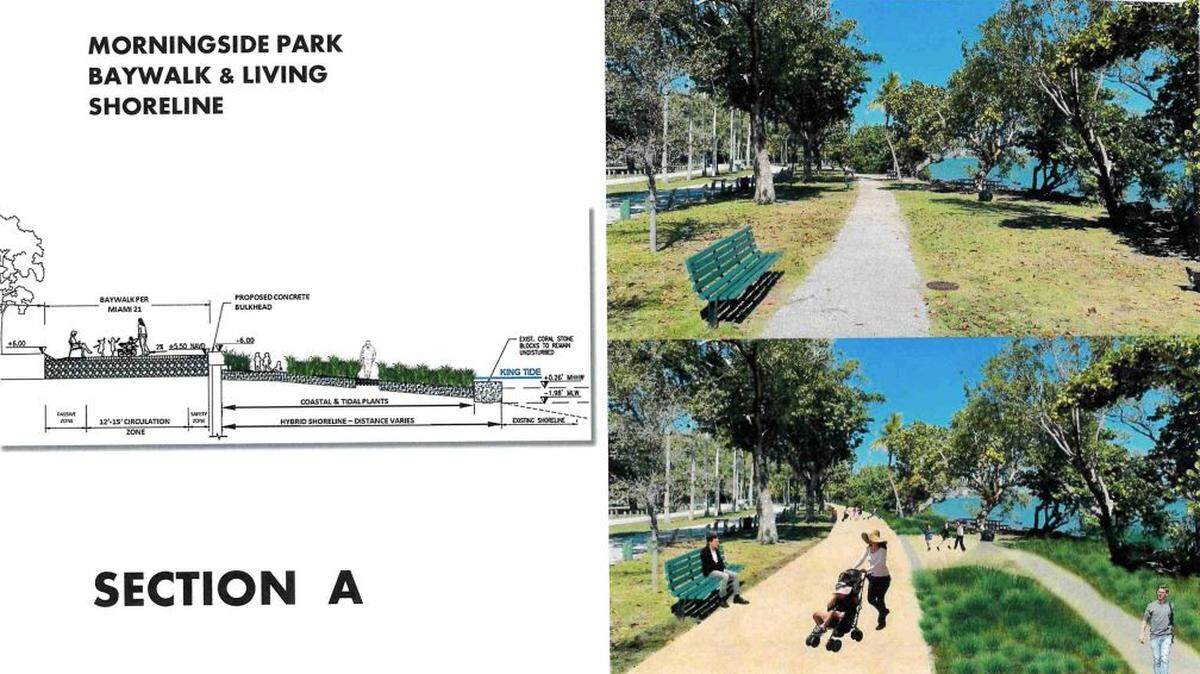
Morningside Park, one of Miami’s most tranquil and historic green spaces, is under threat.
Miami commissioner Damian Pardo, who represents and lives in the district, has picked up the mantle in championing a misguided plan to construct a 15-foot-wide concrete pathway through the heart of this beloved park. This path would permanently erase lush green space, uproot legacy trees, disrupt local wildlife, and destroy the park’s unique character.
The plan for redesigning Miami’s Morningside Park, approved in 2023 by the Miami city commission, includes an expanded walk path, a 6-foot tall seawall, a walking path and a landscaped shoreline with native plants.
Commissioner Pardo has publicly declared that the existing six-foot-wide sidewalks in our parks “don’t cut it” and insists that 15-foot-wide concrete slabs should now be the standard for Miami’s parks.
While this oversized design may align with the Miami 21 plan for high-density urban areas like Edgewater, Downtown and Brickell, applying it to a serene, low-density neighborhood like Morningside is a fundamental misstep that ignores the park’s unique role in our community.
The bayfront park’s anticipated transformation has reignited fierce opposition from the local community, who initially viewed the plan as deeply flawed and are prepared to fight until the end to stop it.
Now, renovations are set to begin with a 9 a.m. ribbon-cutting ceremony on Wednesday, Dec. 4, at the park located at 750 NE 55th Terr.
Residents who oppose the redevelopmet will gather to protest at the ceremony and urge the city of Miami to abandon its one-size-fits-all approach a
nd instead craft park-specific solutions that preserve Miami’s precious green spaces for future generations.
Morningside is no urban core
The Miami Baywalk project and its wide paths are designed for bustling waterfronts with heavy pedestrian traffic and commercial activity. By contrast, Morningside Park is a sanctuary of peace and nature—a space for quiet reflection, family picnics, and enjoying Miami’s natural beauty. Morningside is a cohesive green haven, already providing robust community benefits without such intrusive interventions.
Moreover, Baywalk’s design, with its 20-foot pathways, aligns with the needs of dense urban areas like Brickell and Edgewater, where resilience infrastructure must accommodate high foot traffic. Morningside, however, does not face the same urban pressures.
By paving over legacy trees and natural landscapes, the proposed pathway would strip away the very elements that make Morningside a refuge.
Nestled within the Morningside Historic District, the park is surrounded by one of Miami’s first planned neighborhoods, dating back to the 1920s. This area, with its wide, tree-lined boulevards and Mediterranean Revival and Art Deco homes, was designed to complement the natural beauty of Biscayne Bay.
The district’s architectural and historical significance earned it designation as a historic district by the city of Miami in 1984 and a place on the National Register of Historic Places in 1992. The park has a place on the National Register of Historic Places in 1992.
Morningside deserves a tailored approach that preserves its essence—not a one-size-fits-all application of rules meant for high-density urban areas.
Environmental cost
The environmental cost of the “monsterpath” is staggering. Replacing green space with concrete will uproot legacy trees that provide shade and clean air and house wildlife. It will displace local animals and disrupt delicate ecosystems, further threatening the park’s fragile balance.
Pardo’s statements about outdated six-foot sidewalks and his insistence on 15-foot-wide concrete paths betray a disregard for different parks and communities’ unique needs. Parks like Morningside should remain sanctuaries for Miami residents, not sites for ill-fitting infrastructure projects.
A reckless precedent
What is even more concerning is that Pardo has made it clear this isn’t just about Morningside—he envisions 15-foot concrete pathways in all of Miami’s parks. If this plan moves forward, it will set a dangerous precedent, jeopardizing green spaces across the city and leaving behind a legacy of overdevelopment and ecological loss.
Residents of Miami must come together to reject Pardo’s plan and protect Morningside Park. Green spaces are vital to our city’s health, happiness, and heritage.
Morningside deserves better. Miami deserves better. Let’s stop Pardo’s plan before it’s too late.
James Torres is president of the Downtown Neighbors Alliance.

This story was originally published December 3, 2024 at 12:11 PM.