
Musk and Ramaswamy’s attack on remote work isn’t about efficiency. Its goal is darker | Opinion
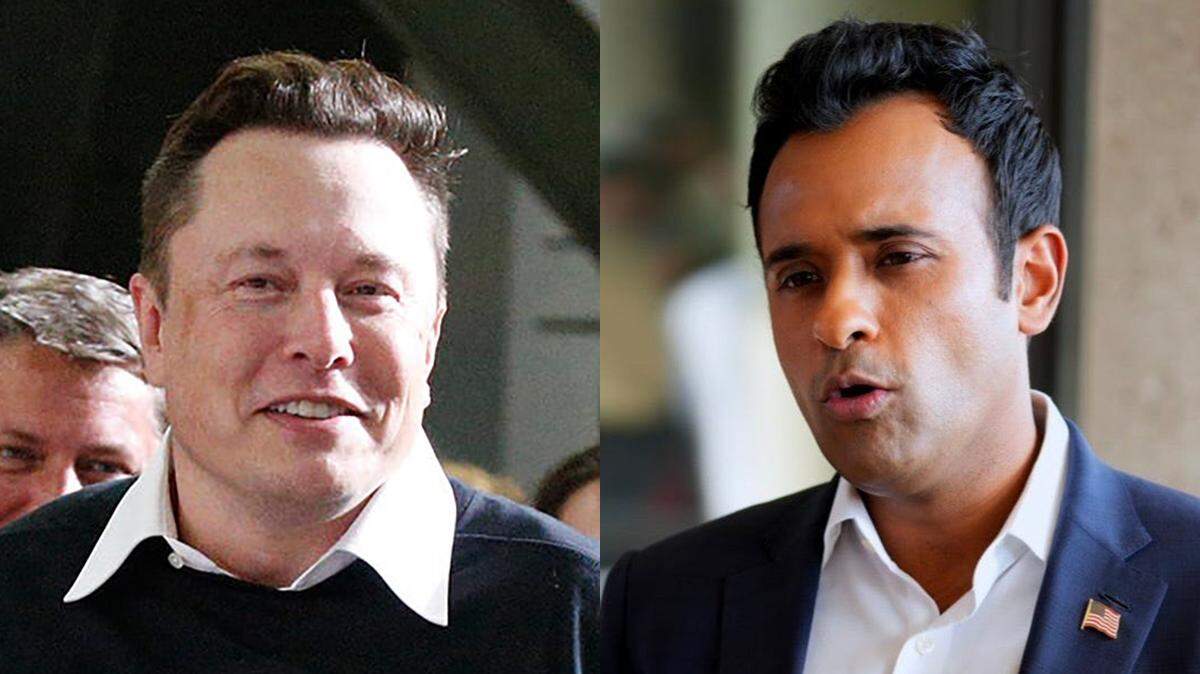
Elon Musk and Vivek Ramaswamy are targeting millions of federal employees who do what millions of our private sector neighbors do: work remotely during some part of their week.
The “DOGE duo” — tapped by Donald Trump to run a new, extragovernmental Department of Government Efficiency — are premier examples of remote workers, but I’ll avoid the “one rule for thee, another for me” angle and share some facts.
Musk and Ramaswamy relied on facts to make fortunes in highly technical businesses, but their remote work vendetta smells like precooked prejudice and ideological payback, not careful assessment. Their attack on remote work is one prong of Trump’s assault on our federal workforce.
They claim canning remote work would make government more productive. They assert that returning every civilian employee to federal buildings full-time would make them more efficient — and their jobs subject to elimination. They recently wrote in The Wall Street Journal that they would welcome “a wave of voluntary terminations” by people who choose not to come back to the office. These innovators are candid: This is their and Trump’s real goal.
As the Environmental Protection Agency’s regional administrator for Region 7 — the heartland — during the Obama administration, I know something about remote work’s history and results in the federal government. Our region piloted the EPA’s test from 2011 to 2013 of what we called “telework.” First a cautious skeptic, I became a champion of supercharging our federal workers’ dedication using remote work technology. This experience persuaded me that remote work serves the American people well.
I moved to Washington, D.C., in 2015 to head the EPA’s national operations office, where I was charged with helping 15,000-plus EPA employees — from Guam to Maine — pioneer remote work and assess its viability. Our national results were clear. Region 7’s telework success was no unicorn. Doubters became believers.
I was the agency’s senior human resources officer. Critics knew where to find me. We faced internal issues about this new way of working, but I heard not a discouraging word from the EPA’s national partners and customers about our agency’s remote work.
First regionally and then nationally, we learned that work is what you do, not where you do it. As the political appointee leading the EPA’s heartland region, much of my job was listening carefully to our partners. I often asked state agencies, regulated businesses, elected officials and local governments: Are my EPA colleagues who work remotely harder to reach, harder to meet, slower to act? Their answer: no.
Sure, the EPA’s heartland critics forthrightly criticized the agency’s environmental policies and actions. But bottom line: The governmental, private sector and nonprofit partners the EPA relies on had not one negative word about remote work.
For EPA staffers who worked remotely, the facts don’t just speak for themselves — they shout. Surveys documented that remote work made colleagues happier and more productive. It saved commuting time. The fact that it lowered office rental costs sealed the deal. Like so many innovations in how we work, once you move forward, you don’t go back.
Skeptical? Ask a federal worker in your neighborhood, at your church, or whose kid attends school with yours. They’re not hard to find — 85% of federal employees work outside Washington, D.C. Federal agencies are metropolitan Kansas City’s biggest single employer, and the second-biggest in St. Louis.
You’ll hear from these hardworking, dedicated people, whose jobs better our lives in so many ways, what I heard at the EPA: “A federal office chair and agency coffee don’t do my job. I do, no matter where I sit.”
Trump plans radical changes to the federal workforce. Some bad ideas deserve opposition because they will violate his constitutional obligation to “take care the laws be faithfully executed.” Others, like Musk and Ramaswamy’s attack on remote work, aren’t unconstitutional — they’re just deceptive and vindictive.
This story was originally published November 26, 2024 at 7:08 AM with the headline "Musk and Ramaswamy’s attack on remote work isn’t about efficiency. Its goal is darker | Opinion."