
A Trump administration is not necessarily bad for climate change | Opinion
Like it or not, we are wrestling with the same reality we did after the presidential elections in November 2016. Donald Trump is president-elect again, and if you care about our climate, you may think all is lost.
Progress on all things climate seemed to hang in the balance following Trump’s first election.
Less than a year later, when he announced the U.S.’s withdrawal from the Paris Agreement, it would’ve been fair to assume that climate action would dip in response.
But history offers us a glimmer of hope. In 2017, nearly 4,000 local leaders from communities across the U.S. banded together in the “We Are Still In” campaign to drive climate action at the state, local and tribal levels.
Corporate investment in climate action grew during Trump’s first term because of the market demand, particularly for decarbonization and mitigation projects. Total U.S. wind capacity increased 18% from 2017 to 2018.
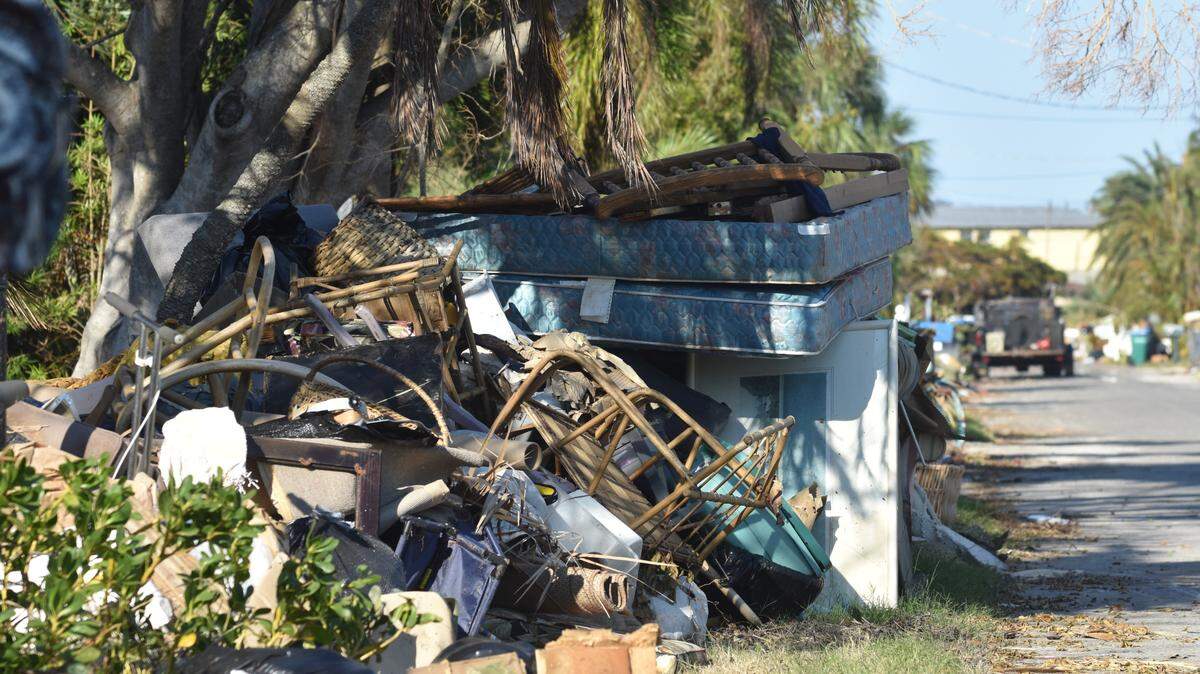
Today, our climate reality is more dire. In the last eight weeks alone, drought conditions have been declared in 48 states; the west coast of Florida was hit by the second-most intense Atlantic hurricane ever recorded; and Asheville, North Carolina, is still reeling from devastating flooding. According to NOAA, the total cost of 24 weather and climate disasters in 2024, prior to Hurricanes Helene and Milton, exceeded $61 billion.
No election results will make climate change go away. National, state and local officeholders who choose to deny climate science won’t be able to ignore Americans demanding disaster response. Our challenge will be to increase private-sector investment to reduce our communities’ risk due to extreme climate events.
With or without federal government support, here’s how we can continue acting on climate over the next four years to save lives and create economic growth:
1. Build and nurture strong coalitions — Climate impacts are bipartisan and communities pull together to rebuild after a fire or storm regardless of political viewpoints. Ensuring that broad community coalitions are prepared to face climate threats is essential. The University of Miami is a core member of the South Florida Climate Ready Tech Hub, while the SUNY Stony Brook-anchored New York Climate Exchange has coalesced a global network of partners to accelerate climate solutions in New York City and beyond. Both seek to empower local networks and keep the U.S. competitive in the rapidly developing climate tech sector.
2. Get creative in sourcing innovative financing — To attract more private capital, we must accelerate efforts to better account for climate and community benefits in investment portfolios. For example, what if there were a financial mechanism, like a social impact bond, to better monetize the benefits of street trees? Studies have found links between tree canopies and a significant reduction in diseases like hypertension and diabetes.
We can also explore out-of-the-box ideas like a modest $5 per passenger airline fee. In 2023, 144 million passengers flew in and out of NYC’s three airports. Every year, a ticket surcharge could generate $700 million annually, which could underwrite private investment in regional climate projects.
3. Center frontline communities in climate action — This election exposed deep uneasiness about our economic future. Building a climate-ready economy is an opportunity to address social inequity, making communities more vulnerable to climate shocks. New York City’s Green Economy Action Plan aims to employ nearly 400,000 people and contribute $89 billion to the city’s GDP.
In South Florida, we are pairing job training and placement with institutions and startups developing innovative materials like carbon-negative concrete and coastal defense technologies like gray-green hybrid reefs. This road will get bumpy, but the data—and our experience—shows what’s possible.
By listening to the needs of Americans, and working together to address them, we can drive progress on climate just like we did from 2016 to 2020.
Michael Berkowitz is the executive director of the Climate Resilience Institute at the University of Miami. Stephen Hammer is the CEO of the New York Climate Exchange.
This story was originally published November 21, 2024 at 7:19 PM.