Make welfare great again? Donald Trump appointees pledge to slash the government | Opinion
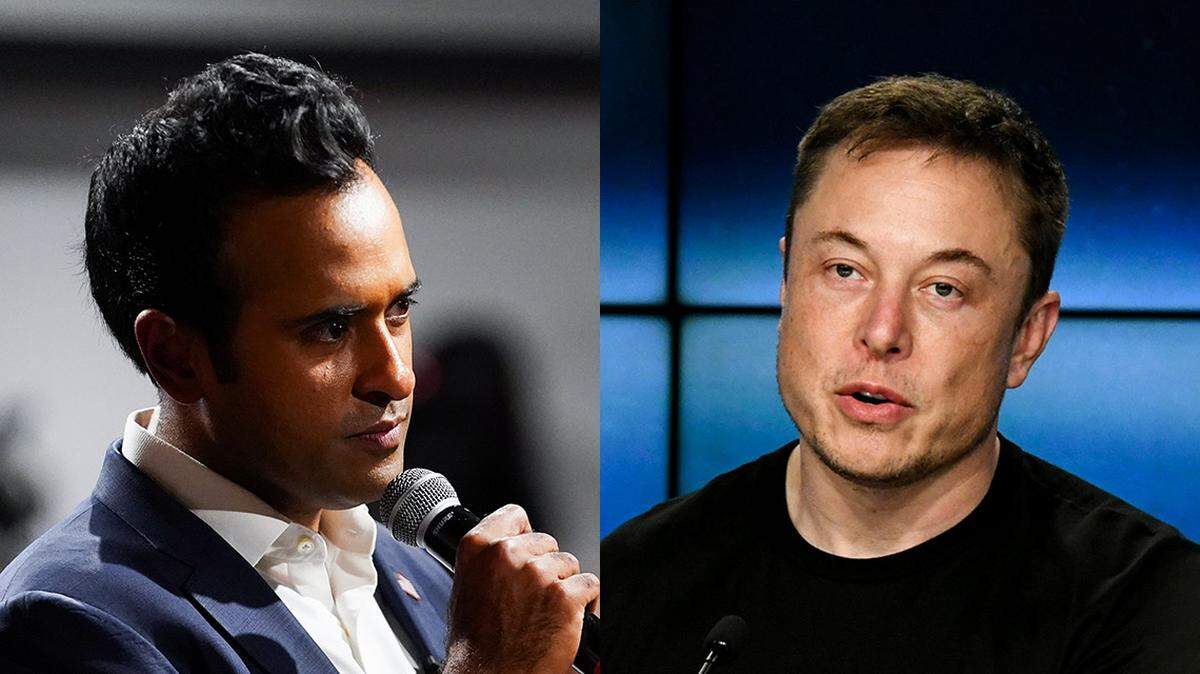
Donald Trump has appointed former presidential rival Vivek Ramaswamy and billionaire X-owner Elon Musk to lead an effort to slash government called the Department of Government Efficiency, DOGE for short. Such things have been tried before and come to little, but Trump’s minions might be more willing to break some china than those who have tried in the past.
“We expect mass reductions,” Ramaswamy said to Fox News. “We expect certain agencies to be deleted outright. We expect mass reductions-in-force in areas of the federal government that are bloated.”
A great place to start that effort would be by abolishing Washington’s dozens of separate welfare programs and replacing them with one based on the Earned Income Tax Credit.
Right now, there are multiple programs for providing basic income, healthcare and housing as well as paying for food, utilities, child care, college tuition and birth control. I don’t think anyone has a comprehensive list, in part because they keep getting added. Among the most recent are programs for buying electric cars, installing solar power and getting cell phone and high-speed internet service. Some go on the budget and some get hidden in the tax code.
Together, the tangled alphabet soup of programs (TANF, SSI, WIC, SNAP, CHIP, ACA, Title X, LIHEAP, Medicaid, Section 8 and on and on) cost more than $1.25 trillion dollars a year and have four things in common. They punish hard work, they strip freedom and dignity from the recipients, they layer rules onto the American economy, and like barnacles on a ship, they sustain a class of bureaucratic hangers-on who forge middle-class lives from the misery of others.
Punish work: Once you are on these programs, anything productive you do will begin to strip them away. Since each has its own rules and “phase outs” the people who are on them rarely know what kind and how much help they are going to lose if they work harder and earn an extra $100. It works like an extra random income tax on the poorest among us. Sometimes you lose cash or food or healthcare or even your apartment. Middle class people know the tax rate they pay – if they earn more they know more or less what taxes they’re going to have to pay.
Strip freedom: To buy food with your food stamps, you have to go to the stores the bureaucrats say and buy the food the bureaucrats designate. Likewise for housing, healthcare and electric cars you have to follow the rules of each program, living in the housing Washington says, going to the doctors Washington allows and buying the cars Washington approves. There are even rules for who you let sleep on your sofa and for how long. Middle class people can do whatever they want with their couch and buy whatever they can afford without the federal parents supervising their every move.
Add rules: There’s nothing businesses love more than having their product subsidized, but with every government program, the rules don’t just apply to the recipients, they also apply to the businesses that benefit. Grocery stores have to learn what the definition of an “accessory food” is and carefully calculate whether they sell too much food that’s hot or too many beverages that are alcoholic. Renting an apartment to a government beneficiary means you have to have your toilet paper holder inspected for compliance with the rules set decades ago.
Growing bureaucracy: It is hard to figure out how many people work in the welfare-industrial complex. The federal government doesn’t keep track in any systematic way, though it does say there are about 3 million federal civilian employees. Many of these programs are administered in partnership with states that have more than 20 million employees altogether. Many of the programs are housed in the Department of Health and Human Services where 80,000 people work. Over 10,000 people work at the Department of Housing and Urban Development. To complexify matters further, federal grants employ thousands more people at non-profits to help recipients navigate the complex of federal and state rules.
All this could be replaced by putting the Earned Income Tax Credit and the Child Tax Credit on steroids, boosting them from less than $100 billion a year by a factor of 10 to a trillion dollars. Even at the size they are today, the EITC and the CTC boosted nearly 6 million people out of poverty and helped 17 million more, many by sending them checks that amount to a negative income tax. Imagine how many would be boosted out of poverty and maybe into the middle class with 10 times the money.
THE EITC would begin to rival Social Security in its impact, a program which keeps 22 million people out of poverty.
With a job, even the crappiest of jobs, the poorest of Americans would get a hand up that they earned, have the dignity to make their own decisions about health care, housing and food, be free of the stigma that comes with vouchers and benefit cards and handouts. Moreover we could cut tens of thousands of government workers who contribute nothing to the economy other than paperwork without touching Social Security or Medicare benefits.
Of course, there are people who will still fall through the cracks, but all the state spending on welfare programs and federal support of non-profits will remain to help those who can’t help themselves. Indeed, according to the federal budget numbers I looked at for the last few years there’d be more than $100 billion a year left over to put towards helping those people or even to cutting the deficit.
That sounds like a plan Vivek and Elon could get behind.
This story was originally published November 19, 2024 at 1:00 AM with the headline "Make welfare great again? Donald Trump appointees pledge to slash the government | Opinion."