
Peru’s jailed former president needs medical care. Why can’t he get it?| Opinion
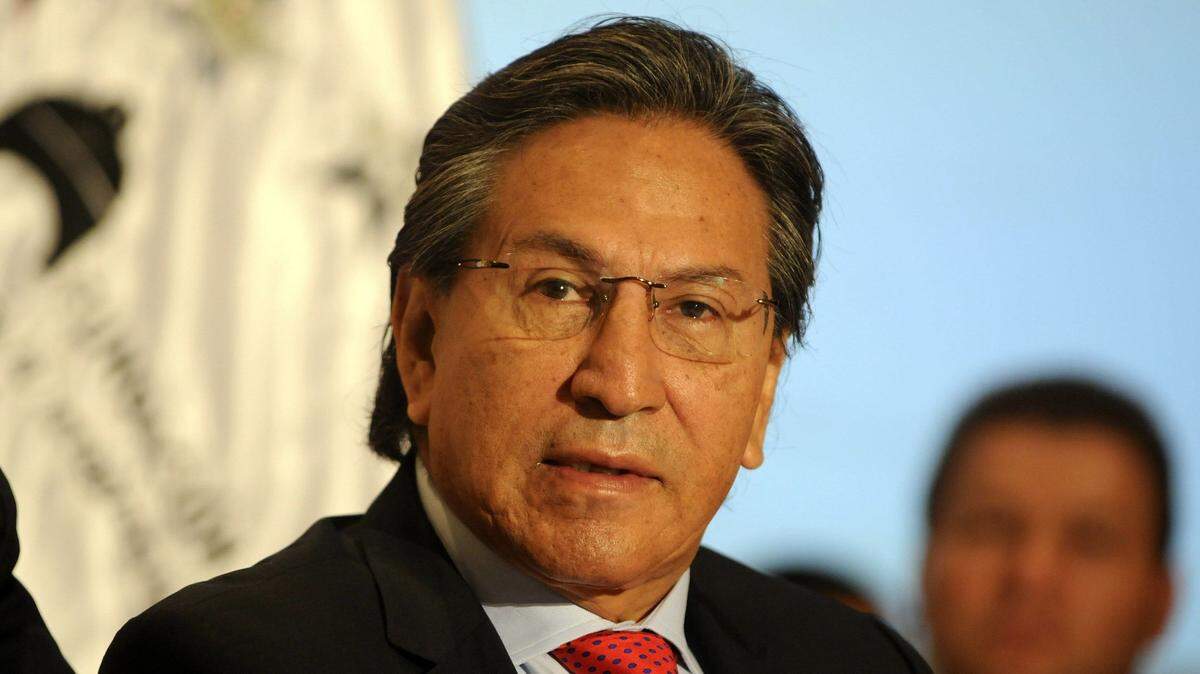
The death this month of Peru’s former president, Alberto Fujimori, should shine a light on what’s happening to the man who played a key role in toppling him from power: Alejandro Toledo.
Toledo shrugged off more than a hundred death threats to lead the street movement that, in 2000, ended Fujimori’s autocratic and corrupt right-wing regime.
Toledo was then elected president in 2001 and served a five-year term in which he oversaw an economic boom, strengthened the country’s shaky democracy and maintained a strong alliance with the United States.
Toledo now sits in prison in Peru, awaiting trial on accusations that he took $20 million in bribes from the Brazilian contractor Odebrecht for a highway project. He has denied the charges.
I’m inclined to doubt it, if only because Toledo lived modestly when I saw him after his presidency. It belied the charge that he had come into big money.
In a 2007 article, I reported that he had visited eight different car dealers before driving home in a used SUV — not exactly the hallmark of a big-time operator in the realm of Latin American graft.
The last time I saw Toledo was in February 2023, when I visited the apartment that he and his wife, Eliane Karp, the former first lady, were renting in Menlo Park near Stanford University. It was small but homey. He showed me pictures on the wall with him and South Africa’s Nelson Mandela, former French President Jacques Chirac and Israel’s Simon Peres.
Does any of this prove his innocence? It does not. But what I know for sure is that Peruvian authorities are now preventing Toledo, 78, from getting the medical attention he needs. I heard this directly from Toledo when he called me recently from his Peruvian prison.
I first got to know Toledo when I profiled him in 2000 for Stanford’s alumni magazine. He grew up in a slum, one of 16 children — only nine of whom survived infancy. Two Peace Corps volunteers helped get him out of Peru to study on a partial scholarship at the University of San Francisco. From there, he obtained a doctorate at Stanford, another step toward fulfilling the seemingly impossible dream of being elected president of Peru.
I covered Toledo as president as a Peru-based foreign correspondent for the Miami Herald.
We later became friendly when he was at Stanford. I met my Peruvian wife through him — she was a senator in his political party — and Toledo walked her down the aisle when we got married in 2008.
When Toledo called me recently, he was almost unrecognizable. The last time we met in Palo Alto, he was outgoing, quick to laugh and tease, but two months after we spoke, the State Department authorized Toledo’s extradition to Peru, where he was immediately imprisoned.
A few minutes into our latest call, Toledo began crying. He has serious medical ailments, he told me, but the prison authorities won’t let him see his doctor. Toledo told me that a Peruvian judge has said he should receive medical care, but prison officials have refused to obey the judge’s order.
“I’m paying the price to recuperate democracy in Peru,” Toledo told me in English.
I asked him whether the State Department had intervened with Peruvian authorities to ensure he could see his doctors. No, he replied.
II don’t know whether Toledo is guilty or not. He has yet to get his day in court.
The State Department extradited Toledo under specific instructions, I asked them whether they had a responsibility to ensure that Toledo received the necessary health care and was treated humanely while in Peru.
The press official at the U.S. Embassy in Lima would not address the question.
But isn’t receiving necessary medical attention in any prison a basic human right?
Tyler Bridges, twice a member of Pulitzer Prize-winning teams, is a journalist based in New Orleans who reports on Louisiana politics for The Advocate/The Times-Picayune. Formerly, he was the chief political reporter for the Miami Herald.
This story was originally published September 24, 2024 at 11:26 AM.