
Now and then, issues like Florida’s Amendment 4 require people to protest | Opinion
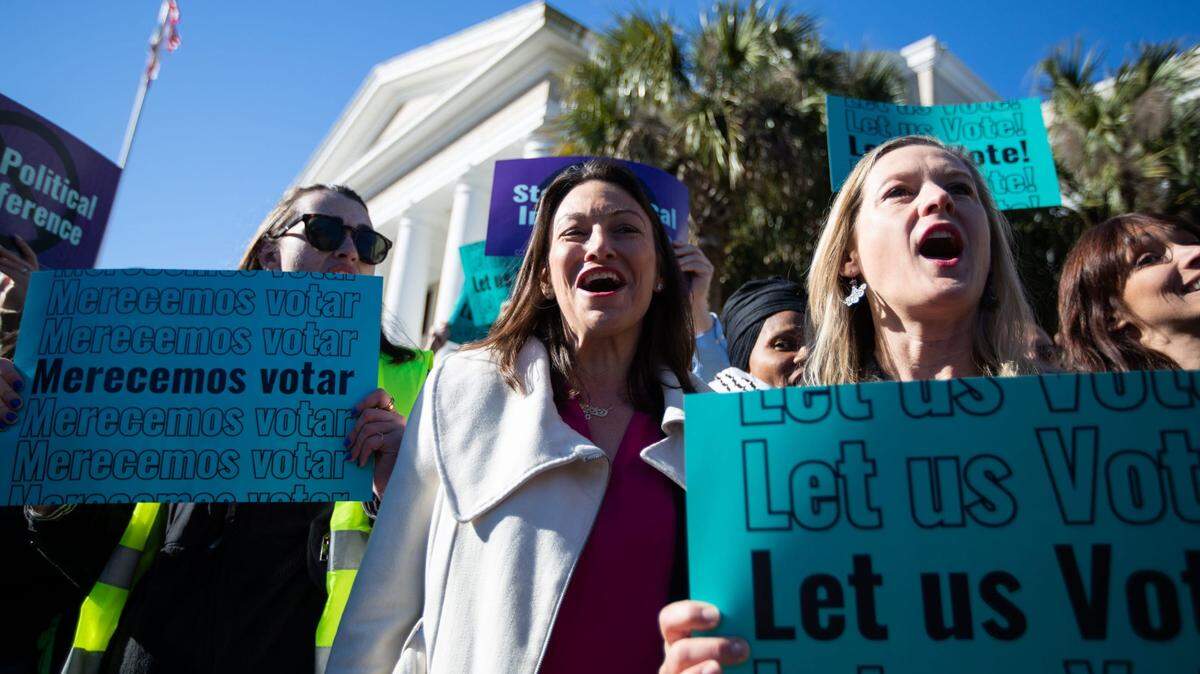
When I was 10 years old in 1965, my mother’s first cousin Pat, a white suburban woman, led her friends, her children and me - all dressed in our Sunday best - on a field trip to downtown Chicago.
We attended a civil rights demonstration to picket the Chicago Real Estate Board to protest their practice of redlining. Redlining was the process of drawing a line on a map to delineate where Black people could and could not live by limiting where banks would lend money for mortgages. It was de facto segregation – not in the South, but in the urban North. And it was wrong.
That day I learned about the power of protest – of citizens coming together to demonstrate their dissatisfaction with the status quo. Of people gathering peacefully – singing, chanting and holding hands with their heads held high – in solidarity with each other. And everyone sharing a goal to effect positive change in our society, with a vision of freedom, equality and justice for all.
Over the years, I have attended many protests and rallies – for civil rights, against the war in Vietnam, for women’s rights and for LGBTQ+ rights. In 1994, it was my privilege to be elected to the Miami-Dade County Commission, where I graduated from being a protester to being a policymaker.
In 1998, I was honored to sponsor the human rights ordinance, which outlawed discrimination based on sexual orientation. The memory of the eloquent speakers who attended the commission hearing to fight for their full rights as citizens, and to advocate for their sisters and brothers, will always inspire me.
Today there is another urgent reason to demonstrate and protest. It affects all of us and it’s a nonpartisan issue. Florida currently has a 6-week abortion ban – a cruel law that blocks women from making their own decisions about whether and when to have children.
Not only does it prevent women from exercising their right to self-determination, but it can also threaten their health or even their lives if their pregnancies involve fetal abnormalities or conditions that are not compatible with sustaining a viable pregnancy.
Even if they fervently want to bear children. Fortunately, there is a remedy, and it’s on the ballot in November. Voting “yes” on Amendment 4 will enshrine in the Florida Constitution the right of the patient to secure an abortion prior to viability or when necessary to protect the patient’s health, as determined by the healthcare provider. Simply, it will give us back our freedom.
Next Saturday, Sept. 14 at the Bayfront Park Amphitheatre in downtown Miami, from 11 a.m. to 1 p.m. there will be a rally entitled Our Bodies, Our Lives, to advocate for reproductive freedom and the passage of Amendment 4. The event is sponsored by the Florida Women’s Freedom Coalition, along with many other organizations www.ourbodiesourlives.com. And the list is growing.
And to celebrate the elected officials and allies who stand up for the rights of all people to determine what’s best for them and their families.
Participants are encouraged to take public transit, to wear white to honor the suffragists, our first women’s rights advocates and to bring signs, American flags, rain gear if necessary, and water.
In solidarity, we will sing, chant, listen to music, and listen to inspiring words from our leaders, including Mayor Daniella Levine Cava, former Congresswoman Debbie Mucarsel-Powell, and commentator Ana Navarro - and maybe even dance.
Almost 60 years ago, I attended a demonstration to protest the practice of redlining.
Today, we seek to impose a red line - around our uteruses. And we want to let the government know, in no uncertain terms, that they have no right to cross it. Our bodies belong to us.
I hope many citizens will join us at the rally to make our voices heard and to tell those in power, we will not go back.
Katy Sorenson served on the Miami-Dade Commission for 16 years.
This story was originally published September 6, 2024 at 5:24 AM.