
Black cultural greats helped America realize segregation had to be left in the past | Opinion
This week’s 70th anniversary of the Supreme Court’s epoch-making Brown v. Board of Education ruling reminds us that the route to social change never is a straight line.
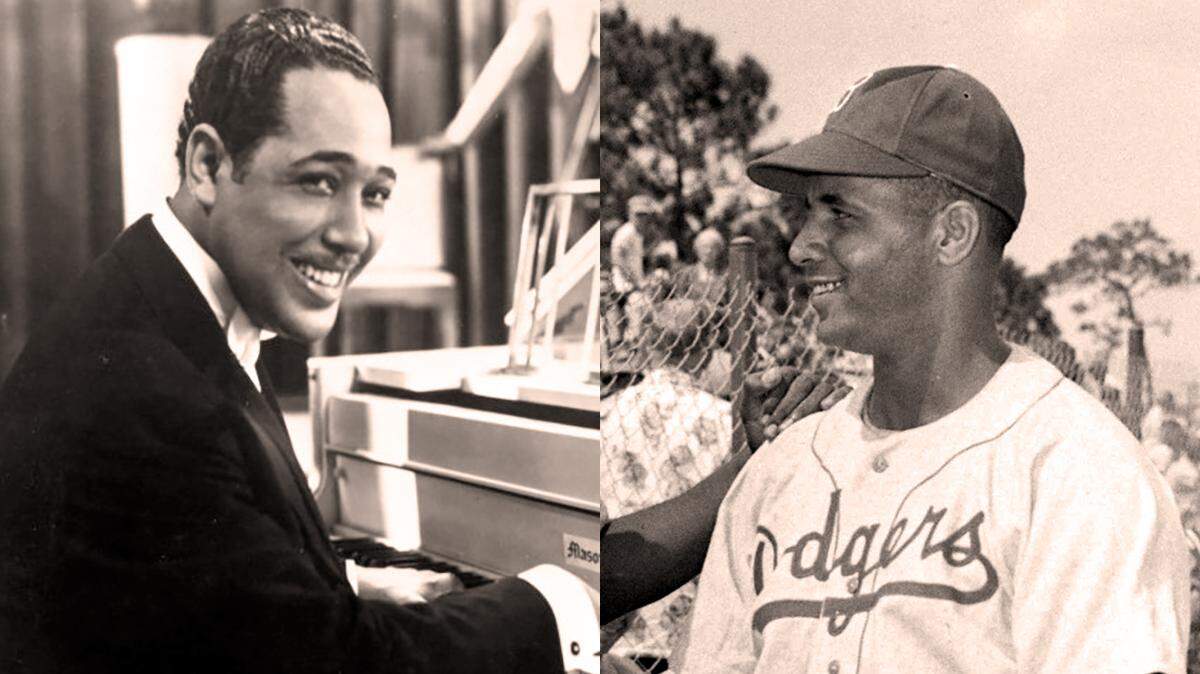
In this case, the path was cleared by the all-Black Pullman sleeping car porters, Negro League ballplayers like Satchel Paige and, more than anyone, by three revolutionary American maestros named Edward Kennedy “Duke” Ellington, Louis “Satchmo” Armstrong and William “Count” Basie, whose music throbbed at the soul of the 20th century.
This trio of African American music makers opened white America’s ears and souls to the grace of their music and their personalities, demonstrating the virtues of Black artistry and Black humanity. White men who wouldn’t let a Black person through their front door wooed their sweethearts with tunes from the Count, the Duke and Satchmo. Even the most unyielding of rednecks flipped on their radios to hear “One O’Clock Jump” as they sped their trucks through the rolling hills of the hinterlands. Race, for once, fell away as America listened rapt.
“Jazz speaks for life,” Martin Luther King Jr. wrote to the organizers of the Berlin Jazz Festival in 1964. Three years later, the civil rights icon told the Negro National Association of Radio Announcers: “You have paved the way for social and political change by creating a powerful cultural bridge between Black and white. School integration is much easier now that they share a common music, a common language, and enjoy the same dances. … You have taken the power which Old (Uncle) Sam had buried deep in his soul, and through our amazing technology, performed a cultural conquest that surpasses even Alexander the Great and the culture of classical Greece.”
That wasn’t merely hyperbole. King knew that among African Americans, only the Pullman porters saw more of the nation than the jazzmen, and even the porters just rolled through places like Fargo, North Dakota. But Ellington stayed one winter night in 1940 for a concert at the Crystal Ballroom that drew about 700 fans. The state’s entire population was only .03% Black then, just 30 in Fargo. Racism certainly existed there, but wasn’t as all-consuming as in other parts of the country. The locals’ attention was focused more on dust storms and farm foreclosures. There was no TV to take people’s minds off the raging war, little money for the motion pictures. That left jazz.
Elllington’s concerts that winter showed heartland America that Black musicians could play before white large audiences without the sky falling. And performances like those proved to white entrepreneurs that musicians such as Duke, the Count and Satchmo could put money in their pockets.
Their time upcountry exposed the bandleaders to a raw and uninhibited America that was unfamiliar to people who’d grown up in Washington, D.C., Red Bank, N.J. and New Orleans They watched ranchers lubricated with beer fight to get closer to their bandstand. They got to know Frank Sinatra, who brought the Basie band to mob-run Las Vegas and told his bodyguards, “If anybody even looks funny at any member of this band, break both of their f****** legs.”
Such interactions emboldened the Supreme Court on May 17, 1954 to strike down laws segregating America’s public schools, and paved the way for the country’s eventual acceptance of the landmark Brown verdict.
Roy Campanella, an outstanding Negro League catcher called up by the Brooklyn Dodgers in 1948, witnessed that kind of table-setting for himself: “Without the Brooklyn Dodgers, you don’t have Brown v. Board of Education,” he said. “All I know is we were the first ones on the trains, we were the first ones down South not to go around the back of the restaurant, first ones in the hotels. We were like the teachers of the whole integration thing.”
This story was originally published May 15, 2024 at 7:00 AM with the headline "Black cultural greats helped America realize segregation had to be left in the past | Opinion."