
What slowed the daily migrant landings in South Florida? Maybe new policy is working | Opinion
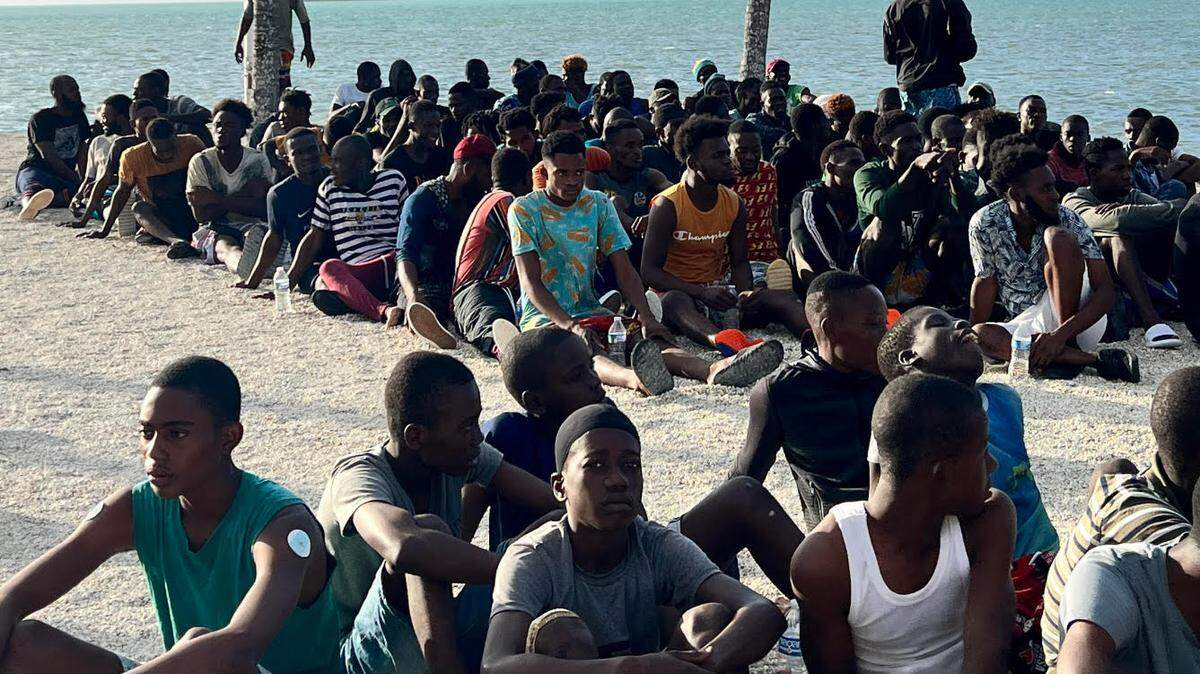
The number of migrants landing in South Florida from Cuba and Haiti has decreased dramatically in the past few weeks. Ditto for those and other migrants arriving at the U.S.-Mexico border. This, after an onslaught the previous six months that saw more than 200,000 come illegally by land and sea.
The long waits are now in those countries outside passport centers, filing the necessary paperwork to make it to the U.S. with a sponsor.
Besides the arrival of colder weather and rougher seas, the most plausible explanation is that the Department of Homeland Security’s recent change in immigration policy has stemmed the tide. In other words, it’s working.
The numbers tell the story. The Biden administration merits praise for doing the almost impossible: slowing the flow of illegal migrants into the United States.
This lull is a temporary win, at least for the Biden administration.
New policy working
The growing crisis last year prompted Homeland Security to declare the inn was full and to automatically turn everyone back - at the U.S.- Mexico border and off the Florida coast. The chance of claiming asylum is more complex, discouraging many refugees from coming.
Homeland Secretary Alejandro Mayorkas has said that since the program’s implementation in early January, there has been a 90% decrease of migrants from Cuba, Nicaragua, Haiti and Venezuela trying to cross the southwest border illegally. That’s impressive.
Anecdotally, Miami Herald reporters who have been covering this latest immigration crisis agree the arrivals of migrants from Key West to Palm Beach are considerably down.
Two weeks ago, a group of about 100 Haitian men landed on a beach in the Upper Florida Keys on an overloaded migrant sailboat after such landings were occurring almost daily.
And on last month, the crew of the 270-foot U.S. Coast Guard Cutter Bear, sent to Florida returned to its home port in Portsmouth, Virginia, following a 60-day operation in the Florida Straits and Windward Passage, which included the interdiction, care and repatriation of over 500 migrants stopped at sea.
And at the U.S.- Mexico border, back in December, 49,473 refugees crossed, compared to January, when the number plummeted to 17,053, according to government figures.
That’s when Mayorkas came to Miami to unveil the new parole program for Cubans, Haitians, Venezuelans and Nicaraguans that sends the logistics and paperwork of seeking entry into the United States back to their countries.
The program requires refugees to seek a sponsor in the United States at no cost or by filling out a form. The program allows a total of 30,000 migrants a month from Cuba, Haiti, Venezuela and Nicaragua to come to the United States, where they will be authorized to work for two years. It is the bet solution an administration has offered in years.
But the program also curtails their opportunity to apply for political asylum and the requirement of a sponsor has also slowed the process. Human-rights groups have sued over this. And Miami Republican Congresswoman Maria Elvira Salazar has also spoken up against a GOP measure in the House to further infringe on the asylum card. We echo her concerns.
Others take issue with the requirement of a sponsor. Those without relatives in the United States likely are out of luck.
“This is the model that this administration is committed to implementing, to build safe and lawful pathways for individuals seeking humanitarian relief in the United States,” Mayorkas said.
So why didn’t we do this sooner?
Maybe because there wasn’t a presidential election campaign on the horizon. President Biden now needs the focus away from the idea of an open U.S. border, a scenario where Florida plays a significant role. Or maybe the president read our editorial of Jan. 4 titled: “The Biden administration needs to pay close attention to the growing, unchecked migration from Cuba to Florida. “ He did.
Still, immigration advocates in the U.S. say the parole/ sponsor system is prohibitive. Not everyone has access to a sponsor with the financial means to support them.
No refugees at the borders would be the perfect solution, and that’s the ultimate goal.
According to Secretary Mayorkas, the federal government has contributed $3.5 billion to investigate the root causes of migration in the countries of origin. Good luck with that idea.
We know desperate refugees from our region will continue to try to make it to America through Florida, but the U.S. Coast Guard and Border Patrol welcome this current lull. Will it last?
Doubt it.
BEHIND THE STORY
MOREWhat's an editorial?
Editorials are opinion pieces that reflect the views of the Miami Herald Editorial Board, a group of opinion journalists that operates separately from the Miami Herald newsroom. Miami Herald Editorial Board members are: opinion editor Amy Driscoll and editorial writers Isadora Rangel and Mary Anna Mancuso. Read more by clicking the arrow in the upper right.
What's the difference between an op-ed and a column?
How does the Miami Herald Editorial Board decide what to write about?
The Editorial Board, made up of experienced opinion journalists, primarily addresses local and state issues that affect South Florida residents. Each board member has an area of focus, such as education, COVID or local government policy. Board members meet daily and bring up an array of topics for discussion. Once a topic is fully discussed, board members will further report the issue, interviewing stakeholders and others involved and affected, so that the board can present the most informed opinion possible. We strive to provide our community with thought leadership that advocates for policies and priorities that strengthen our communities. Our editorials promote social justice, fairness in economic, educational and social opportunities and an end to systemic racism and inequality. The Editorial Board is separate from the reporters and editors of the Miami Herald newsroom.
How can I contribute to the Miami Herald Opinion section?
The Editorial Board accepts op-ed submissions of 650-700 words from community members who want to argue a specific viewpoint or idea that is relevant to our area. You can email an op-ed submission to oped@miamiherald.com. We also accept 150-word letters to the editor from readers who want to offer their points of view on current issues. For more information on how to submit a letter, go here.
This story was originally published March 3, 2023 at 1:30 PM.