
Jimmy Carter became reluctant hero, welcomed Mariel refugees in 1980, changed Miami | Opinion
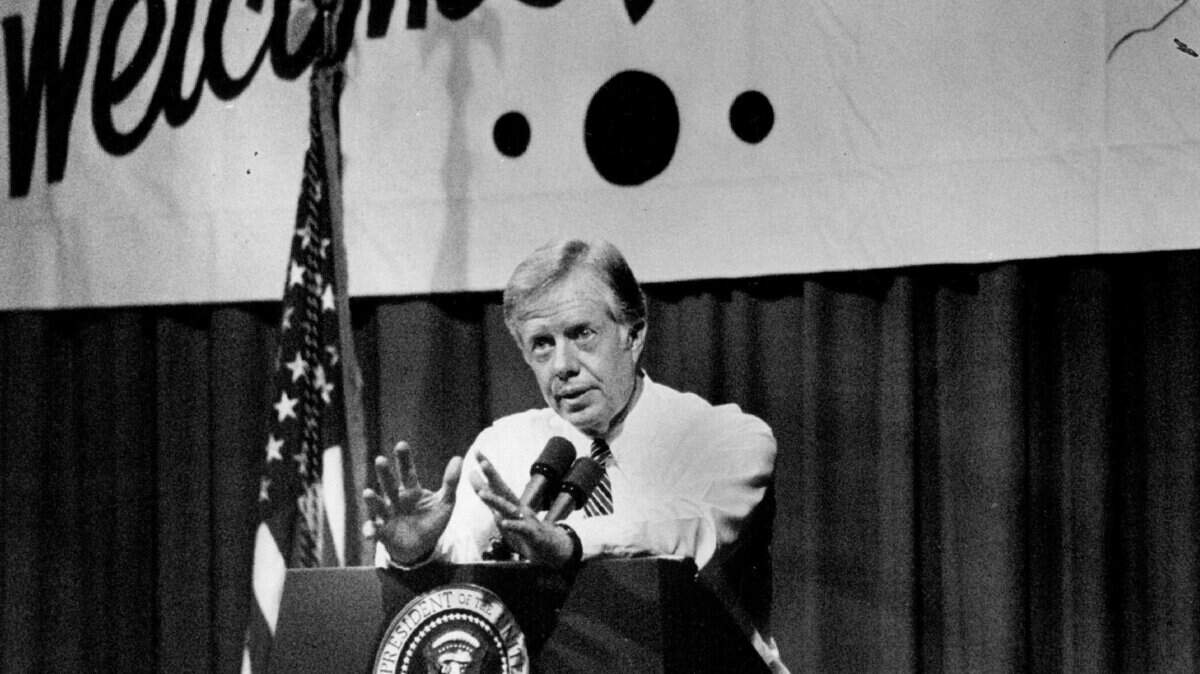
Cuban Americans are lucky that Jimmy Carter, the humanist, was the man in charge in 1980.
Cuban Miami, at the time enmeshed in assimilation often compared to the Irish experience in Boston, wouldn’t be as “Cubanized” as it is today if it weren’t for the welcoming statement President Carter made at a critical juncture of the Mariel boatlift from Cuba to Key West.
Caught off guard by Fidel Castro’s opening of the port of Mariel — and at times hesitant to admit unauthorized boatloads of refugees — President Carter nevertheless accepted the Cubans who became known as “marielitos,” a tag that at first seemed demeaning, but has since turned into a source of pride, as so many realized their version of the American Dream.
“We will continue to provide an open heart and open arms to refugees seeking freedom from Communist domination and from economic deprivation brought about primarily by Fidel Castro and his government,” Carter said, almost three weeks into the exodus, in response to a question at a League of Women Voters convention.
And with those unscripted words, President Carter — who died Sunday at 100 — became the reluctant hero of Cuban Americans now mourning his passing.
Faced with a humanitarian crisis that presented for him another political crisis in a string of foreign and domestic fiascoes — and in the midst of a reelection campaign — Carter put people first.
His unprepared, heartfelt words — and reluctance to forcefully end the exodus when so many were clamoring for him to do so — gave quasi-legal cover to what was a desperate, unscripted and uncontrolled operation. The U.S. Coast Guard went from confiscating boats and issuing fines, as Carter had at first ordered, to assisting boats returning to Florida.
By the time the boatlift ended, 125,000 Cubans had arrived in Key West in five months.
“I will forever be grateful to him for welcoming us,” said Coral Gables restaurateur Ana Mari Rabel, the daughter of a political prisoner who fled on the boatlift with her mother and sisters a month shy of 18.
“I cried over the news,” wrote Omar Escarpio on Facebook when Carter went into hospice care at home in February 2023. “They don’t make them like him anymore.”
“Super grateful...he welcomed us with open arms. GRACIAS, JIMMY Carter,” wrote Xiomara Cabrera.
Carter, Cuba and Castro
Carter was no fan of Fidel Castro, but he was a man of faith on a mission to broker peace in the world.
If he could negotiate difficult Camp David accords between Egypt and Israel, surely he could handle Cuba and Castro’s obstinate brand of communism.
The Middle East proved to be an easier task.
In 1978, Carter — whose policy toward Latin America centered on ending human rights abuses of both the right and left — sent a personal message to Castro hoping to open the door to improved relations.
He warned Castro that relations wouldn’t advance if he escalated Cuba’s military role in Africa. Castro, arrogant as ever, answered that the United States should get out of Europe. But despite the contentious exchange, Castro released some political prisoners and allowed Cuban exiles to visit families for the first time.
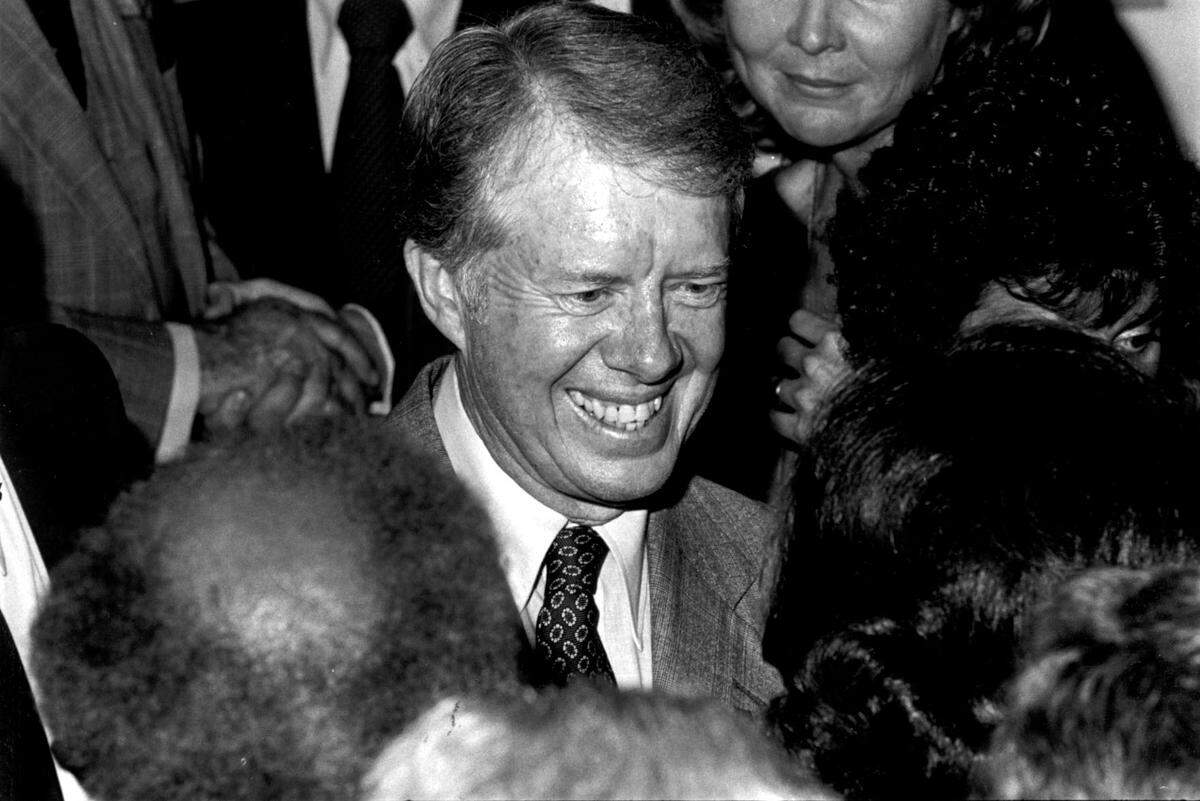
The return of successful exiles showering families with gifts and talking up life in the United States catapulted discontent in Cuba to a bursting point.
After a bus driver broke through the gates of the Peruvian Embassy in Havana and some 10,000 people followed suit, Castro angrily responded by opening the port of Mariel to an exodus, branding those leaving “escoria,” scum.
Castro also plucked criminals from jails and mentally ill from asylums and sent them among the refugees — a factor that made the Carter administration’s haphazard sheltering and resettlement efforts all the more difficult.
Ironically, for a fair-minded president, the fear that there were more hardened criminals among the refugees landed some unfairly in U.S. prisons.
Never gave up on Cuba
Carter’s penchant for choosing to do the humanitarian thing instead of making politically beneficial decisions hurt him.
He couldn’t overcome the voter backlash evoked by unchecked mass Cuban immigration — nor the images of tent city camps set up at the Orange Bowl and under a Miami expressway.
The humble former Democratic Georgia governor who had prevailed in 1976 over Nixon-tainted Gerald Ford, lost to actor and California Gov. Ronald Reagan.
Carter lost the race, but not the moral ground.
Marielitos arrived in a Miami steeped in the violence of the cocaine trade and racial riots fueled by police brutality and social inequities. But as they built a life as artists, entrepreneurs, blue collar workers and professionals, re-Cubanizing Miami in the process, their chaotic arrival became a story of resiliency, another chapter of Cuban-exile success.
Carter’s generosity of spirit, indeed, turned out to be Cuba’s loss and Miami’s gain.
Hardliners in Miami, his detractors, delight in belittling Carter by calling him “disastrous” and “el manicero,” the peanut vendor he wasn’t (he cultivated peanuts). Carter had failures like the failed rescue of American hostages in Iran, but harsh assessments don’t take into consideration his substantial wins nor that Carter was a man of unimpeachable moral character.
The Nobel Peace Prize winner never gave up playing the peacemaker with Cuba.
In 2002, along with his wife Rosalyn and a delegation, Carter made a five-day visit to Cuba and met with Fidel Castro and regime officials, becoming the first president in or out of office to visit the island since the 1959 Revolution. Both leaders wore white guayabera shirts at one occasion. Carter threw the first pitch at an all-star baseball game.
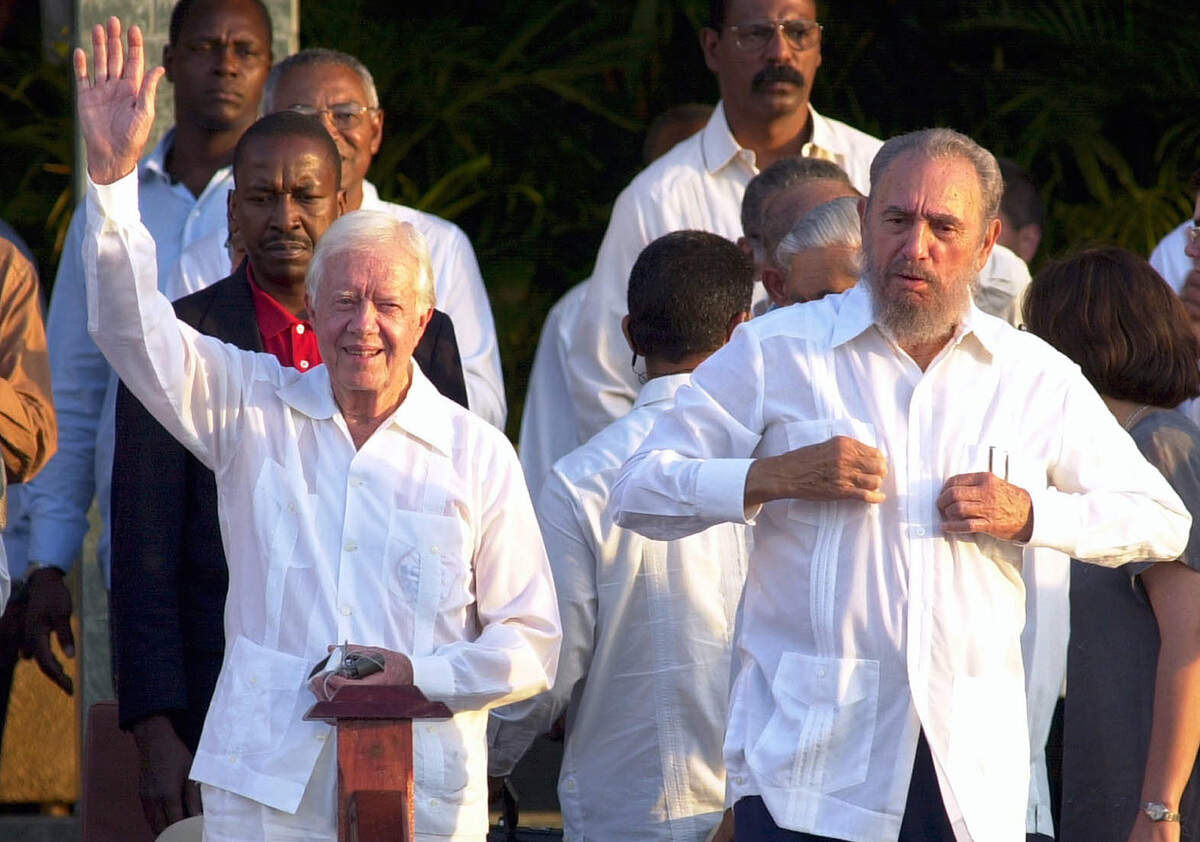
The happy images of the humanitarian and the oppressor were repulsive.
But Carter was a man who faced his adversaries with class — and purpose. He didn’t play up to domestic political calculus.
As he said in a 1977 speech about his approach to foreign policy: “For too many years, we’ve been willing to adopt the flawed and erroneous principles and tactics of our adversaries, sometimes abandoning our own values for theirs. We fought fire with fire, never thinking that fire is sometimes best quenched with water.”
He was thinking Vietnam then, but perhaps Cuba, too.
In 2011, again the Carters visited Cuba at the invitation of Raúl Castro. Carter wrote extensively about the trip and publicly posted his report on the subjects he discussed with Castro and government officials in the Atlanta-based Carter Center’s website.
In hindsight, it’s clear that he was laying the groundwork for what became President Obama’s engagement policy three years later.
One can disagree with Carter’s politics, but indifferent to Cuba, he wasn’t — and for that we should also be grateful.
Fabiola Santiago is a former columnist for the Miami Herald and el Nuevo Herald.
This story was originally published December 29, 2024 at 4:46 PM.
