
Council on Foundations should increase its financial help to Florida immigrants
This week, hundreds of the country’s most powerful grantmakers will land in Miami for the annual meeting of the Council on Foundations.
Most of the attendees are not from Florida, but they should know the state is at the front lines of the struggle for a thriving future for our communities and funders have an urgent opportunity and role to play.
As philanthropists and lawmakers know, all of the money in the world cannot solve these problems without considering and including all members of our community.
You can’t address sea-level rise or craft consequential anti-poverty or economic stimulus strategies without including immigrant entrepreneurs, taxpayers and consumers.
Florida is the third largest state in the nation by population, right after California and Texas.
Sadly and ironically, it could also turn against its own people and become one of the most anti-immigrant states in the nation if current legislation under consideration in Tallahassee passes.
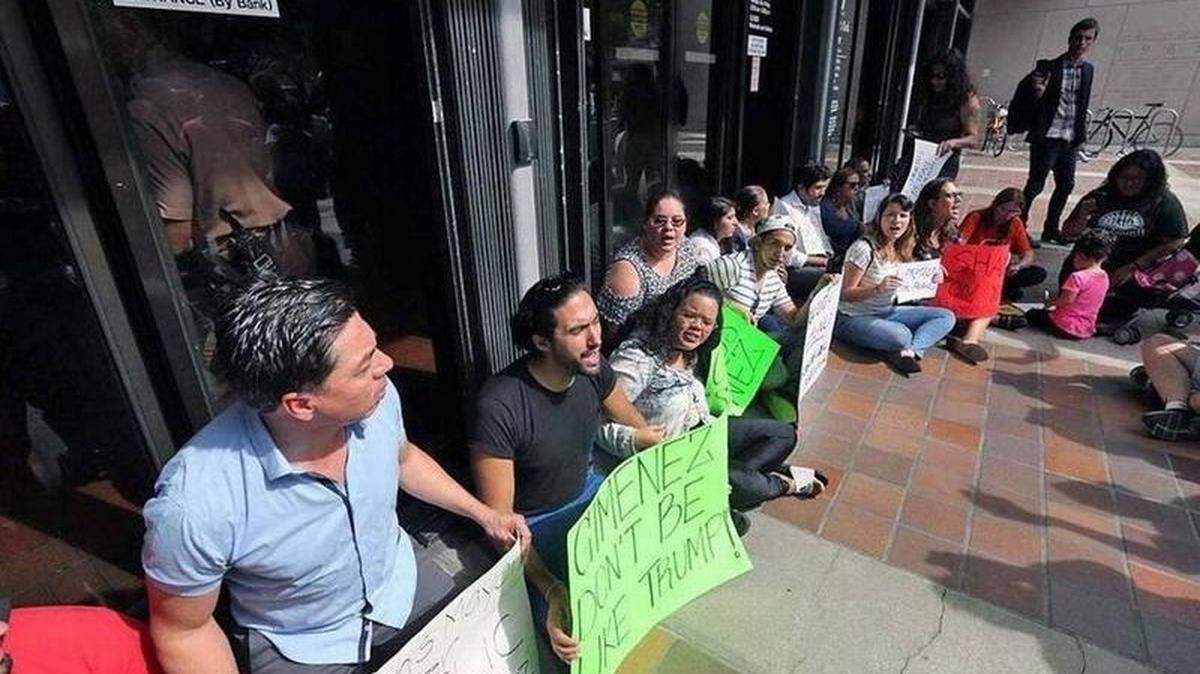
Last Friday, the Florida Senate passed Senate Bill 168 — the biggest state-level threat since we defeated the Arizona copy-cat bill in 2011 — and the bill now is on its way to the House.
As of today, dramatic as it sounds, these bills would mandate all municipal or state agencies such as local or campus police, even library and Department of Children & Families employees to turn people over to U.S. Immigration and Customs Enforcement (ICE).
Already Florida leads all other states in the nation in deportations, ripping families apart leaving orphans and widows of deportation in their wake.
One out of every five residents in our state is an immigrant, somewhere in the continuum of integration. Some are naturalized citizens, others undocumented, many overstay visas, some await their asylum or family applications, others live in limbo with Temporary Protected Status.
Whether from Haiti or Venezuela, business entrepreneurs, housekeepers, farm or construction workers, black or brown, gay or transgender, at the end of the day immigrants, including those who are undocumented, are part of our fabric and call Florida home.
These anti-immigrant bills won’t make us safer or more prosperous. Instead, the fear and hate-mongering hurts us all. In addition, they distract us from real challenges of addressing climate change, tackling educational disparities, building an economy for all and fostering a sense of shared governance at all levels of society.
As philanthropists and lawmakers know, all of the money in the world cannot solve these problems without considering and including all members of our community. You can’t address sea-level rise or craft consequential anti-poverty or economic stimulus strategies without including immigrant entrepreneurs, taxpayers and consumers.
You can’t improve the quality and access to education and healthcare without acknowledging the full selves of immigrant families. You can’t expand democracy while people are living in fear of racial profiling, criminalization and deportation.
Addressing symptoms with Band-Aid approaches is not cost-efficient nor effective. Systems must be named, visibilized and addressed head on. According to recent research by the National Committee for Responsive Philanthropy, foundations have under-invested in the movement for immigrant justice.
Barely one percent of all money granted by the 1,000 largest U.S. foundations is intended to benefit immigrants and refugees. The funding that does exist often don’t reach communities, many in the South, facing the greatest threats.
For example, California, Illinois and New York received approximately $6 per immigrant in foundation funding for organizations supporting immigrant justice between 2014-2016.
Florida — with almost six times the number of deportations by comparison and an onslaught of anti- immigrant legislation — received only $1.32 per immigrant.
The Florida Immigrant Coalition and its 50 plus member groups, like many others across the country, have been in the fight of our lives, against a brutal for-profit detention deportation machinery, to keep families together and protect our vibrant community.
Foundations can use their power and resources to become our allies in rejecting a society based on a fear of where people come from, what they look like or how they pray.
Investing in immigrant justice is investing in the future we can build together.
Maria Rodriguez is executive director of the Florida Immigrant Coalition.
This story was originally published April 30, 2019 at 2:28 AM.