Hurricane Erin finally makes its north turn. Two other systems are behind it
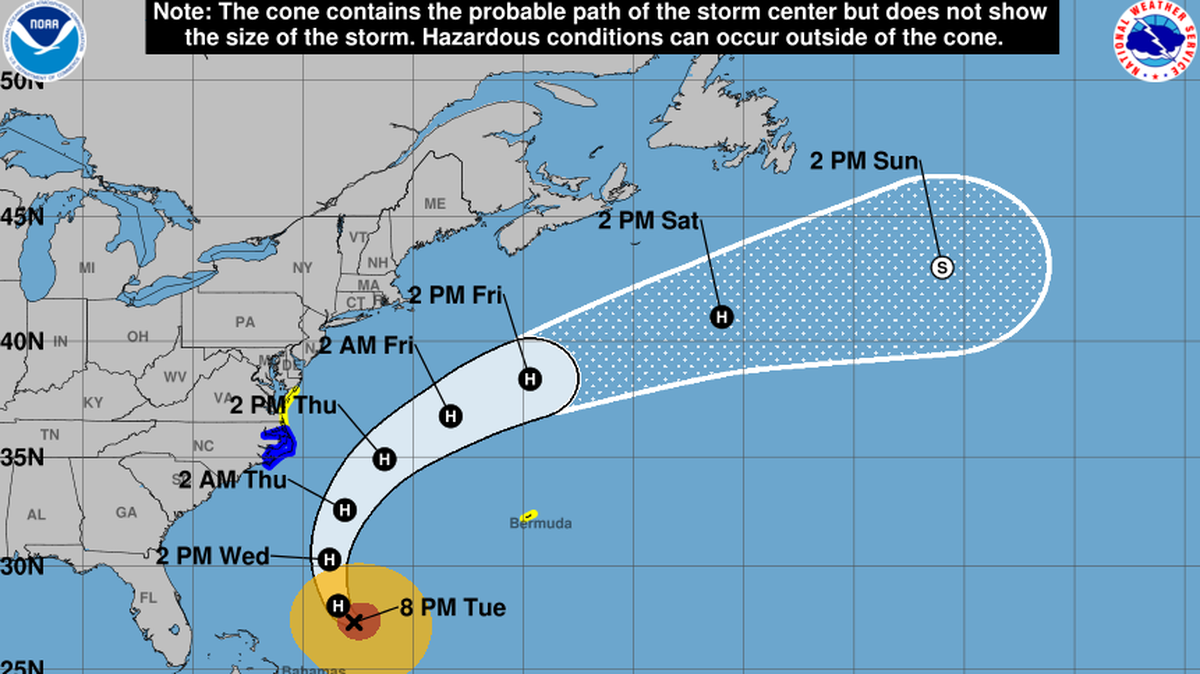
Hurricane Erin, now a Category 2 storm, completed its pivot to the north as a massive, slow-moving storm with wind impacts that reach hundreds of miles from its eye.
Hurricane Erin’s wind field is expected to continue to grow as it scrapes along the Eastern seaboard, delivering rough surf and deadly riptides from Palm Beach County all up way up to the Northeast.
The heaviest hit is expected in North Carolina’s Outer Banks, which got its tropical storm and storm surge watch upgraded to warnings mid-morning Tuesday. By Tuesday evening, the barrier islands started to see waves wash over coastal roads, despite government employees piling mountains of sand alongside them as barriers.
On Wednesday, Erin could whack the vulnerable islands with up to 20-foot waves offshore, storm surge up to four feet over the ground and tropical-storm-force winds. The islands are under mandatory evacuation ahead of Erin’s arrival.
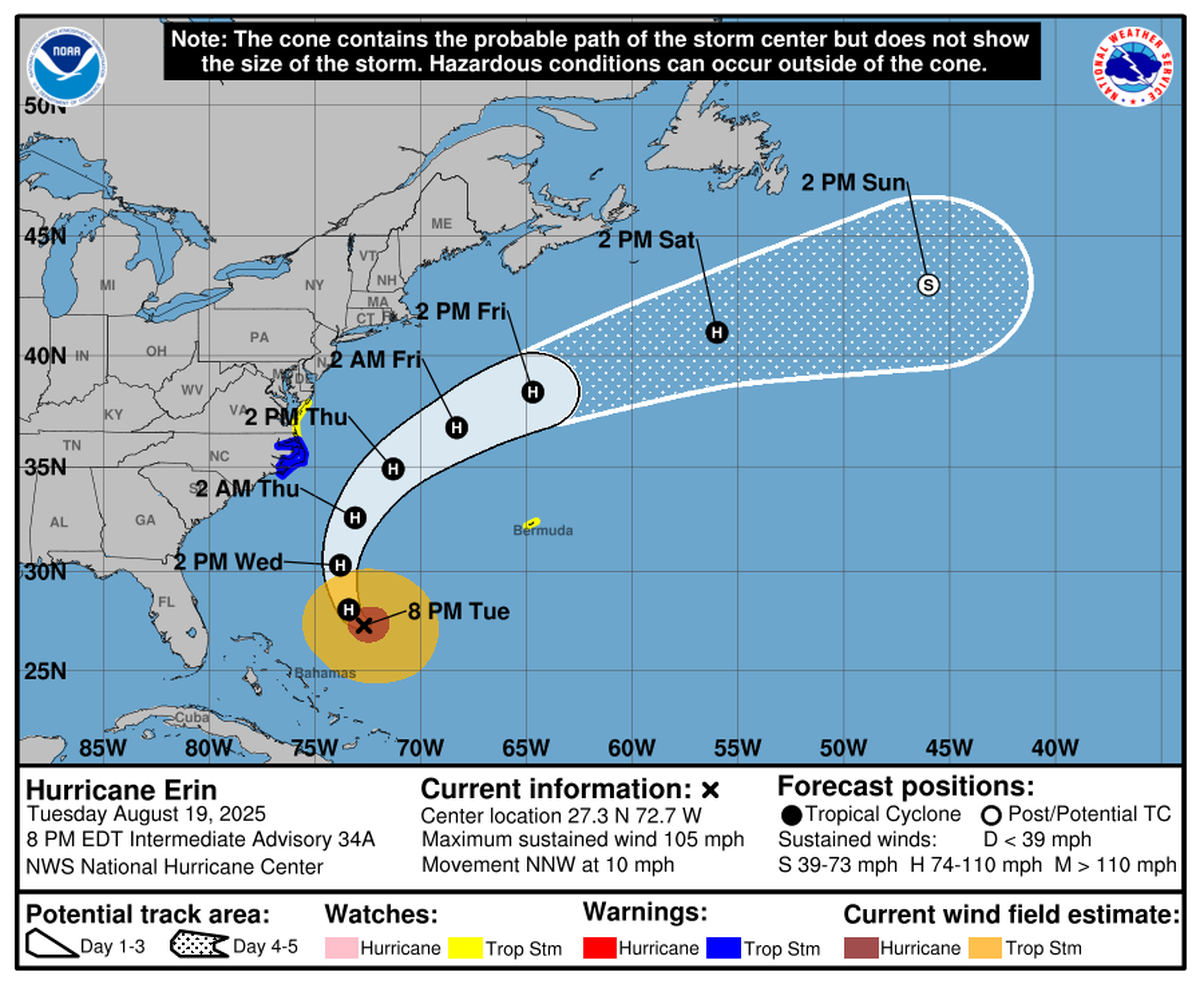
On Tuesday night, the National Hurricane Center said Erin was a Category 2 hurricane with 105 mph sustained winds.
It had picked up the pace from earlier in the morning but was moving north-northwest at 10 mph, a speed that should allow its wind field to continue to grow. Currently, hurricane-level winds extend 80 miles from the center, and tropical-storm-force winds extend out to 230 miles from the center — maintaining a jump from earlier in the day.
Erin had pulled north of the Bahamas, where locals report that the tropical-storm conditions over the last few days have been mild on the island, with no injuries or major infrastructure issues to report, according to the Nassau Guardian.
More storms following Erin?
There are two disturbances in line behind Hurricane Erin that the hurricane center is keeping a close watch on.
.png "two_atl_7d0 (6).png")
As of the 8 p.m. Tuesday update, the first one, a tropical wave, held onto its 60% chances of development in the next seven days and a 10% chance of development in the next two days — no change from Monday’s prediction. Forecasters said this disorganized cluster of storms could approach the Leeward Islands, near Antigua, later this week or into the weekend, and potentially continue moving west after that.
Early versions of long-range storm models, both traditional and the newer AI models, have begun to show a trend keeping this disturbance on a similar out-to-ocean path as Hurricane Erin.
“All 51 members of the reliable European global model show it turning north into the open Atlantic well east of the U.S.,” posted James Spann, a meteorologist for Alabama’s WBMA, on X Tuesday morning.
The second disturbance has already been tagged as an invest by the hurricane center, a term that allows for extra scrutiny from storm models. As of Tuesday night, forecasters gave it a 30% chance of developing into either a tropical depression or storm in the next two to seven days.
Forecasters said conditions look good for the little system near Africa to grow in the next few days, before they shift into unfriendly again, potentially slowing down whatever has developed at that point.
The next name on the storm list is Fernand.
This story was originally published August 19, 2025 at 8:34 AM.