
Traveling during hurricane season? Here’s some advice if a storm threatens
Hurricane season, June 1 through Nov. 30, coincides with summer and fall travel. That means if you’re planning a trip by airplane or cruise ship, you should know what could happen if a storm threatens — delays, detours, cancellations, even airport and seaport shutdowns.
Airlines decide whether to delay or cancel flights. Airports decide whether the terminals close. And the Federal Aviation Administration can issue ground stops in bad weather, which means no planes can land or take off.
MORE: Are you ready for hurricane season? See forecast, get tips — and don’t do this
Here’s what to know about flying or cruising out of South Florida:
Miami International Airport
If a storm is in the path of flights to or from MIA, airlines will cancel those flights on a case-by-case basis, depending on the severity and location of the storm. If a storm is near IA or a destination airport, passengers should contact the airline about flight status and future arrangements.
The Federal Aviation Administration will close control tower at the Miami airport when sustained winds reach 75 miles per hour, hurricane status, at which point no plane can take off or land.
MIA is not a designated shelter during a storm and may not have enough food and water for a storm and its aftermath. Anyone inside could face evacuation to nearby county shelters, according to MIA communications director Greg Chin.
How can you check your flight status? Miami International Airport has two online trackers you can use.
One flight tracker shows a list of all expected arrivals and departures with options to use a drop-down menu to narrow results. It displays the carrier, flight number and where the plane is going to or coming from. It also gives real-time updates on the flight’s arrival or departure status, which concourse the terminal is in and the location of baggage claim.
The other online tool lets you track by flight or route. If you know the carrier, the date and the flight number, this tool might be easier to use because it will only show information for your flight.
Fort Lauderdale-Hollywood International Airport
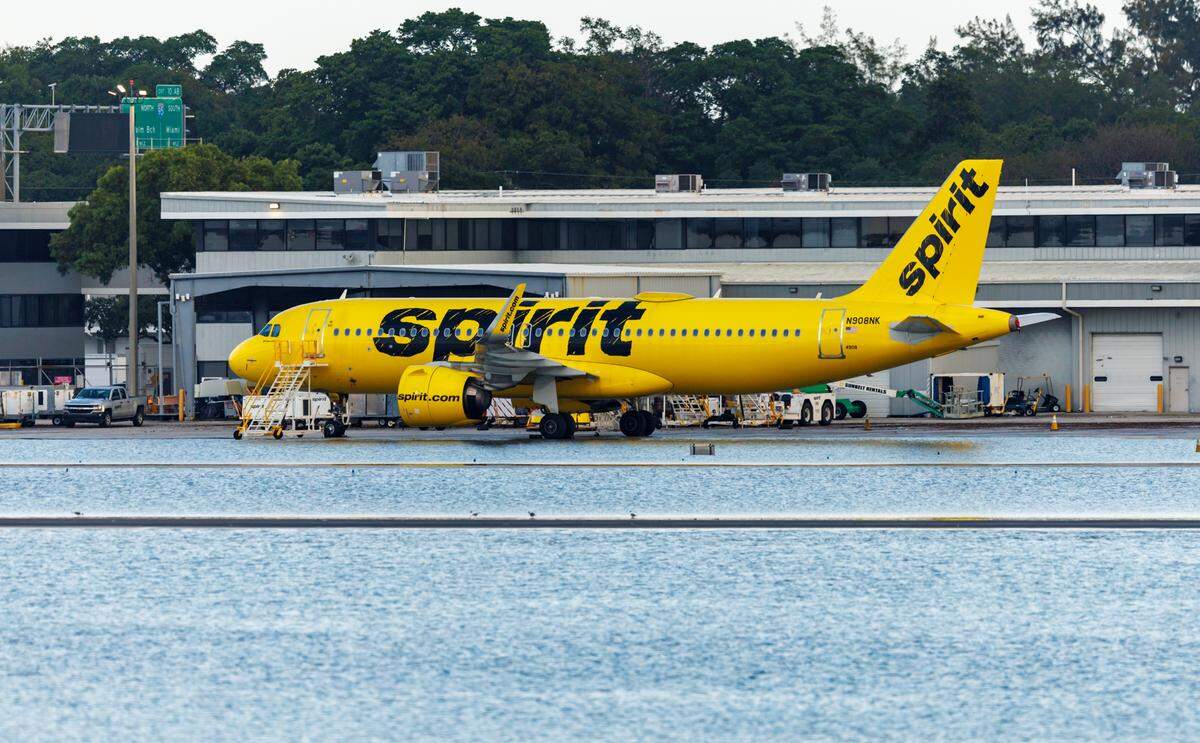
The Broward County Aviation Department will decide whether to close the Fort Lauderdale-Hollywood International Airport during severe weather conditions.
The FAA will temporarily close its air traffic control tower at FLL if sustained winds reach 39 miles an hour.
The airport would determine on a closing time several hours before the bad weather, when conditions wouldn’t be safe on roadways, airfields and inside the airport.
“This advance timing would allow enough time for airport workers to secure equipment ... after the last flight leaves in preparation for the storm,” said Arlene Satchell, a spokesperson at FLL. “Additionally, closing several hours in advance of the arrival of 39 mph sustained winds, provides sufficient time for airport employees to get home before roadway conditions become unsafe for travel.”
FLL’s terminals are not designated as hurricane shelters and all passengers are expected to leave the airport for shelter elsewhere. The terminals will reopen after the storm passes and they are declared safe to re-enter.
Also, drivers can’t keep their vehicles inside FLL’s parking garages during a tropical storm or hurricane.
During a storm threat passengers should check their airline for flight status updates before coming to the airport. How can you check your flight status?
FLL’s flight tracker works by flight or route. You’ll need to know the date, along with the airline carrier and flight number or the departure and arrival airport. The tool also gives people the option to see a list of all expected arrivals and departures and details on the flight’s terminal and baggage claim, too.
Tampa International Airport and Orlando International Airport have similar online trackers on their websites.
You can also check your flight status with the airline directly, on the app or website.
PortMiami
All ports in Florida follow directions on storms from the Coast Guard. No ships are allowed to be in port during storms. The government authority has the following classification system of port conditions.
▪ Whiskey: Sustained tropical storm force winds (39-54 mph/34-47 knots) are predicted to arrive within 72 hours. Waterfront facilities need to start removing all debris and secure potential flying hazards.
▪ X-ray: Sustained tropical storm force winds are expected within 48 hours. All potential flying debris should be removed or secured. All oceangoing vessels greater than 500 gross tons must prepare to depart.
▪ Yankee: Sustained tropical storm force winds are expected within 24 hours. All oceangoing vessels greater than 500 gross tons must depart ports, berths, or anchorages, unless given special permission. All inbound vessels greater than 500 gross tons will not be permitted to enter ports, berths, or anchorages.
▪ Zulu: Sustained tropical storm force winds are expected within 12 hours. All waterfront facility operations are suspended except for final preparations.
Cruise ships
Many cruise companies have their own meteorologists and regularly advise passengers on board of weather conditions. For example, Miami-based Carnival shows a video on its ships throughout hurricane season.
Whether ships will sail from homeports during storms, the cruise company advises guests and future cruisers to opt-in to text alerts to get messages regarding on schedule changes.
This story was originally published May 30, 2025 at 5:00 AM.