What’s a tropical storm watch? A hurricane warning? The cone? See for yourself
Don’t know your watches from your warnings every time a storm comes our way? Confused by all the weather terms you hear on TV and see right here on this news site?
Here’s a guide to help you master the language of storms so you can prepare for the worst this hurricane season:
What’s the difference between a watch and a warning?
A tropical storm or hurricane watch is when either of those conditions have a chance of developing around your area. This is when you should start securing your home, filling your car with gas and stocking up on food and water. Hurricane watches are generally issued by the National Hurricane Center 48 hours before tropical-storm force winds are expected.
A tropical storm or hurricane warning is when either of those conditions are expected in your area. A hurricane warning is issued 36 hours in advance so you can finalize your preparations. This will be your last chance to safely secure your home before the hurricane arrives. If you live in an evacuation zone and are ordered to evacuate, do so immediately.
Can you have a hurricane watch and a tropical storm warning at the same time?
A simultaneous hurricane watch and tropical storm warning means a tropical storm with sustained winds of 39 to 73 mph will likely hit your area within 48 hours. But it also means the weather system is close to turning into a hurricane. The National Hurricane Center classifies severe weather systems as hurricanes the moment they sustain winds of 74 mph or greater.
You should not wait for a hurricane watch to become a warning to start your hurricane preparations.
MORE: Why do we give names to tropical storms and hurricanes?
What does the cone mean?
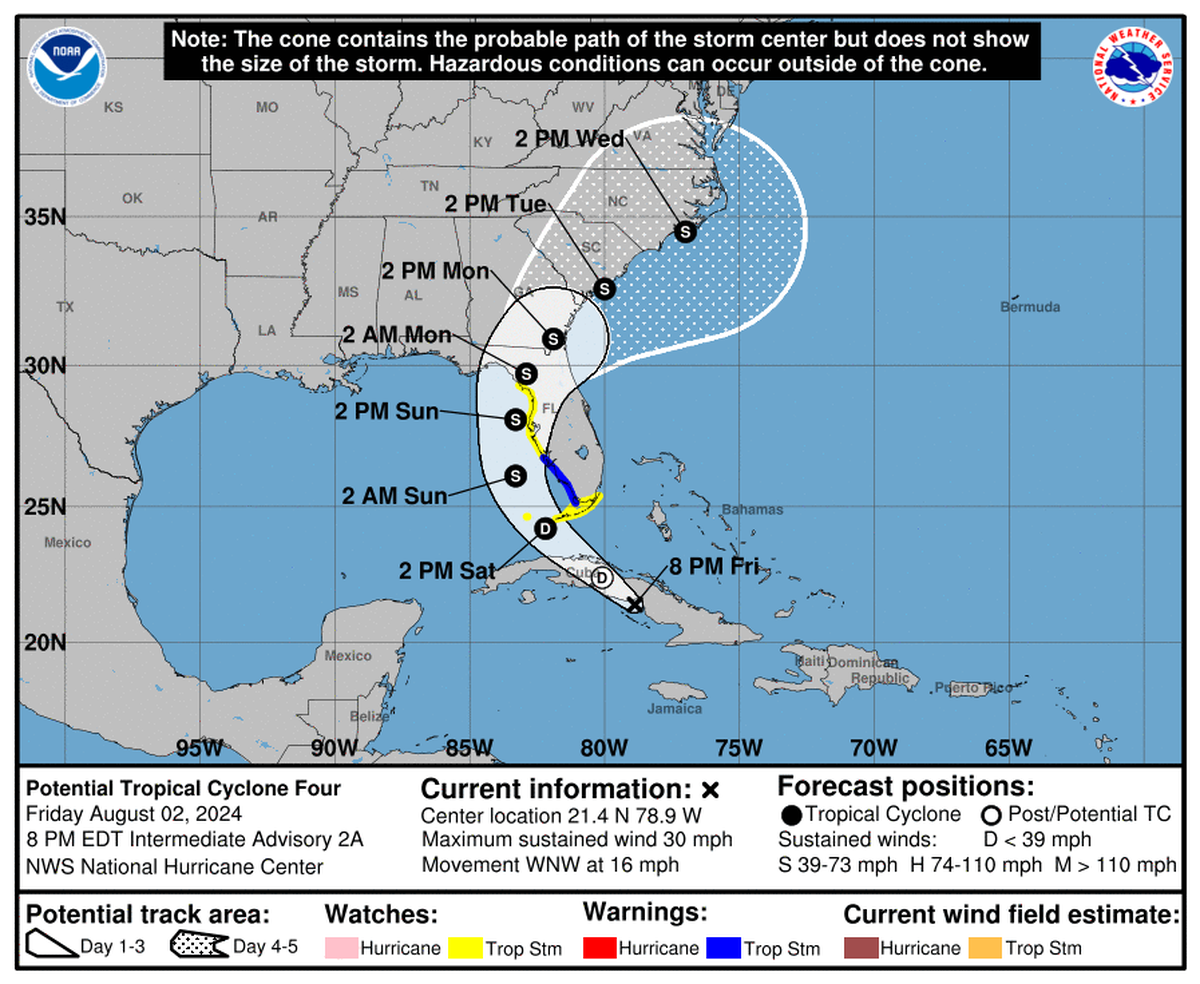
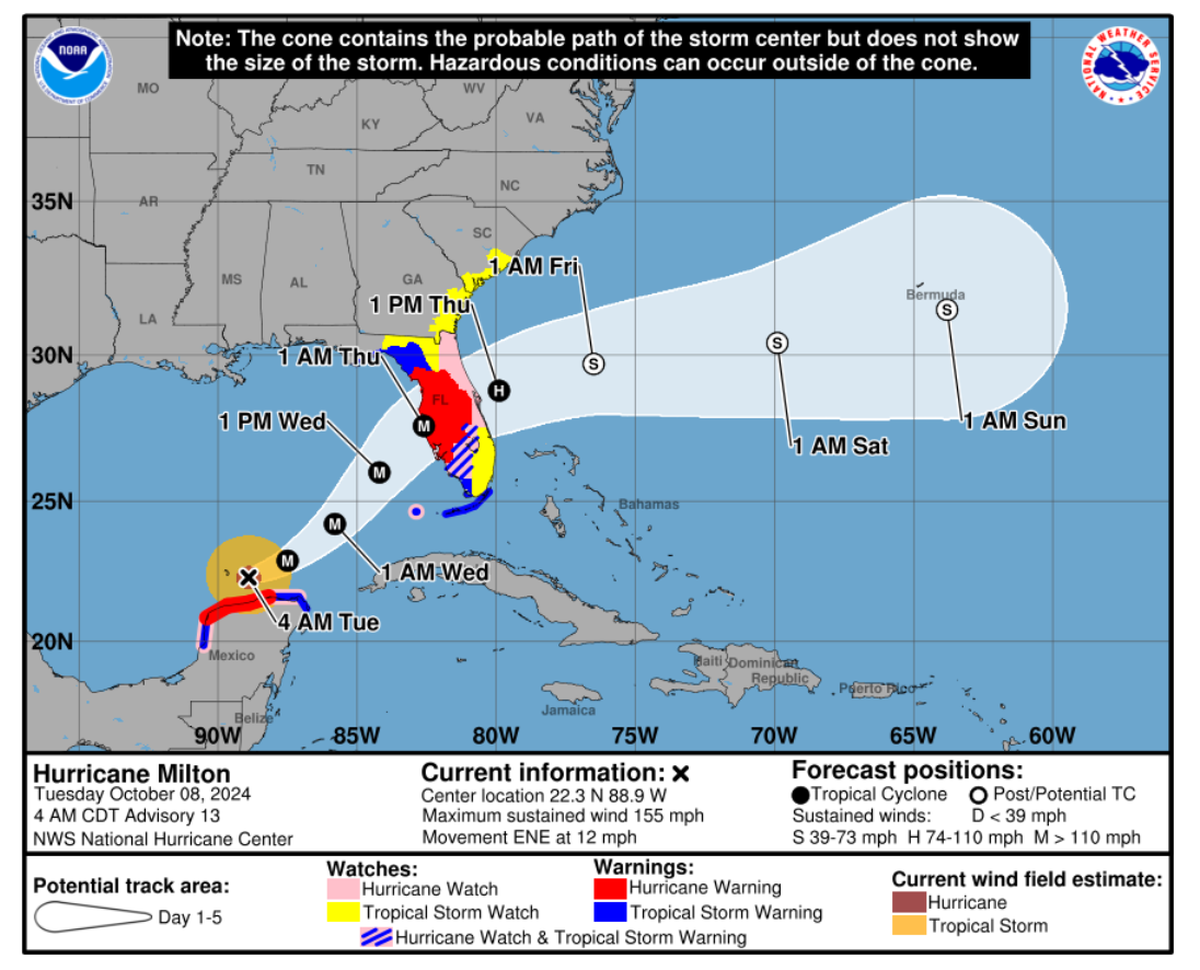
A cone is meant to show the hurricane center’s best guess for where the eye of the storm will travel. It’s a handy tool for showing where a storm may go, but even a tiny track shift can mean a big change for a hurricane that travels along Florida’s long coastline. The cone doesn’t represent the uncertainty associated with a storm forecast, nor the size or intensity of a storm. And just because you’re outside a cone doesn’t mean you won’t see impacts from a storm.
Besides the traditional hurricane cone, the hurricane center also is using an experimental cone that features red, blue and other colors to identify on the map inland areas where tropical storm and hurricane watches and warnings are in effect for the continental U.S., Puerto Rico and the U.S. Virgin Islands. The goal is to make it easier for people to understand a storm’s wind risk.
Other terms you should know
Besides heavy rainfall, strong winds, and the possibility for tornadoes, a hurricane can bring a lot of baggage, including:
▪ Storm Surge and Storm Tide
A storm surge is when strong winds force water from the ocean or a large body of water to rise and enter several hundred miles of coastline, according to the National Hurricane Center, and is considered to be one of the “greatest threats to life” a hurricane can bring.
Florida is particularly susceptible. Storm surge from Hurricane Irma affected 133,000 homes across the state, 45,000 of them in Miami-Dade County.
▪ Inland flooding
People in low-lying areas are familiar with how bad the streets get with Florida’s typical summer rainy season. During a hurricane or tropical storm, it’s much worse.
Alerts may be issued for flash flooding, which is when water levels rapidly rise because of heavy rainfall. Slower or larger moving storms can also lead to longer-term flooding for several days.
▪ Rip Currents
Dangerous rip currents can pull even the strongest swimmers away from the shore. While no one should be outside during a hurricane, mariners, swimmers and those who live along the coast should stay out of the water even if a storm is miles away.
In 2017, forecasters warned of higher rip-current risks in South Florida while Hurricane Maria was well to the east. In 2008, despite Hurricane Bertha being more than a 1,000 miles offshore, rip currents killed three people along New Jersey’s coast and required 1,500 lifeguard rescues in Ocean City, Maryland, during a one-week period, according to the National Hurricane Center