How to store your refrigerated food before and after a power-killing hurricane
If you lose power in a tropical storm or hurricane, your food is at risk.
Here is some advice from the FDA and the USDA on how you can avoid foodborne illness after a power outage.
It starts with preparation.
Here’s what to know:
Is my food still safe to eat?
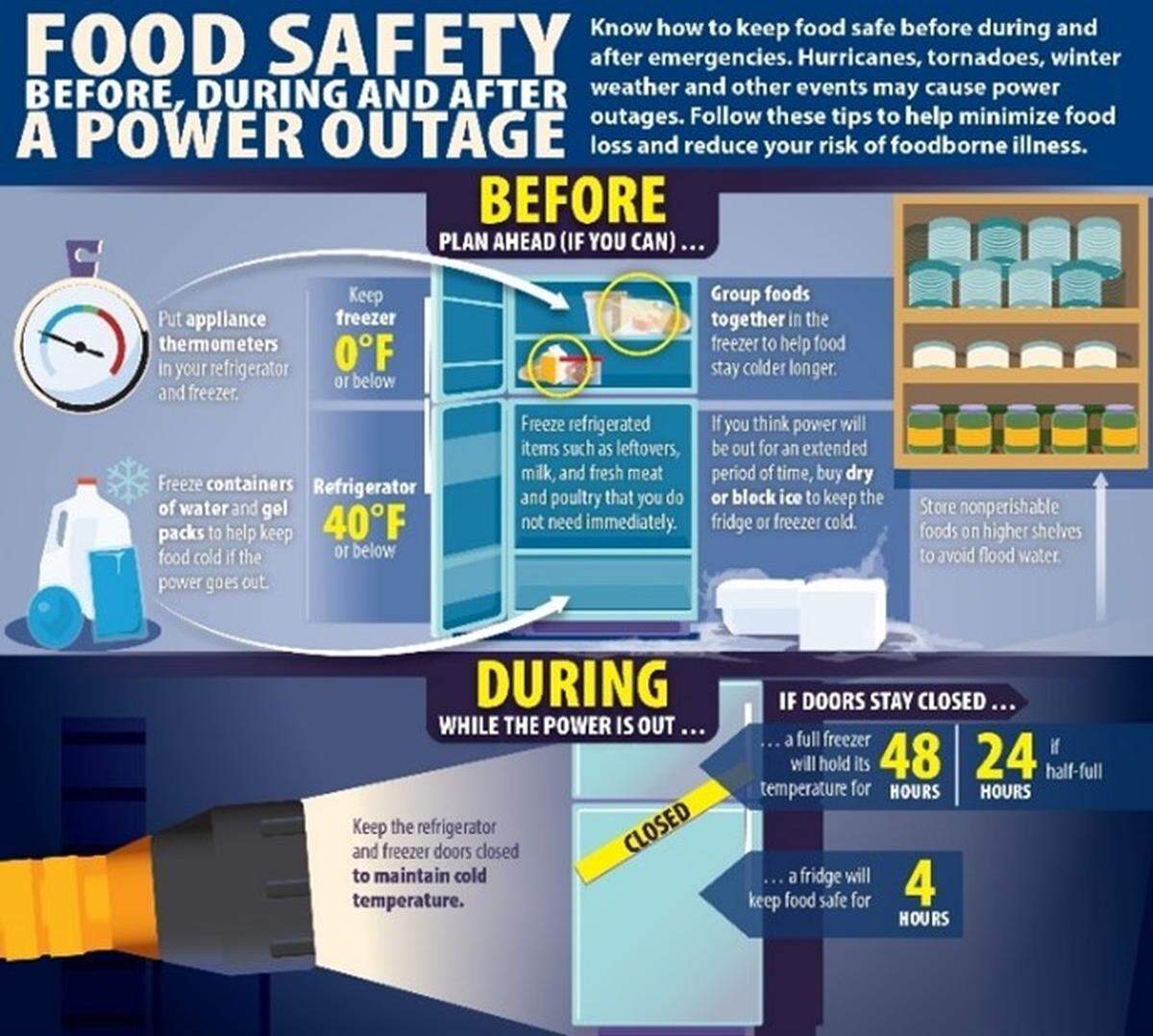
▪ If your power was out for less than four hours and you kept the opening of refrigerator doors to a minimum, what’s in there should still be good.
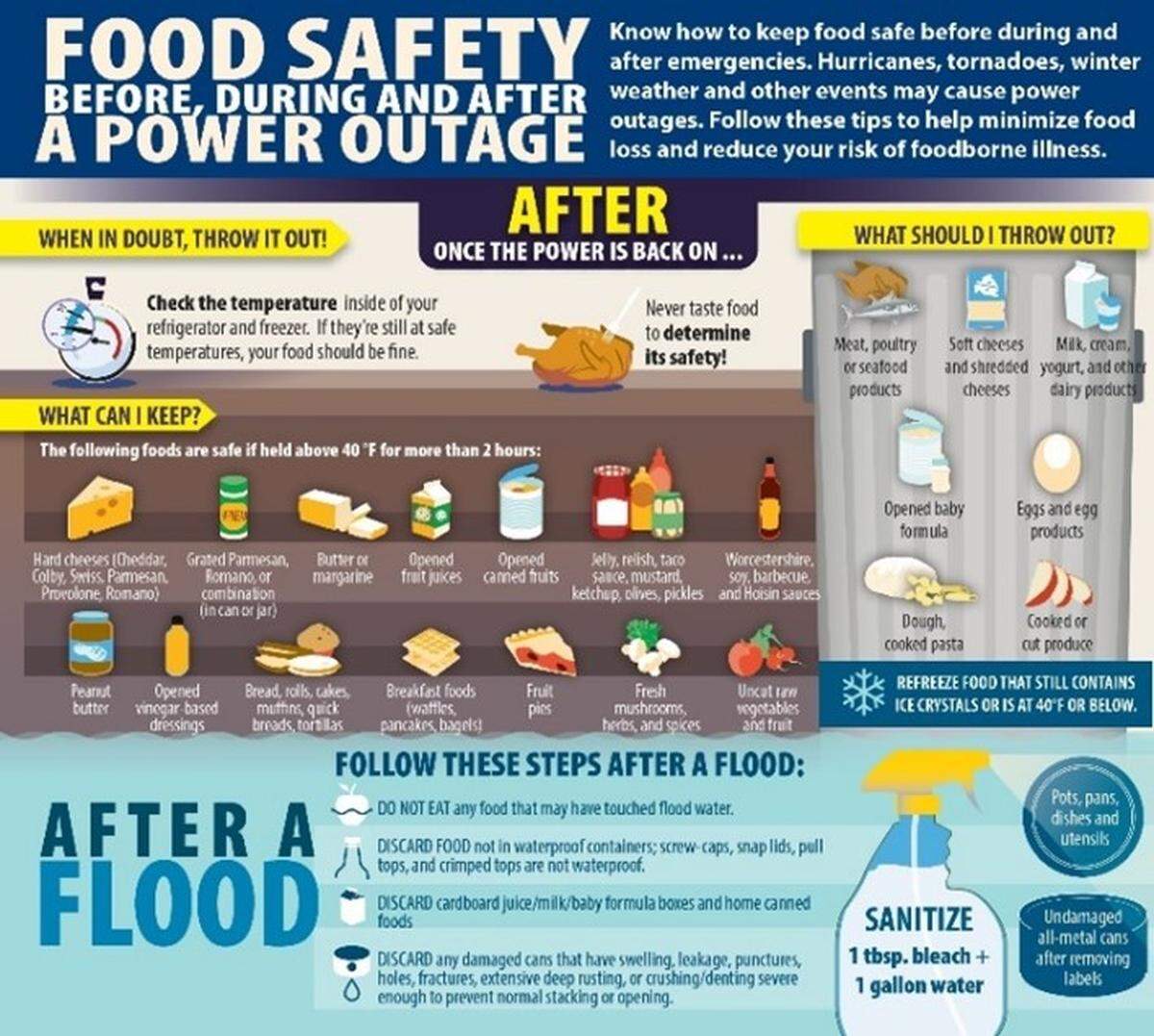
▪ Meat, poultry, seafood, milk, eggs or leftovers that are over 40 degrees and has been for more than four hours should be tossed. Anything in that group that is 41 to 45 degrees, but hasn’t been for more than four hours “should be safe,” the FDA says. You better cook it, however, and chow down on it as soon as possible.
▪ How do you know what temperature your food is? A food thermometer (see below). A good one can keep you out of the hospital or urgent care, either of which will cost you more than the $10 to $20 one-time investment in a quality food thermometer. Pick up an appliance thermometer, also.
▪ As far as food in the freezer, an appliance thermometer kept in the freezer should read 40 degrees or below when you’re checking . If it does, your food is fine. If you didn’t keep an appliance thermometer in there, check each pack with a food thermometer. If they’re 40 degrees or below, it’s safe to refreeze or cook. Generally, a full freezer can be without power for two days and keep its contents from being bacteria battleships. Half-full, half the time: 24 hours.
▪ Speaking of bacteria, they pack floodwaters like boats in Biscayne Bay.
▪ Did the actual food touch floodwater? Don’t eat it.
▪ Is your food in a waterproof container? Truly waterproof, not keeps-most-water-out? Is there a minuscule chance the floodwaters touched it? Don’t eat it.
▪ Did bottled water, juice boxes or foods you canned yourself touch floodwaters? Don’t consume.
▪ Are your canned foods damaged in any way? Dented? Rusted? Any holes in them? Don’t consume.
▪ Can you stack your cans normally or use a hand-cranked can opener on them?
▪ Now, for your commercially packaged canned goods or food in pouches with flexible plastics and foils, they’ll be fine after you do a little extra cleaning on them. Take off as much of the labels as you can. Wash the cans or pouches with soap and hot water. Rinse them with drinkable water. Then, put the can or pouch in water and let the water boil for two minutes or put them in a solution of a tablespoon of liquid chlorine bleach per gallon of water for 15 minutes. Let them air dry for one hour.
Food preparation
▪ Get thermometers. A food thermometer to measure the temperature inside your food is just basic, good daily food safety. Cooking beef, pork, chicken or turkey to the proper minimum temperature kills most foodborne illness bacteria (salmonella, listeria, E. coli). An appliance thermometer will come in handy for measuring your refrigerator’s temperature. If you think you might lose power in a storm, set the freezer to under zero degrees Fahrenheit and the refrigerator to under 40.
▪ Freeze bottles of water. When frozen, they can help keep the freezer cold. As they melt, you have drinking water.
▪ Freeze cold packs, too. They can be used in coolers to extend the life of refrigerated food as the refrigerator warms up.
▪ Pack the freezer. If there’s anything perishable in the refrigerator you don’t think you’ll need immediately, move it over to the freezer.
▪ “Consider getting 50 pounds of dry or block ice if a lengthy power outage is possible,” the USDA said. “This amount of ice should keep a fully stocked 18-cubic-feet freezer cold for two days.”
▪ If a flood is possible, get the refrigerator up on cement blocks if you can. Get canned goods off the floor and onto shelves.
This story was originally published October 10, 2024 at 4:01 PM.