Hurricane Lee keeps getting wider, expanding the zone that could feel its winds and waves
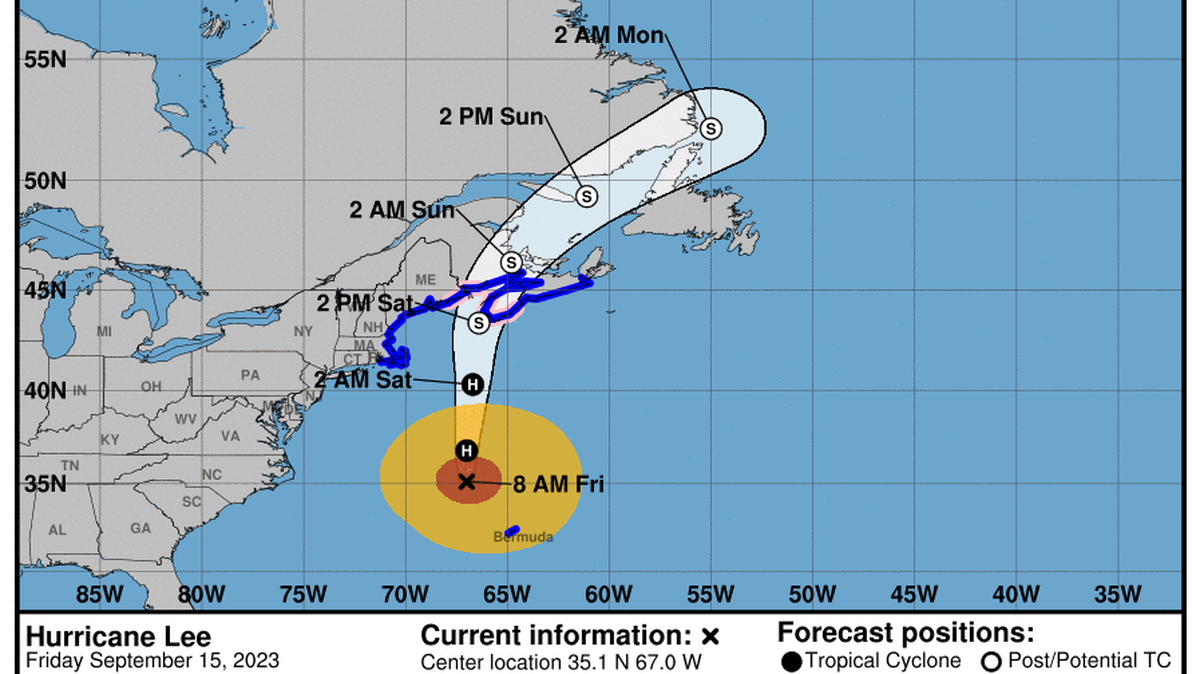
Coastal New England was blanketed by hurricane, tropical storm and storm surge watches on Friday ahead of a potential landfall from Hurricane Lee this weekend.
The storm, which dropped to a Category 1 on Thursday, was heading north at 16 mph after a forecasted turn and at a faster pace expected through Saturday. The storm’s wind field exploded over recent days, upping the chances that Lee’s waves and winds could affect even more spots along its path.
While Florida and the northern Caribbean started feeling Lee’s rough surf and rip currents earlier this week, the effects will spread north up the U.S. East Coast through the week as Lee moves north.
“On the forecast track, the center of Lee will continue to move farther away from Bermuda Friday morning and approach the coast of New England and Atlantic Canada Friday and Saturday. Lee is then expected to turn toward the north-northeast and northeast and move across Atlantic Canada Saturday night and Sunday,” John Cangialosi, a hurricane specialist with the National Hurricane Center, wrote in Friday’s 8 a.m. advisory.
On Friday, Lee’s outermost winds and waves could reach New England, from Rhode Island to Maine. Cape Cod Bay and Nantucket, in Massachusetts, remained under a storm surge watch. A hurricane watch was issued for down-east Maine to the U.S. Canada border, where the latest forecast suggests Lee could make landfall. Some spots could see two to four feet of storm surge, the hurricane center said Thursday.
By the time Lee reaches the northeast coast, the hurricane center said it may be down to a post-tropical storm, but with an even larger wind field Saturday. Its forecast track takes it north into cooler waters, patches of drier air and more wind shear, which can topple storms.
“Regardless of Lee’s designation when it approaches New England and Atlantic Canada, it will remain a very large and dangerous cyclone through landfall.,” forecasters wrote Thursday night.
As of the 8 a.m.. Friday update, Lee was about 460 south-southeast of Nantucket, Massachusetts and had 85 mph maximum sustained winds — a Category 1 storm. It was headed north at 16 mph and had hurricane-force winds that expanded about 105 miles from its center. Its tropical storm-force winds expanded out about 320 miles from its center.
READ MORE: Hurricane Lee’s waves and a cold front approach Florida. What it means for our weather
Tropical Storm Margot
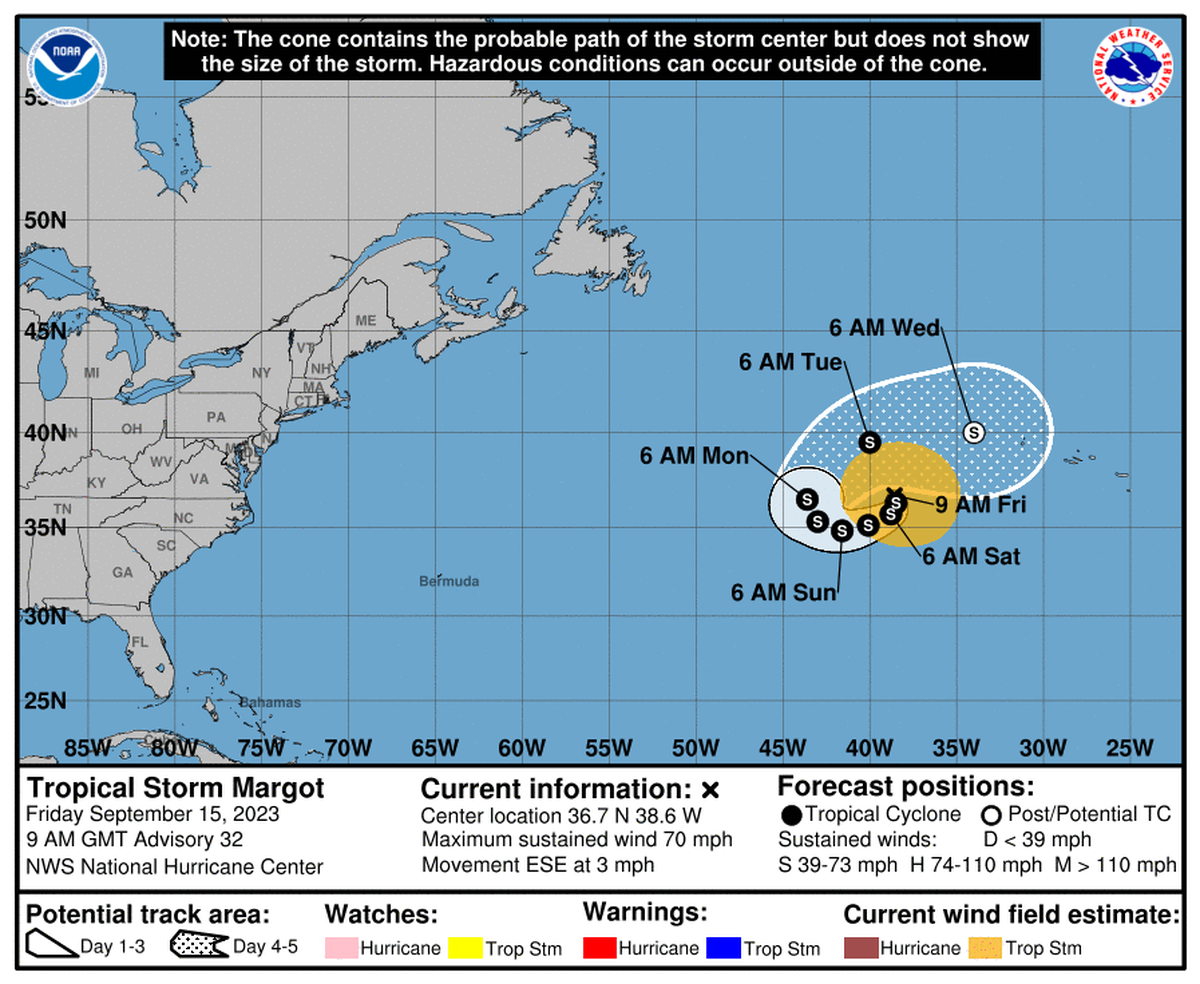
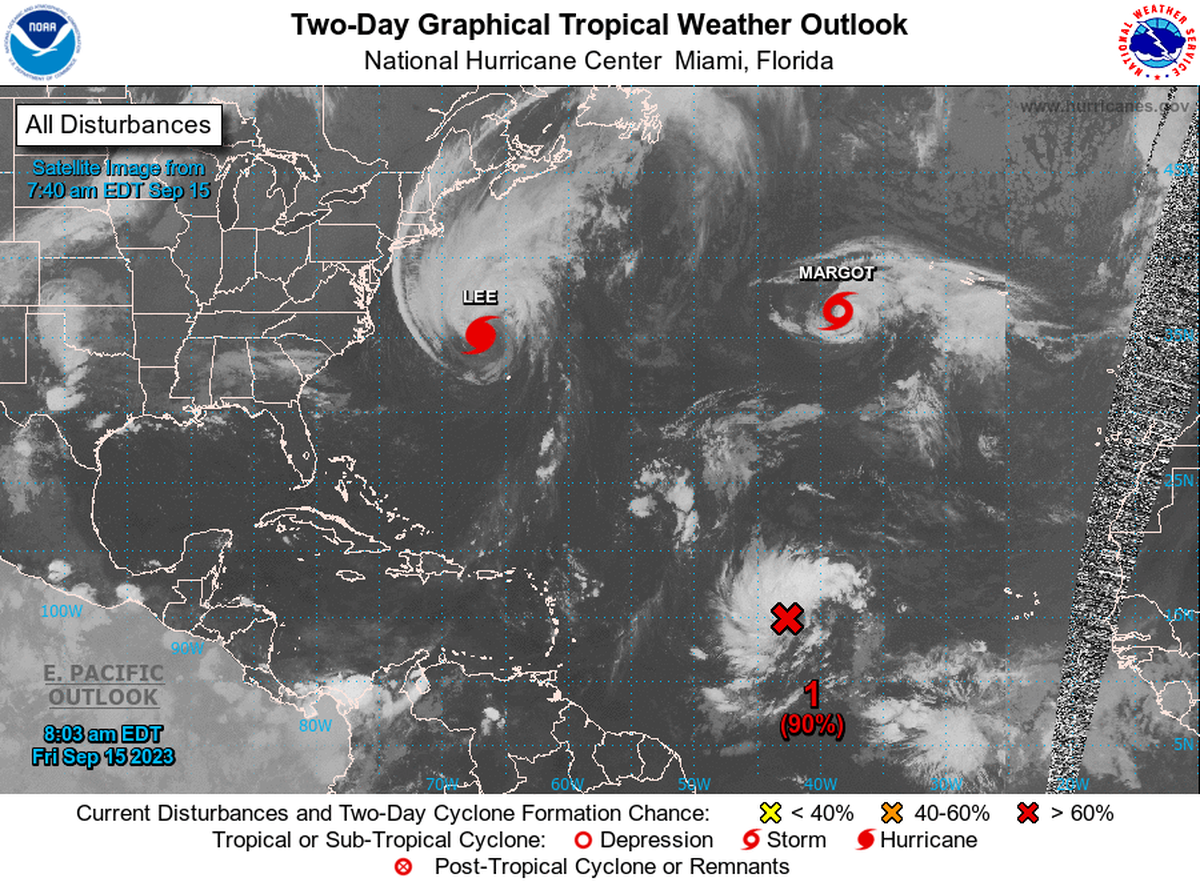
The hurricane center is also keeping an eye on two other systems in the Atlantic — Tropical Storm Margot and a disturbance with a good shot at developing by the weekend. Neither poses an imminent threat to land.
As of 8 a.m. Friday, the former Category 1 Hurricane Margot had dropped from 80 mph winds to 70 mph winds and was moving east-southeast at 3 mph. It’s forecast to whirl around in the middle Atlantic far from land. The latest track calls for Margot to make a slow clockwise loop over the weekend and a faster northeast motion by Monday. Margot should run into colder waters and continue to weaken, forecasters said.
Central Tropical Atlantic
Forecasters are also tracking a disturbance in the far east Atlantic, a broad area of low pressure, about midway between the Cabo Verde Islands and the Lesser Antilles. The hurricane center pegged its chances of strengthening into a tropical depression at 90% sometime within the next week.
The system was moving northwest at 15 mph in the 8 a.m. Friday advisory.
Eastern Atlantic
A tropical wave is forecast to move off the west coast of Africa by the middle of next week. Some gradual development of this system is possible as it moves west across the eastern tropical Atlantic. Formation chances are near zero over the weekend byt 20% over seven days.
The next storm name on the list is Nigel.
This story was originally published September 13, 2023 at 5:14 PM.