Category 3 Hurricane Lee and Tropical Storm Margot keep strengthening. Here’s the latest
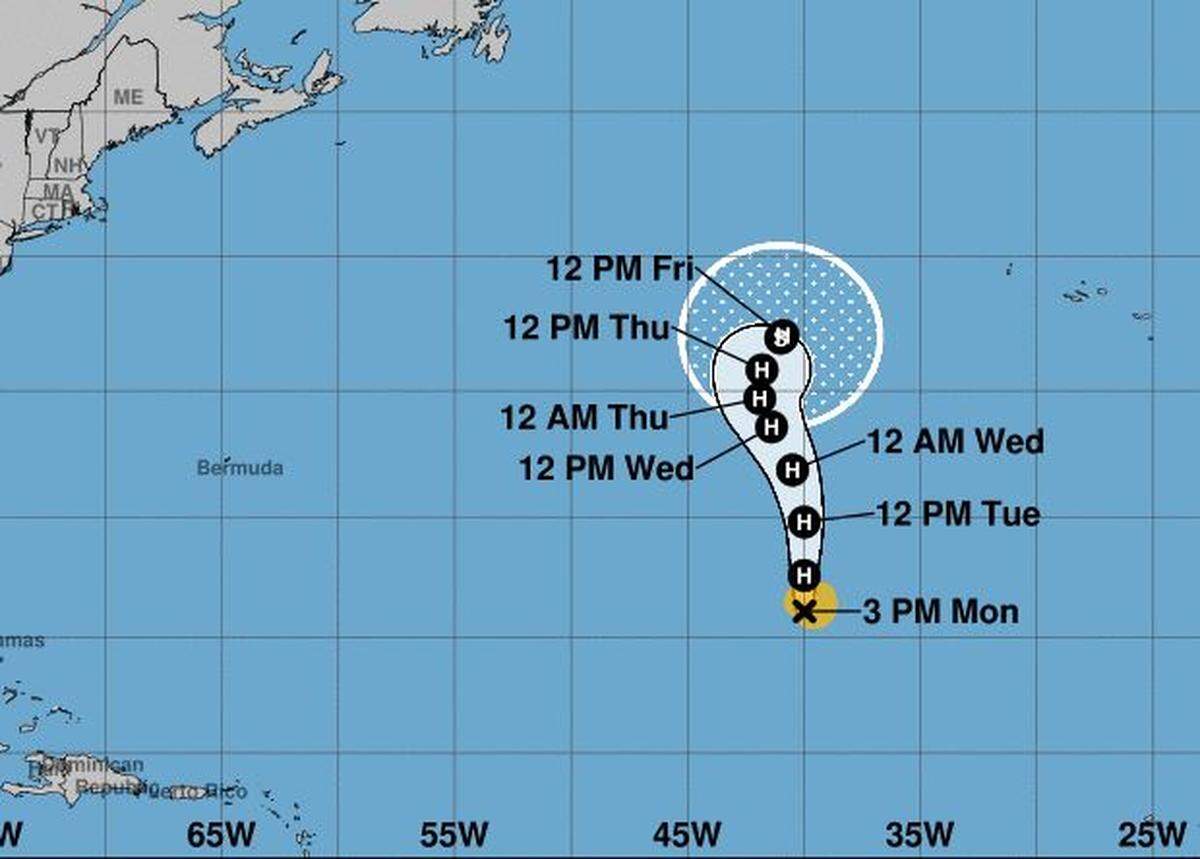
.jpeg "The projected path of Hurricane Lee as of 11 a.m., Monday, Sept. 11.")
Hurricane Lee — forecast to take a sharp turn north, leaving the eastern United States safe from a direct hit — kept gaining sustained wind speed Monday as did Tropical Storm Margot in the Atlantic Ocean’s open waters.
That’s from the National Hurricane Center’s 11 a.m. advisories for the storms. Category 3 Lee’s cone of concern includes Bermuda; however, there are no coastal watches or warnings in effect.
Dangerous surf and rip currents have begun to reach portions of the U.S. East Coast and are forecast to worsen and spread north over the next couple of days, the hurricane center warned.
Also in the eastern Atlantic Ocean, two tropical disturbances are moving off the coast of Africa, but any development is likely a week away.
Here’s what the hurricane center’s forecast is for the busy Atlantic:
What’s Hurricane Lee doing?
As of the 11 a.m. Monday advisory, Hurricane Lee with its 120 mph maximum sustained winds was about 365 miles north of the northern Leeward Islands and about 615 miles south of Bermuda, moving northwest at 8 mph.
Hurricane-force winds extended up to 75 miles from its center while tropical storm-force winds extended 185 miles from the center. There are still no warnings or watches, but folks in Bermuda should keep paying attention. Strengthening is forecast, possibly into Category 4 status (130-156 mph sustained winds), followed by slow weakening.
“A slow west-northwest to northwest motion is expected during the next couple of days, followed by turn toward the north by midweek,” the hurricane center said. “On the forecast track, Lee is expected to pass near, but to the west, of Bermuda in a few days.”
Lee is causing swells affecting Puerto Rico, Haiti, the Dominican Republic, the Bahamas, the Turks and Caicos Islands, Bermuda, the Lesser Antilles and the U.S. and British Virgin Islands.
“These swells are likely to cause life-threatening surf and rip current conditions,” the hurricane center said. “Dangerous surf and rip currents have begun to affect portions of the southeastern U.S. coast, and these conditions are forecast to spread northward along much of the U.S. East Coast during the next couple of days.”
How strong is Tropical Storm Margot and where is it?
Tropical Storm Margot’s maximum sustained winds were up to 70 mph as of the 11 a.m. Monday advisory, a 5 mph increase from the 5 a.m. advisory. The storm was about 1,245 miles northwest of the Cabo Verde Islands, moving north at 10 mph.
“Margot is forecast to become a hurricane late (Monday) and could strengthen further over the next few days,” the hurricane center said.
There are no coastal watches or warnings in effect in connection to Margot.
What’s the forecast for the disturbance called AL97?
An area of low pressure a few hundred miles southwest of the Cabo Verde Islands remained disorganized, the hurricane center said in its 8 p.m. Sunday advisory.
“The system is forecast to merge with a larger tropical wave to its east in a couple of days and no further development is expected after that time,” the center said.
Formation chance through 48 hours: 10%, the same as the 2 a.m. Monday advisory.
Formation chance through seven days: 10%, the same as the 2 a.m. Monday advisory.
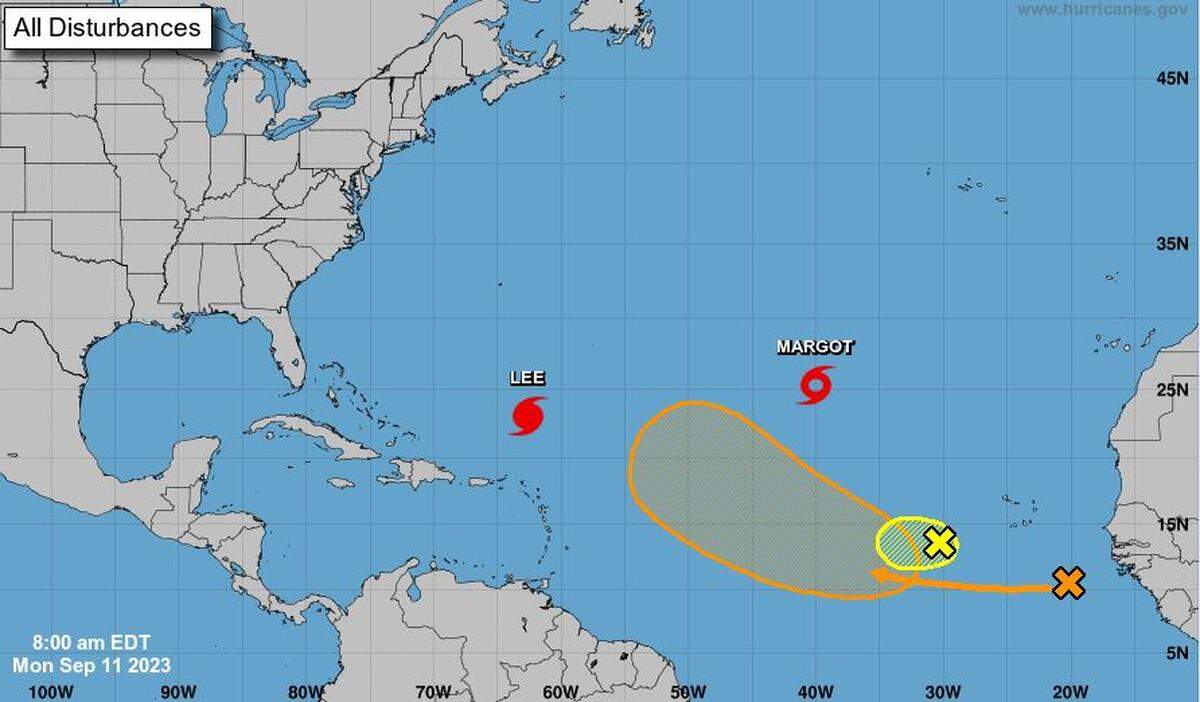
What about the other disturbance?
This tropical wave is just west of Africa’s west coast and is expected to move west or west-northwest at about 15 to 20 mph over the central tropical Atlantic. Gradual development is possible, the hurricane center said in its 8 p.m. Sunday advisory.
“Environmental conditions appear conducive for gradual development of this system during the latter part of this week, and a tropical depression could form by next weekend,” the hurricane center said.
Formation chance through 48 hours: near zero.
Formation chance through seven days: 60%, up from 50% at the 2 a.m Monday advisory.
This story was originally published September 10, 2023 at 8:54 AM with the headline "Category 3 Hurricane Lee and Tropical Storm Margot keep strengthening. Here’s the latest."
%20Cropped%20(2).jpg)