Hurricane prediction raised for remaining season, thanks to a steamy Atlantic Ocean
The Atlantic is caught in a tug-of-war between two forces, one that brings more storms and one that snuffs them. So far this “unprecedented” hurricane season, most forecasters are betting on the side of an active season.
NOAA joined that team on Thursday with its latest seasonal forecast, which called for even more storms than the administration initially predicted in May.
Matthew Rosencrans, lead hurricane season outlook forecaster for NOAA’s Climate Prediction Center, said the record-hot waters of the Atlantic Ocean appear to be winning out over the dampening effects of a worldwide atmospheric phenomenon called El Niño.
“This year, the changes typically associated with El Niño appear to be emerging a bit later than initially anticipated, so the season could have more activity than expected in the May outlook,” he said.
NOAA’s newest prediction calls for 14 to 21 named storms, of which six to 11 could become hurricanes and two to five could become major hurricanes, which are Category 3 or higher.
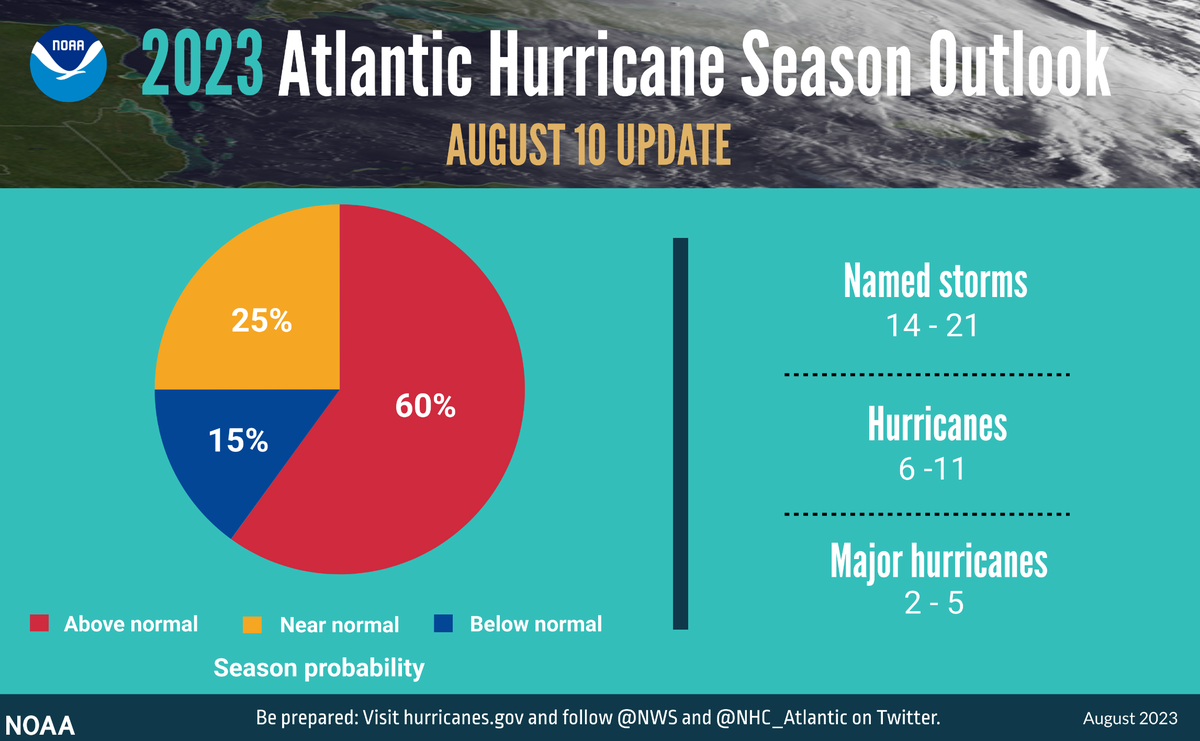
That’s an uptick from the May prediction, which called for 12 to 17 named storms, five to nine of which would strengthen into hurricanes and one to four would become major hurricanes.
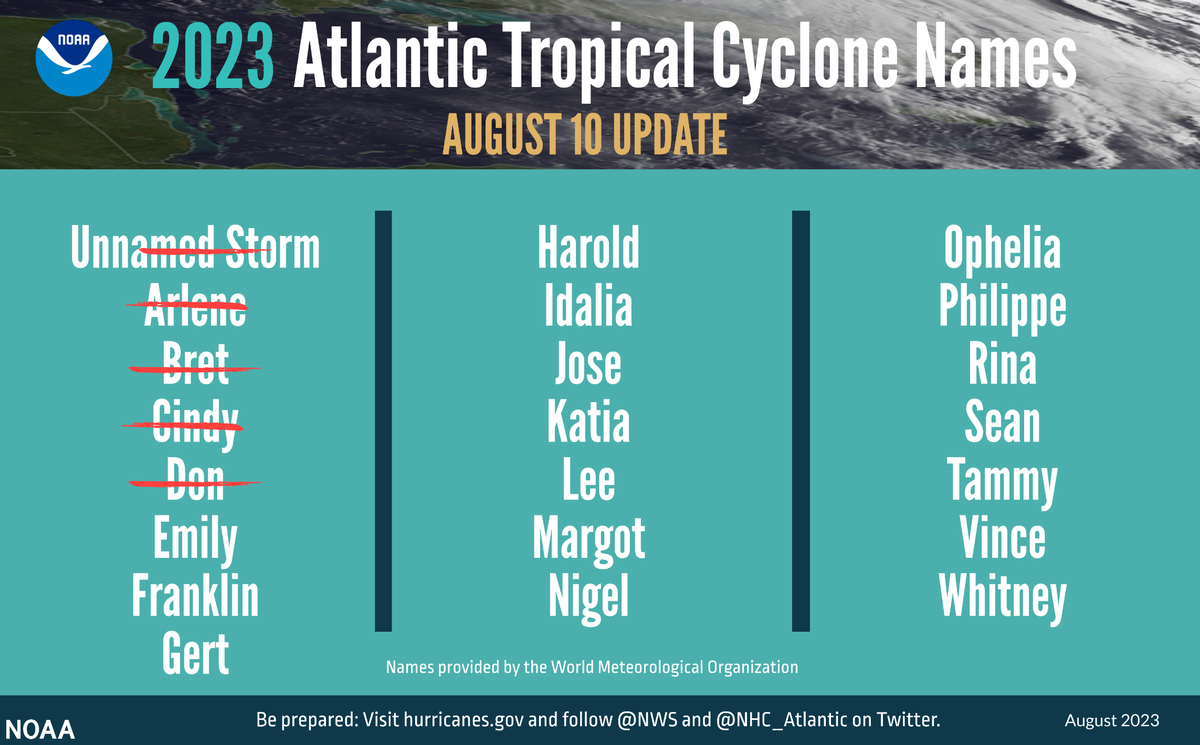
So far, the Atlantic has brewed up five storms, counting the unnamed subtropical storm that formed near New England in January. Only one, Don, became a hurricane. But Don spent most of its life doing donuts out in the deep Atlantic, far from inhabited land.
The next name on the list is Emily.
This year’s hurricane season kicked off early, thanks to unusually hot water in the main development region of the Atlantic Ocean, where most storms form. June and July sea surface temperatures in that area were hotter than anything in recorded history, which started in 1950, at 1.23 degrees C above normal.
Hot water acts like fuel for hurricanes, creating more moisture to buff up the storm clouds that form them.
In a typical year, water this hot would all but automatically result in an active hurricane season. But this year, the Atlantic is also facing the effects of El Niño, a weather pattern that brings cold, wet weather to the nation’s west coast and storm-shredding wind shear to the Atlantic.
“That kind of pulling from these two factors is really the root of any uncertainty we have in this forecast,” Rosencrans said.
The closest analog year, he said, was 2004. That year had 15 named storms, 9 hurricanes and six major hurricanes, including the infamous back-to-back Florida slams from hurricanes Charley, Frances and Jeanne.
Hurricane season runs from June 1 to November 30, with a peak of the season in August through October. With only five storms under our belt so far, NOAA’s prediction likely means an active few months lie ahead.
Rosencrans said NOAA’s models suggest the effects of El Niño could start to emerge in earnest in September, which could start to dampen storm activity.
NOAA does not predict whether storms will make landfall, or where they might hit, but a more active season equals more opportunities for storms to threaten land.
“No matter the overall activity, we urge you to prepare now for the upcoming core of the hurricane season,” Rosencrans said. “A single storm could have catastrophic impacts.”
This story was originally published August 10, 2023 at 11:15 AM.