One hurricane forecast to extend to seven days. More time for Florida to watch — and worry
Two more days to prepare — or worry.
Starting this storm season, the National Hurricane Center is making a notable change in its forecasts. It won’t affect the cone of uncertainty — the tracking graphic just about everyone who lives in Florida or other coastal states watches with anxiety. Forecasters create that only after a tropical depression forms. That graphic will stay at 5 days, as usual.
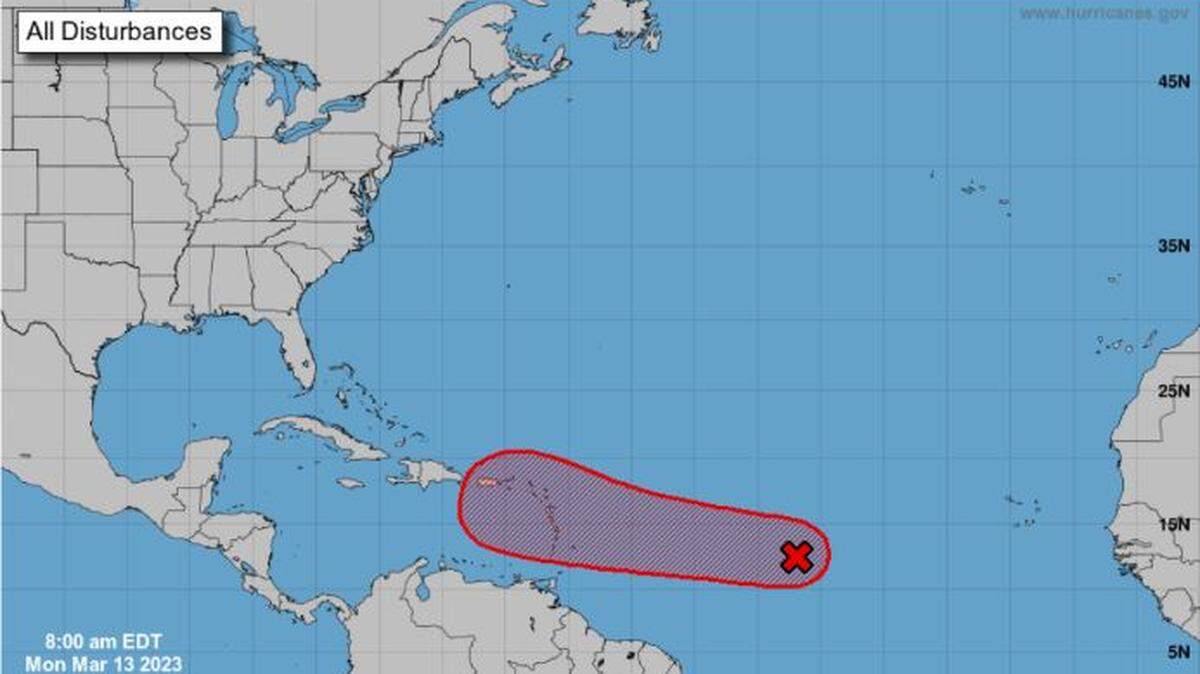
The change will come for graphics the NHC produces before a depression forms. They rank the odds of disturbances and tropical waves morphing into full-fledged systems within broad areas. Those forecasts, provided twice a day, will switch from a 2-day and 5-day chance of formation to a 2-day and 7-day chance.
“We realize there’s always a need for additional lead time for a variety of users to know there’s something forming,” said Michael Brennan, NHC’s acting deputy director. “That’s why we decided to push out.”
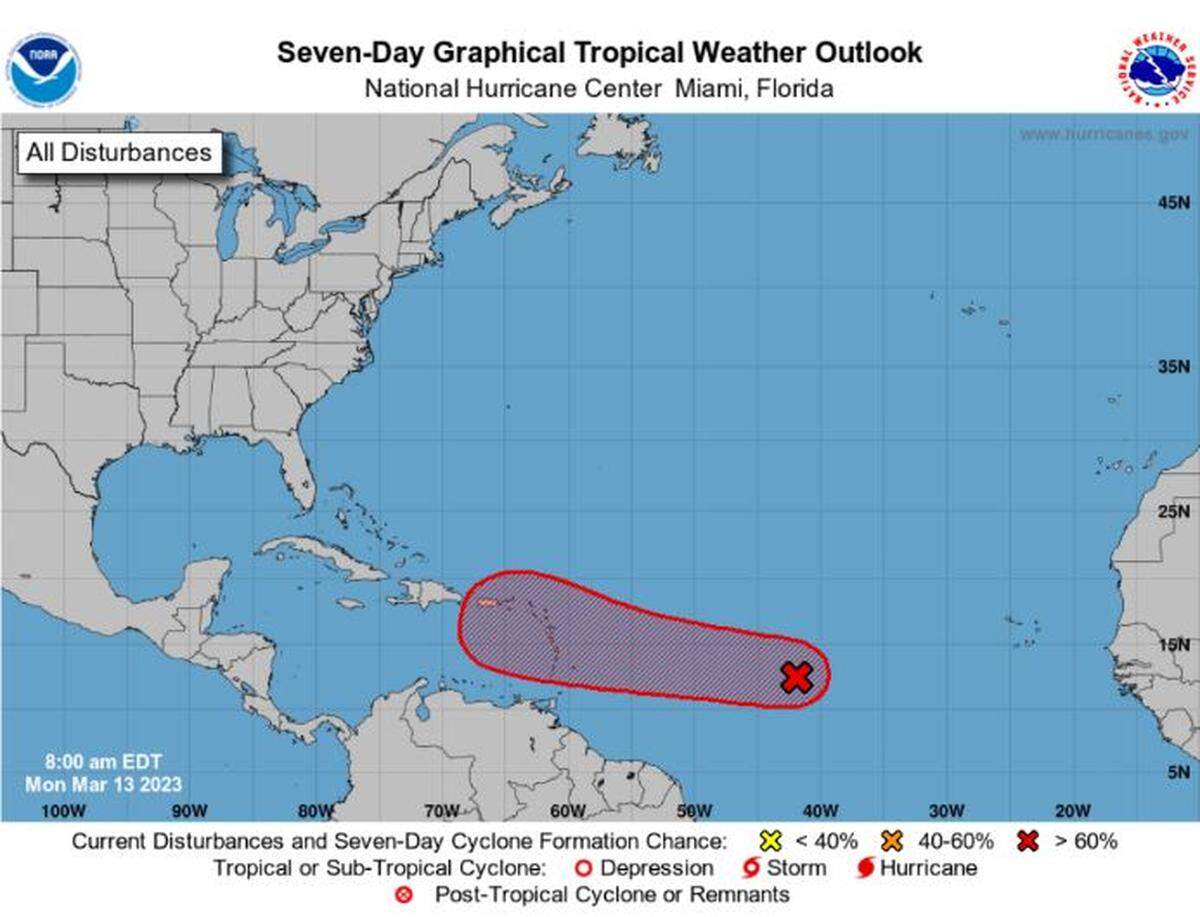
Brennan said his team has been experimenting with a 7-day forecast since 2019. They’ve also been toying around with extending the cone of uncertainty forecast to six or seven days, but don’t expect that to launch anytime soon.
Already, the five-day version of the cone represents a large error range, and as the storm draws closer and the forecast gets more accurate, the track can undergo big changes. That can be confusing for people trying to decide whether to evacuate, as seen in the lead-up to last fall’s devastating Hurricane Ian, where northern areas like Tampa evacuated ahead of a storm that ended up making landfall further to the south.
“It’s a trade-off. People want more lead time but there’s more uncertainty in the forecast,” Brennan said. “We want to make sure we do that the right way when the time comes.”
The NHC announced this update on Friday, along with several others, including that the size of the cone will remain about the same in 2023. That’s because the cone of uncertainty is based on the margin of error for past storms.
It’s a fixed number that only changes year to year, not storm to storm. The cone is smaller in the short-term forecast and bigger in the long-term forecast as a reflection of how well forecasters have done at predicting past storms in that range.
Another update this year is new potential storm surge flooding maps for Puerto Rico and the U.S. Virgin Islands. The forecast maps for the mainland, which are now a formal product starting this year, help show how much storm surge flooding an incoming storm could bring.
Hurricane season starts June 1.
This story was originally published March 31, 2023 at 10:59 AM.