
2 depressions may form, one in Atlantic, another in Caribbean Sea. Check the forecast
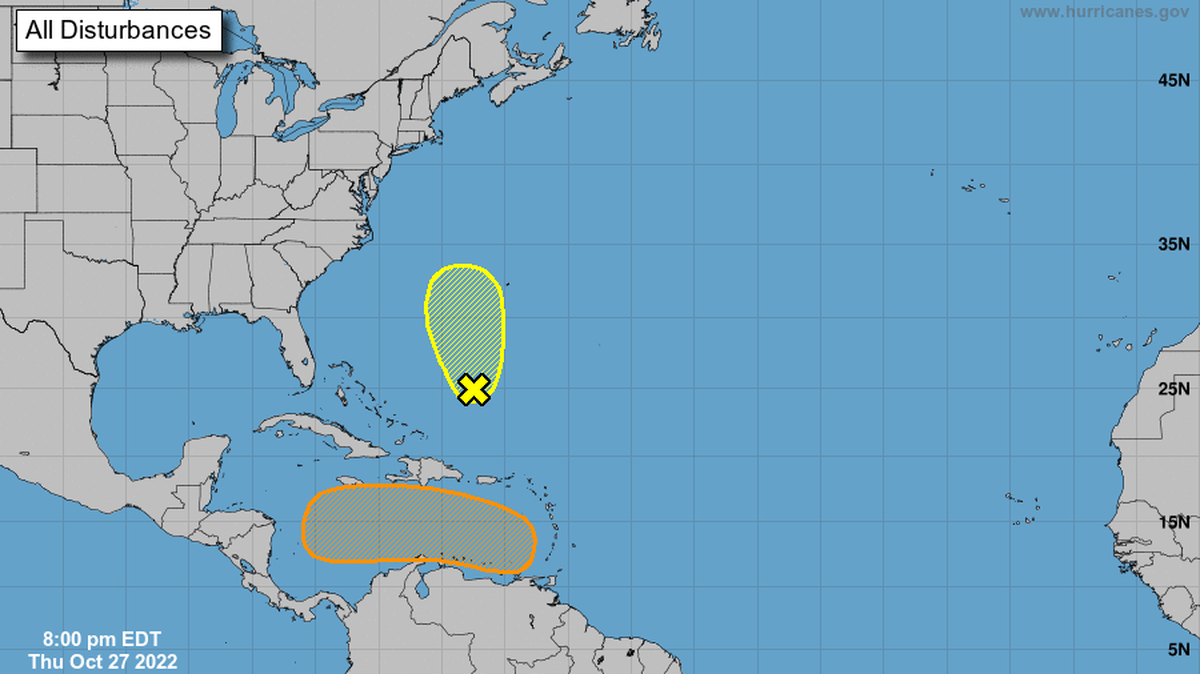
A tropical depression is likely to form in the Caribbean Sea by early next week, while forecasters say another system in the Atlantic is losing its opportunity to turn into a subtropical depression over the next few days.
One of the disturbances that forecasters are watching is a trough of low pressure extending over the southwest Atlantic. The National Hurricane Center’s Thursday forecast says that a “surface low pressure system” will likely emerge Thursday night or Friday.
NHC forecaster Jack Beven told the Miami Herald that the system, labeled as Disturbance 1 on the map, still has a chance to turn into a subtropical depression — though the window for it to do so is diminishing.
Upper-level winds should become less favorable for development by late Saturday, with the low expected to interact with an approaching frontal system.
The system had its chance of formation through the next two to five days lowered from a medium 40% to a low 30%, as of the hurricane center’s advisory at 8 p.m. Thursday.
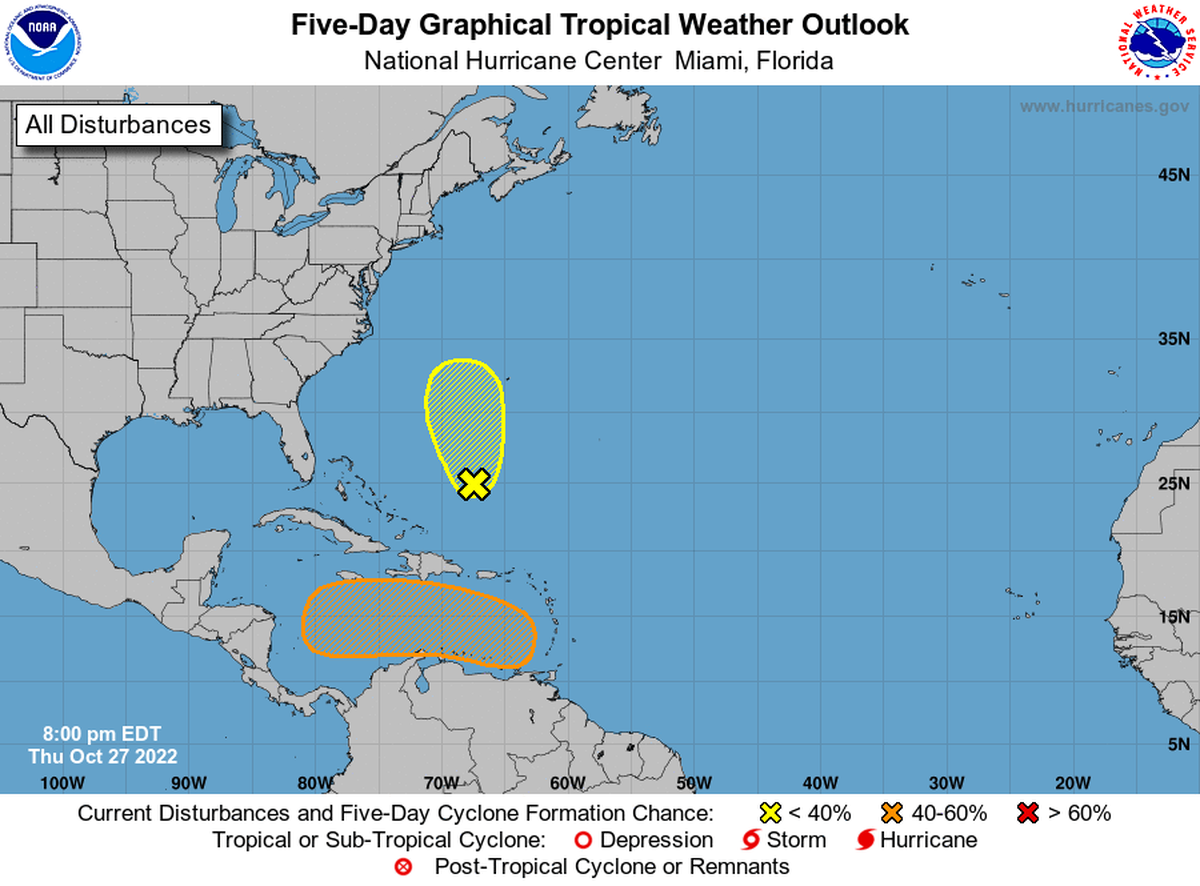
The hurricane center also expects an area of low pressure will form over the eastern Caribbean Sea this weekend. Forecasters say conditions will be good enough for the system, labeled as Disturbance 2 on the map, to gradually develop into a tropical depression by early next week while moving west or west-northwest over the Caribbean’s waters.
The hurricane center said the system has a 0% chance of formation within the next 48 hours and a 50% chance of formation through the next five days.
What’s the difference between subtropical and tropical systems?
Both subtropical and tropical depressions can produce rain, thunderstorms and gusty winds. However, subtropical systems don’t usually have typical tropical characteristics, said National Weather Service Meteorologist Chris Fisher.
A tropical system, for example, will usually have its maximum sustained winds closer to its center, Fisher said. A subtropical system, on the other hand, will have its winds more spread out, he added. It’s also more common to see subtropical systems form farther north, away from warm waters.
Warm water is like fuel for storms. Because subtropical systems are usually in cooler waters, Fisher noted they’re normally not as strong as tropical systems and rarely see hurricane-force level winds.
Tropical storms also usually generate more rain than subtropical storms. If a subtropical storm strengthens past 74 mph, it becomes a normal hurricane.
What’s the next storm name?
Lisa is the next name on the list for the 2022 Atlantic hurricane season.
This story was originally published October 26, 2022 at 2:35 PM.

%20Cropped%20(2).jpg)