
After the storm: How Hurricane Ian has only begun to change South Florida
For Floridians affected by Hurricane Ian, the immediate worries may be finding an air-conditioned place to sleep, getting warm meals and cold water, or starting the tedious task of filing insurance claims. But if the aftermath of past hurricanes is any indicator, residents, businesses and governments across Florida — particularly in the Southwest — will have to grapple with a state reshaped in ways big and small.
Take Tammy and Joe Caryl, who lived in a Punta Gorda-area trailer home destroyed by Ian. They moved from Flint, Michigan, a decade ago to enjoy the sun-drenched, modest life. They paid only $600 a month in rent. So far, the cheapest unit they’ve found on Facebook’s marketplace is $1,600.
They fear they may have to return to Michigan. “It was my husband’s dream to live here,” said Tammy Caryl, 57. “We would like to stay here but I’m not sure that’s feasible.”
For Florida residents already stung by the high cost of homeowners insurance, rates may skyrocket. Getting financing to build and rebuild in regions prone to winds and floods will likely be more difficult. Local governments may consider stricter building codes against the backdrop of rising sea levels and climate change.
Construction will boom to rebuild the thousands of structures demolished by winds, storm surge and floods. But the lower-income and middle class workers, priced out of coastal regions, may move inland — or out of Florida altogether — worsening already acute labor shortages.
Here are some of the ways Hurricane Ian is expected to change Florida, according to experts:
Property insurance woes
Florida’s property insurance industry was already in bad shape before Hurricane Ian arrived. The sixth property insurer of the year to go bankrupt did so the day Ian became a tropical storm, closing in on the state’s post-Andrew record of eight insolvent insurance companies.
Premiums have been soaring to unsustainable levels in recent years. Insurers blame it on fraud and lawsuits, and experts worry the early — but terrible and climbing — financial toll of Hurricane Ian could push the ailing market over a cliff.
“This is a test for the entire insurance industry,” Michael Carlson, president of the Personal Insurance Federation of Florida, told the Miami Herald/Tampa Bay Times last week. “This looks like major devastation.”
Early guesses at the damage vary. Analytics company Verisk estimates the cost will range from $42 billion to $57 billion. Accuweather, a private weather company, puts the devastation at more than $100 million.
Hurricane Ian’s record-setting storm surge likely means that federal flood insurance, not private property insurance, will have to foot the bill for most of the billions in losses — CoreLogic, an analytics firm, is estimating Floridians might have more than $10 billion in uninsured flood losses.
Few people in the storm-hit regions had flood insurance, which is only required if you have a mortgage and live in a federally designated flood zone. That means the financial burden may fall on FEMA.
The spate of failed insurance firms has pushed tens of thousands of Floridians to the state-owned insurance company of last resort, Citizens. It passed a million policies earlier this year, edging it closer to its disastrously high record of 1.4 million in 2011.
Citizens, the largest insurer in the state, said Wednesday it’s expecting $2.3 billion to $2.6 billion in insured losses and more than 225,000 claims, figures that are guaranteed to grow.
Michael Peltier, Citizens spokesman, said there were more than 34,000 claims already filed at the company’s two catastrophe response centers in Port Charlotte and Fort Myers.
Despite the rising number of policies and claims, Citizens appears to be in solid financial shape, with more than $12 billion in several accounts to cover claims. “They view themselves as being able to weather this,” Gov. Ron DeSantis told the media after the storm.
It will take years for the lawsuits and squabbling over policy payouts to die down, but in the meantime, it’s almost assured that premiums will rise. That could be due to the rising cost of reinsurance (insurance for insurance companies) that usually spikes after a storm, or a tax levied on all Floridians to cover the cost of a belly-up insurance company’s unpaid claims.
Industries may reshape, see losses
Southwest Florida is known for its tourism — attracting visitors to its pristine shell-strewn beaches, seafood restaurants and beloved bars on barrier island communities such as Sanibel, Captiva and Fort Myers Beach. But before Ian, Southwest Florida had already been undergoing significant economic changes, attracting more warehouse and logistics companies involved in online retail, smaller manufacturers, remote workers and healthcare industries, experts say.
“I think it’s going to reshape Southwest Florida. Maybe the hurricane is going to accelerate some of the changes that were already happening,” said Amir Ferreira Neto, the director of Florida Gulf Coast University’s Regional Economic Research Institute.
The retail, leisure and hospitality sectors will have the biggest losses, at least for now.
Given the extent of the damage to some of the beachfront attractions, resorts, restaurants and amenities such as Ding Darling National Wildlife Reserve in Sanibel, tourist sites are going to be out of commission for a while. In some instances, depending on how rebuilding goes — and that’s largely dependent on the receipt of insurance monies — they could be offline for a year or more.
“Most of the leisure and hospitality jobs in both counties are nearer to the coast where most of the damage and economic impacts occurred,” said Edward “Ned” Murray, associate director of the Jorge M. Pérez Metropolitan Center at Florida International University.
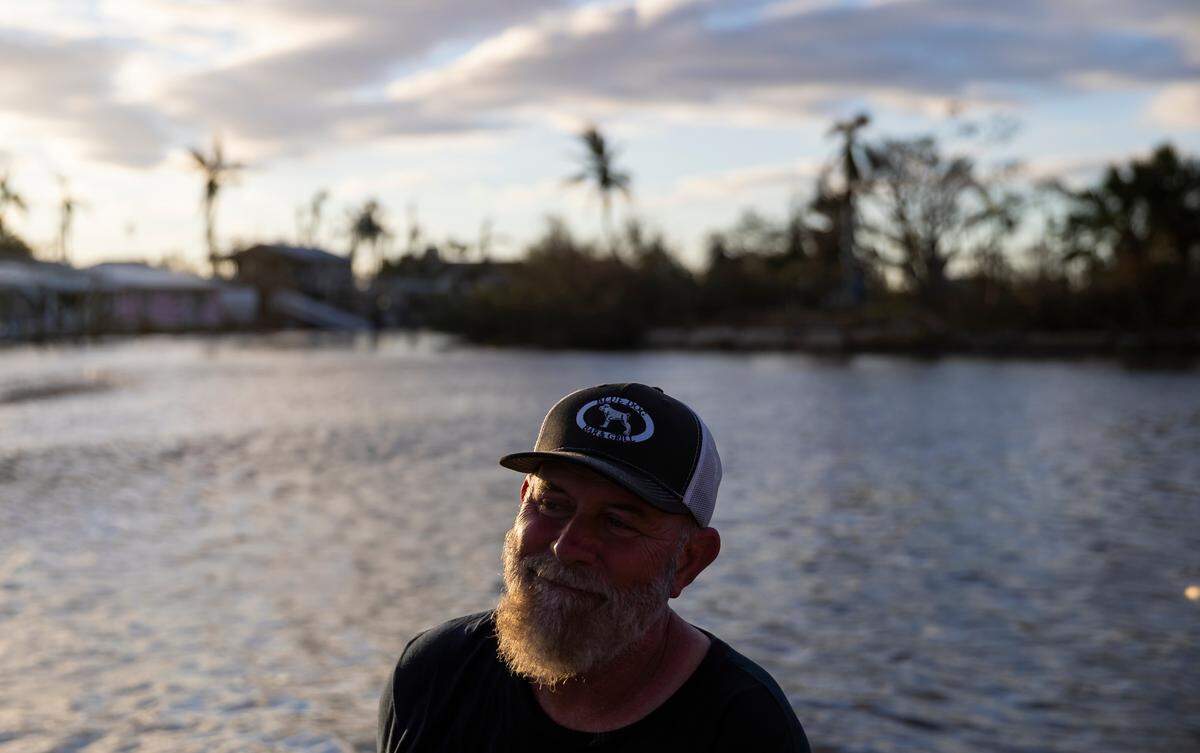
John Lynch has no idea when his business, the Blue Dog Bar and Grill, will reopen. The building in Matlacha, the artsy, colorful community on the causeway connecting Pine Island, still stands — but nothing inside survived the onslaught of storm surge.
“It can come back and be a charming place,” said Lynch, 59. “But you’re going to lose the flavor that was there over decades and decades. That’s going to be lost.”
Professional service suppliers will also be hard hit.
“Imagine you’re a dentist who was operating on Sanibel Island with your own practice or any number of service providers of that nature. These people are obviously in a very difficult situation both from a stress point of view, as well as a financial point of view, so we shouldn’t overlook them,” said John Quelch, the dean of the University of Miami Herbert Business School.
Quelch added that for people who are now homeless, displaced or financially ruined, “the last thing they’re interested in, or thinking about at the moment, is getting their annual dental checkup, just to give you an illustration.”
Florida’s massive agriculture industry will also see an impact. Hurricane Andrew in 1992 helped decimate South Florida’s lime industry. In 2017, Irma damaged South Miami-Dade’s avocado trees — the following year, production went down 30%.
Ian’s impact will be felt in Southwest Florida’s rural citrus groves, depending on how badly the winds dropped fruits that would normally be harvested in the coming weeks. The Highlands Citrus Growers Association, which represents farmers in counties such as Charlotte, DeSoto and Hardee, is estimating up to 80% of their trees lost fruit.
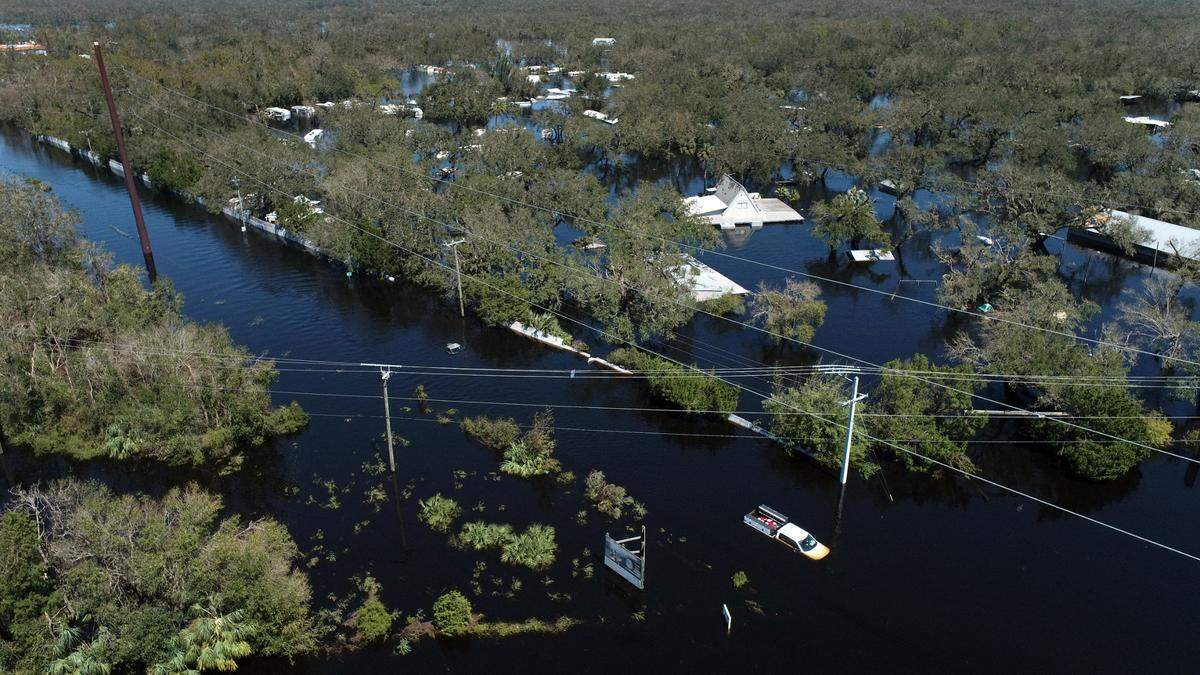
“Tree crops are a huge factor that will be affected and it takes several years for them to come back,” said Trent Blare, a professor in food and resource economics at the University of Florida.
Vegetable crops, which will be planted in the next couple of months, may also be affected, depending on the condition of the lands and whether floodwaters have receded. “Our growers have been challenged the last few years with products coming from Mexico,” Blare said. “It might just be that much more difficult.”
Complicated construction boom
There’s no doubt the construction industry will boom.
While Lee and Collier counties have solid construction employment numbers — Lee 36,300 jobs, Collier 20,400 jobs — the rebuilding of Southwest Florida after Ian comes against the backdrop of a complicated economic picture.
Nationwide, there’s a shortage of construction workers. The U.S. Bureau of Labor Statistics reported 442,000 unfilled construction positions in August, the largest number for the month in more than two decades of tracking the statistics.
Construction workers may flock from other parts of the country to Florida, but projects won’t necessarily be ready to begin. Engineers must still determine if buildings are to be restored or replaced entirely. Existing development projects may be postponed, or halted altogether. For some hard-hit areas, local governments may first consider whether to beef up building codes, a process that can take time.
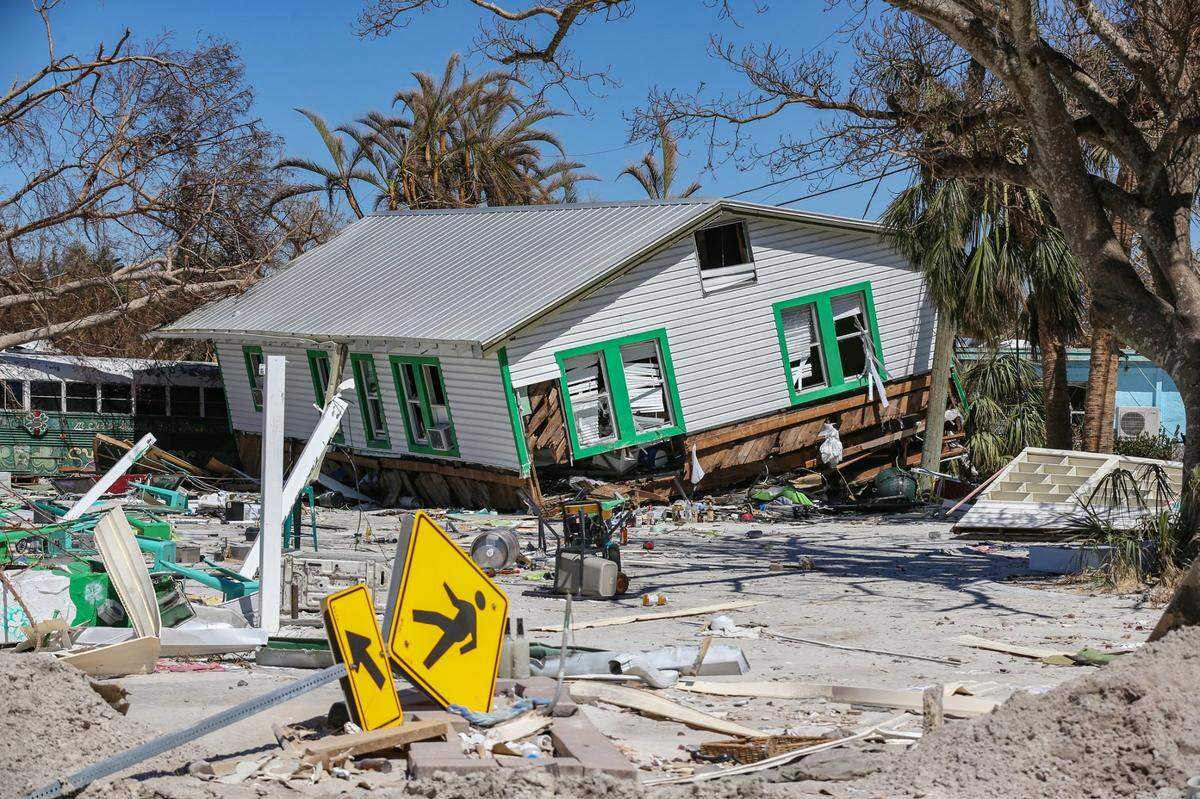
There’s still supply-chain issues — for example, the price of concrete remains high. And property owners need to process insurance claims and secure financing to cover additional costs, which is no easy task with interest rates sky high because of inflation.
“After the storm, crews move in quickly putting up blue tarps, clearing debris and doing specialized work,” said Ken Simonson, the chief economist for Associated General Contractors of America. “But after that, it becomes a longer slog to get that replaced by a permanent roof or get other kinds of repairs done.”
Time for tougher building code?
After Hurricane Andrew hit Miami-Dade in 1992, it unveiled the tragic consequences of decades of shoddy, rush-job construction. By 2002, most of Florida had adopted a far stronger building code to defend homes and businesses against a hurricane’s howling winds.
But while newer homes fared relatively well against Ian’s punishing 150 mph winds, the storm underscored what building and resilience experts have warned for years: The building code isn’t strong enough to keep people safe from storm surge, the No. 1 killer in hurricanes.
“We’ve had so many primarily wind impacts from recent hurricane experience that we lost sight of the impact of storm surge. It’s never really happened this way in anyone’s lifetime,” said Leslie Chapman-Henderson, president of the Federal Alliance for Safe Homes.
But unlike building for high winds, where stronger roofs, windows and connections between walls and roofs can make a huge difference, storm surge is a much tougher opponent to battle. Water is much heavier and more harmful than wind, as seen in the damage from Ian.
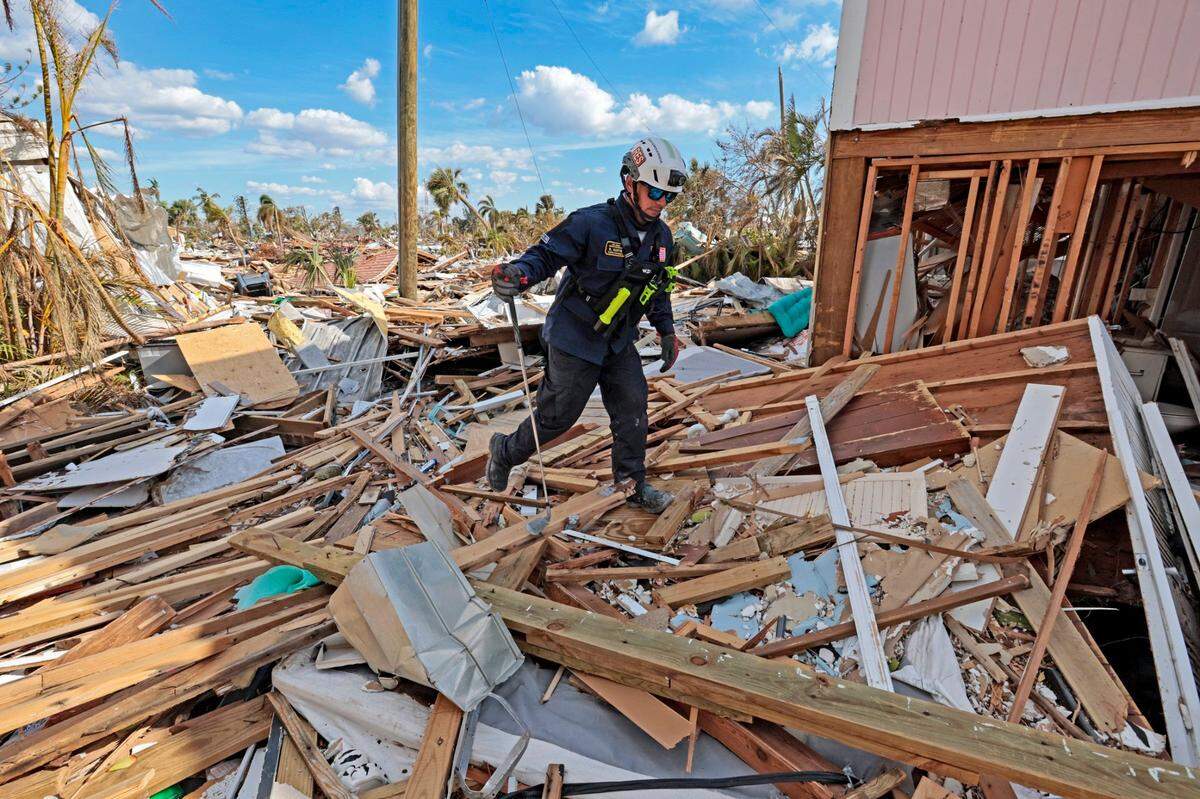
“There is not an easy answer to storm surge. It’s a very difficult problem and challenge for our generation,” said Anne Cope, chief engineer for the Insurance Institute for Business and Home Safety. “You can either build up high and strong or you can retreat.”
Building higher and stronger is unappealing to home builders looking for profit or home buyers facing an affordable housing crisis, so it’s a tough sell even in the best of times. And building away from the water would be less lucrative in most places in Florida, with the exception of the Florida Keys.
But Chapman-Henderson, who’s been advocating for strengthening Florida’s building code since Hurricane Andrew, said she’s hopeful that scientists and the business community will innovate, just like they did for the wind code.
“Back in the day everyone said you can’t build for high wind, they’ll be bunkers. They’ll be expensive and ugly. But we did it,” she said. “What we can’t also do is just walk away from things like this and say it can’t be done.”
Affordable housing and migration
Florida is no stranger to seeing migration after a powerful hurricane.
Hurricane Andrew sparked an unprecedented migration to Broward County. Hurricane Maria’s devastation in Puerto Rico led to thousands moving to Florida, with many settling in the Orlando area. Floridians also relocated after Hurricanes Charley and Michael.
Another exodus is expected after Ian, but this time it will be complicated by an affordable housing shortage that was already affecting the state.
“Unfortunately, the poor are going to bear most of the burden. So many people on low incomes are being priced out of the region and having to go farther inland, farther north,” said Ferreira Neto of Florida Gulf Coast University. “As we rebuild, we have to think: Is there anything that can be done about affordability?”
READ MORE: He survived Ian in a tree as his mobile home flooded. Are trailer parks too risky?
It’s likely Ian wiped out or severely damaged many older, relatively affordable homes, including mobile homes, that have existed for decades in parts of Lee, Collier and Charlotte counties. Those homes can’t be replaced for the same prices for which they were built. And research — from Miami-Dade after Andrew and Galveston after Hurricane Ike in 2008 — shows that lower-income neighborhoods take longer to recover.
Flight attendant Michele Reidy, 56, has lived in the Iona area of Lee County, in between Fort Myers and Fort Myers Beach, for about 30 years. The inside of her upstairs apartment got ruined because the door ripped open during the storm.
She’s hoping her employer, American Airlines, transfers her — somewhere inland, perhaps Arizona. “I probably will [leave] after this,” Reidy said. “I’ve been here for a while now, so it might be time.”
Jennifer Fagenbaum, executive director at the nonprofit Family Promise of South Sarasota County, said its clients had been seeing average rentals of between $2,000 to $2,500 for two-bedroom units, and over $2,800 for three-bedroom ones. The higher demand means higher prices, she said, although some units may be freed up by seasonal “snowbirds” choosing to winter elsewhere.
“We will work with our partner agencies as well as the county and cities to do the best we can to meet the needs but there will be many families left without housing options. Currently, we have been getting 30 to 50 calls a month from people needing housing help but with no affordable housing to put them in and not enough funds to assist everyone, we struggle to help them,” she said.
“After Irma our calls for services increased 300% in the months that followed. I expect that will be the same or greater for Ian.”
Financing will be challenging
Migration may be spurred by another issue — building and rebuilding won’t be cheap.
Jesse Keenan, an associate professor of sustainable real estate at Tulane University, said how government and property owners in Florida build and rebuild will be driven by financial and capital markets wary of climate change and the increased danger of communities that have for decades been built on risky, low-lying wetlands.
“The economy is trying to find safer places to settle and reside and this is only going to speed up that process,” Keenan said.
Lenders may impose more risk premiums for people wanting to live in areas considered more vulnerable to weather-related damage. Likewise, local governments which need to rebuild infrastructure will turn to bond markets that will impose climate-risk premiums.
Government assistance from agencies such as FEMA is generally inadequate and takes a long time to secure, experts say.
The end result, Keenan said, is that the lack of capital and development momentum will force lower- and middle-income people who had moved to the coast to return to the states from which they came — in the case of Southwest Florida, many transplants hail from the Midwest.
“The ultra wealthy will be able to rebuild and recover,” Keenan said. “Those are the people who don’t need a mortgage and insurance to build on the coast.”
Miami Herald staff writers David Goodhue and Joey Flechas contributed to this report.
This story was originally published October 9, 2022 at 5:30 AM.