
Hurricane Fiona leaves three dead in Puerto Rico; governor warns of more flooding to come
At least three people died in Puerto Rico in the wake of Hurricane Fiona, which devastated bridges and roads and left millions without power after drenching the island in some areas with more than 30 inches of rain.
Calling the impact of the storm, which hit the island as Category 1, devastating, Puerto Rico Gov. Pedro Pierluisi said Fiona’s worst came from the amount of water it is pouring over the country, with many areas still under flash-flood warnings as of Monday afternoon.
“The heavy rains have caused the greatest havoc in our towns. In some of our towns the concentration of water was higher than that of Hurricane Maria,” Pierluisi said at a press conference Monday, referring to the deadly Category 4 hurricane that devastated the island in 2017.
“The damages to the infrastructure, to the urban centers and to residences have been catastrophic,” he said, adding that the country was still experiencing heavy rains and suffering tropical storm conditions, even after the main part of the storm moved away to the Dominican Republic.
Pierluisi spoke with President Joe Biden early Monday, who pledged long-term help from FEMA, in addition to the 300 officials already at work on recovery. FEMA Administrator Deanne Criswell will arrive in Puerto Rico Tuesday to meet with state and local officials and affected citizens, the White House said Monday.
Several bridges were severely damaged and some were swept away by flooded rivers, while a number of country roads were also badly damaged by the heavy rains, he said.
Puerto Rican police reported that an 88-year-old woman, María Ithier, died of a heart attack at a school being used as a shelter in Mayaguez.
Puerto Rican officials also confirmed the death of José Cruz Román, 70, of Arecibo, who died after the electrical generator he was attempting to start blew up. His wife also suffered severe burns when she attempted to extinguish the flames.
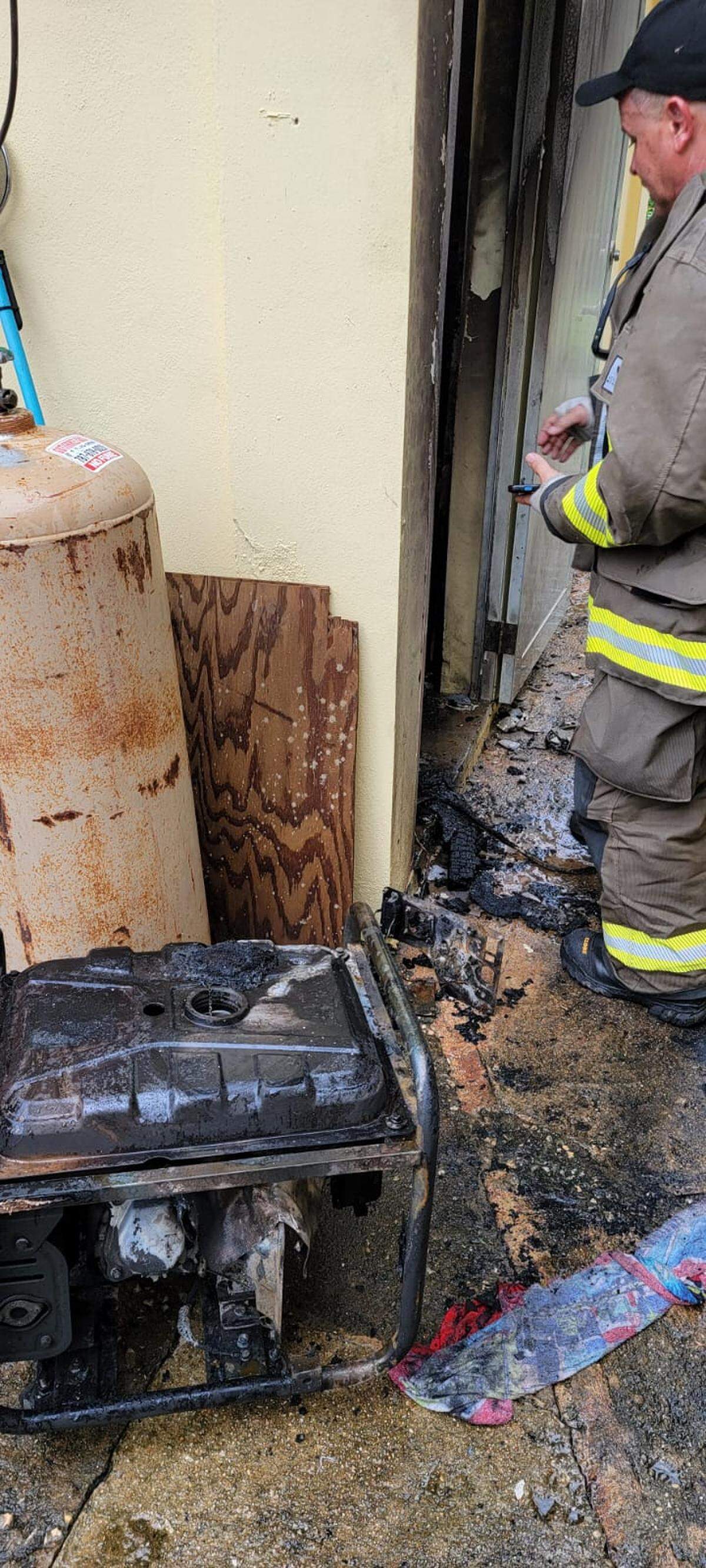
A third person, Gilberto Ayala Aponte, 58, died after he fell outside the back of his house and was dragged by the overflowing waters of the La Plata river in Comerio. His body was later found and police confirmed that he had drowned.
Flooding continues
Lee-Ann Ingles-Serrano, a National Weather Service meteorologist in San Juan, told the Miami Herald that nearly the entire island is under a flash flood warning as of Monday morning, with significant rainfall expected Monday morning and afternoon, worsening flooding in the hardest-hit parts of the island in the south.
That area can expect to see another four to six inches of rain, she said.
“We are going to have a more severe flooding problem in areas that are flooded. And areas that are not flooded could flood,” she said.
Between Saturday afternoon and Monday, the southeast of the island had received between 15 and 25 inches of rain. The rest of the island got between 5 and 12 inches.
Several rivers have also overflowed their banks, flooding the communities around them.
Nearly every municipality in the southeast, south, and interior of the island is reporting flooding. Ingles-Serrano said that the mountain town of Cayey and the coastal towns of Guayama and Salinas were among the most affected.
Rescues needed
The island could see gusts of 35 miles per hour Monday, which are lower than the hurricane winds that blew through the island over the weekend. But they could cause landslides because of how saturated and vulnerable the terrain is.
Rolando Ortiz, the mayor of Cayey, went on national TV asking for help to save a family with a young daughter.
“There is no way to reach them,” he said.
Through Sunday night, residents of the coastal town of Salinas filled social media with pleas to be rescued. One woman identified as Génesis Lían asked to be rescued on her Facebook page.
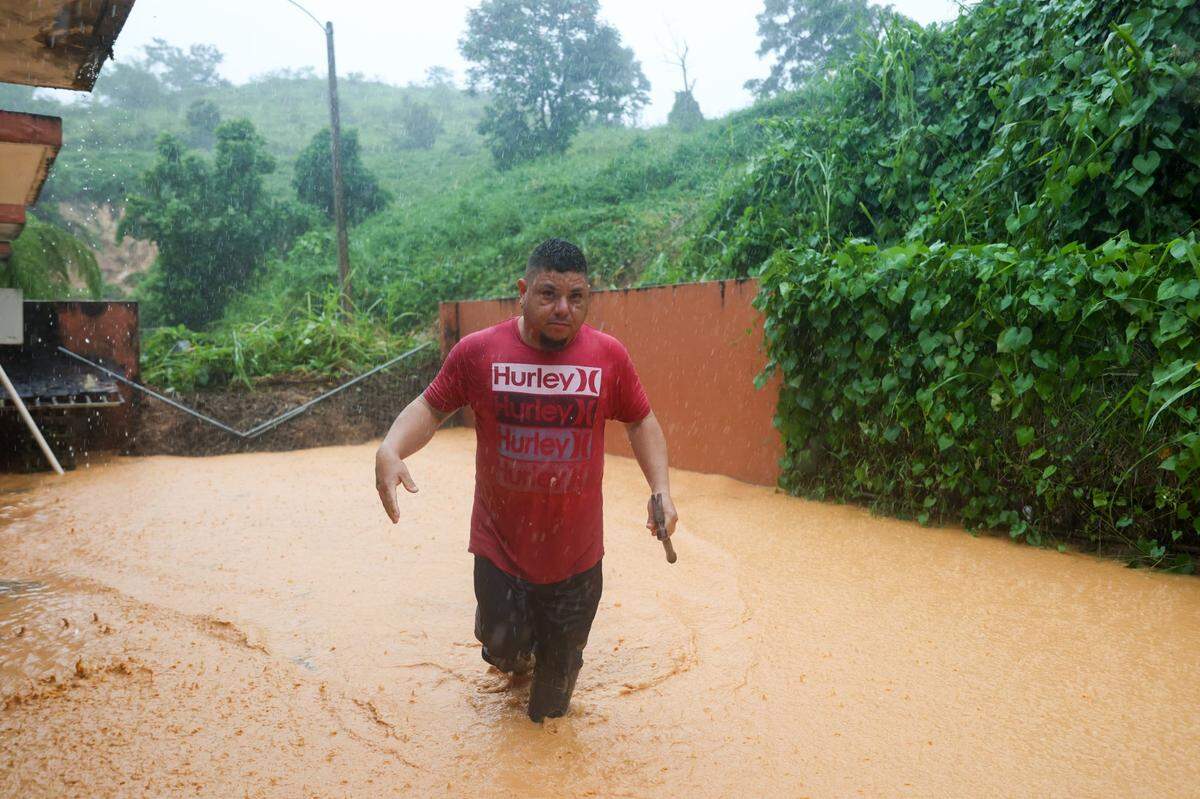
“We need help, we need to get out of our houses in Playa de Salinas urgently. I already called emergency management and nothing, I swear I’m swimming and I’m very, very cold. I need to get us out of here, literally the beach is in the house,” she wrote, adding that her group included a minor, a disabled person and an elderly person with diabetes.
On Sunday evening, the island’s state emergency management agency coordinated with the National Guard to send 10 trucks to evacuate several communities in Salinas. Mayor Karilyn Bonilla said on local TV station WAPA that the situation in Salinas was worse than what happened during Hurricane Maria in 2017.
Pierluisi said that there were reports of damage throughout the island, including fallen trees and electric lines, as well as obstructed roads and landslides. Flooding washed away a bridge in Utuado that had been replaced after Hurricane Maria in 2017. He called the storm’s damages “catastrophic.”
Power knocked out
Fiona also knocked out the island’s fragile utilities. On Monday morning, the head of the Puerto Rico Aqueducts and Sewer Authority told local media that 750,000 clients don’t have running water.
The storm also left the already-fragile electric grid out of service. Hugo Sorrentini, an official with the island’s power utility, LUMA, told the Miami Herald on Monday morning that the private utility operator was doing initial evaluations to assess grid damages.
The company had managed to restore power to 100,000 clients, but he said that number would fluctuate as the situation changed and repairs are made. The company also had five patrols to monitor the transmission lines in hard-to-reach areas.
“Right now, the biggest challenge is that it keeps raining,” he said.
Pedro Labayen, a ham radio operator who oversees the mountain town of Utuado’s community-led emergency radio response, told the Herald that the town, particularly its rural areas, had been “hard hit.”
One family that lives near Dos Bocas had to be rescued after water completely surrounded their home.
The local hospital, municipal and state police and the firefighters were all hooked up to the radio network, Labayen said. And it was through the program that the town’s emergency management officials found out about the rising waters that collapsed one of the town bridges, allowing for the evacuation of nearby residences.
“A lot of landslides, many families that were trapped and had to be rescued in the countryside,” said Labayen. “The emergency management is overstretched.”
FEMA pledges ‘long-term’ help
After the federal government’s much-criticized response to Hurricane Maria, Gov. Pierluisi praised Biden for reaching out and offering assistance for recovery.
Biden spoke with Pierluisi aboard Air Force One on Monday, while the president was traveling back to the United States after attending the funeral of Queen Elizabeth II in the United Kingdom, according to a readout of the phone call provided by the White House.
The president promised the number of support personnel from the federal government would “increase substantially” in the coming days, joining the 300 employees of the federal government already helping the island recover.
“The President said that he will ensure that the Federal team remains on the job to get it done,” according to the readout.
In an interview, Keith Turi, assistant administrator of the FEMA Recovery Directorate, said that the island is better able to withstand and recover from the damage of Hurricane Fiona than it was in 2017.
“There’s still a long way to go to get where we really need to be and where Puerto Rico wants to be in terms of resilient infrastructure, but there has been a lot of progress that’s been made,” Turi said. “Overall, I think we and Puerto Rico are in a much better place and better positioned for this storm than we were five years ago.”
He did caution, however, that it’s a “little early” for federal and local officials to assess the full damage of the storm.
The FEMA official said that in addition to the hundreds of agency personnel already located in Puerto Rico before the storm, a group that’s part of a longstanding contingent helping the island rebuild from Hurricane Maria, a group he said will “increase by hundreds as the days move forward.”
One of three national leadership teams is being deployed to the island, Turi added, along with an urban search and rescue team. The agency is already planning to help the island recover from Fiona over the long haul, he said.
“As you can imagine, we will bring in additional resources as they’re needed,” Turi said. “We’re already teeing up potential resources for later stages of the mission. The staffing for this operation will be dynamic and it’ll change.”
FEMA officials do not yet have confirmed reports of casualties, Turi said, and is still assessing what parts of the island were hardest hit by the storm. But he said the agency is preparing to respond to any part of the island most in need of help.
Restoring lost electrical power will be a priority, he said.
One of the biggest factors in the response is going to be the status of power and how quickly that power comes back up,” Turi said. “Of course, so much of what is relied upon, the critical lifelines, rely on power.”
He said FEMA plans to continue helping Puerto Rico recover for as long as it takes, noting how Hurricane Maria devastated the island only five years ago.
“We recognize the impact of this coming just a day before the five-year anniversary, how that is difficult for everyone involved,” Turi said. “Our hearts go out to those that are suffering a loss again, and we’re going to be with the people of Puerto Rico for the long term.”
McClatchy Staff Writer Alex Roarty contributed to this article.
This story was originally published September 19, 2022 at 9:44 AM.