Will hurricane swells hit Florida’s coast this weekend? What to know about Earl’s impact
A powerful and strengthening Hurricane Earl forecast to pass to the southeast of Bermuda Thursday evening as a Category 3 storm is not heading toward a U.S. landfall. But that doesn’t mean the U.S. east coast won’t feel Earl’s effects in the form of dangerous rip currents along South Florida beaches up through north and central Florida over the weekend.
READ MORE: Hurricane Earl forecast to turn into a Cat 4, and swells could reach U.S. east coast
The entire U.S. eastern seaboard is paying attention.
“It’s fair to say that Earl will cause dangerous rip currents along much of the east coast United States from northeastern Florida across to Maine,” said Eric Blake of the National Hurricane Center.
Cape Canaveral northward is where the rip currents may get most severe starting later Thursday, Blake said.
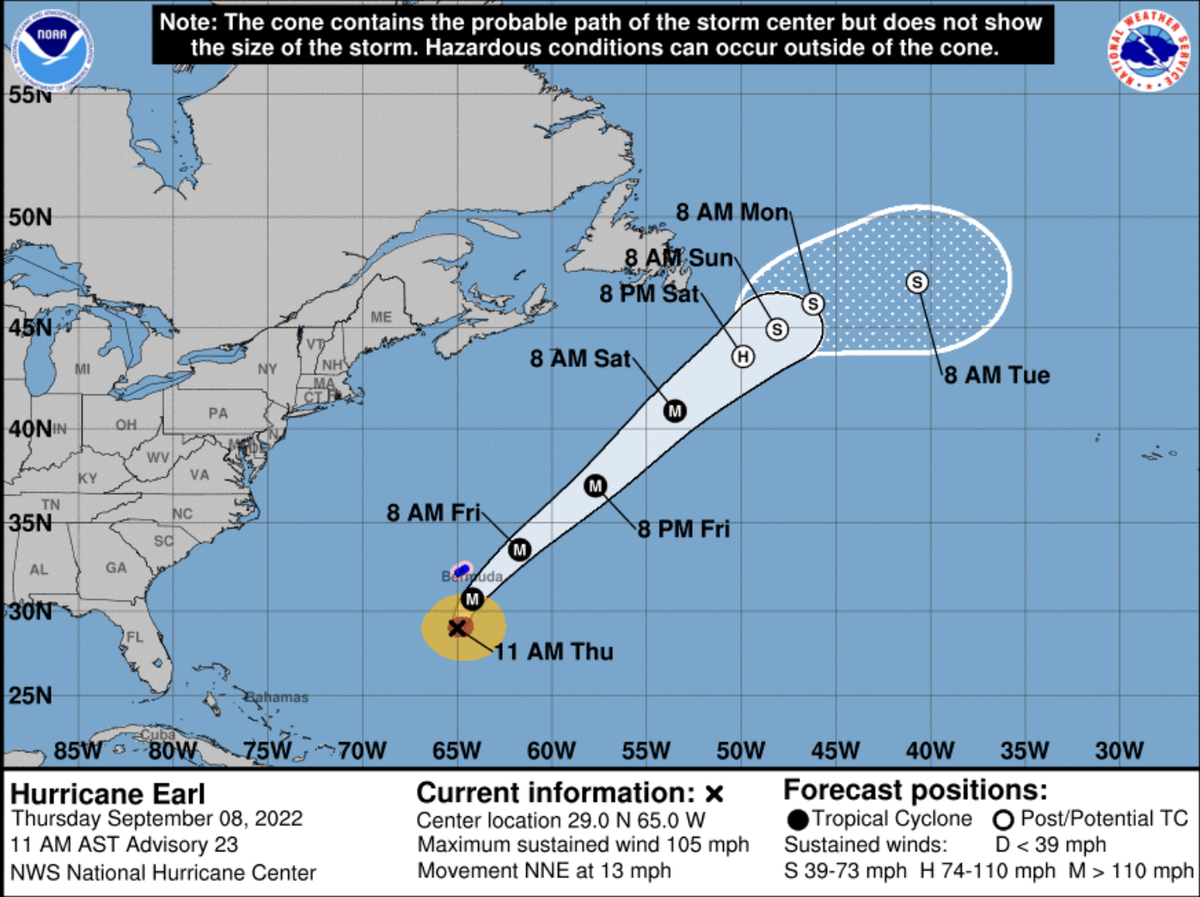
Arrival of swells in Florida
Local forecasters at the National Weather Service pinpointed when Florida could start to see some of these swells and building rip currents.
“We are expecting to see some swells from Earl make their way down the Florida peninsula and, obviously, the higher swells would be further north out of our area and for central and northern Florida,” said meteorologist Larry Kelly of the National Weather Service in Miami.
“We can see swells begin to move in really fast in the Palm Beaches, northern portions of our area, beginning Friday and Saturday,” Kelly told the Miami Herald.
Swells are collections of waves that are produced by storm winds that could be blowing hundreds of miles out to sea, as opposed to waves, which are generated by winds blowing locally, according to Sciencing. Swells characteristically have smoother, more regular and uniform crests and a longer period than wind waves, according to the National Weather Service.
These swells would work their way south through the weekend and into Monday when they should start reaching Miami-Dade County, Kelly said.
“Starting with Palm Beach earlier in the weekend and then continue to work down the coast as we move through Sunday and Monday. As of right now it looks like Monday is going to be the highest day for rip currents,” Kelly said on Thursday with an eye toward Miami-Dade.
On Thursday morning, the wind direction was buffering parts of the Florida coast, he said.
“The one thing that is kind of benefiting is that the winds are going to be offshore. We have south-southeasterly winds the next couple of days. They eventually do turn to our southeast and easterly later in the weekend. So that’s also why the rip currents will go up later in the weekend as well,” Kelly said.
The Florida Keys are not facing Earl-spawned rip currents. But the weather service did alert parts of the island chain about a coastal saltwater flooding possibility through Thursday for the middle and lower Keys due to isolated and scattered thunderstorms.
For Orlando, the incoming swell from Hurricane Earl was about 900 miles east of Cape Canaveral early Thursday morning and was producing a moderate risk of life threatening rip currents. But the risk may become high Friday and on the weekend due to the swell, the weather service in Melbourne said. The same forecast applies to the Cape Canaveral region of the state.
As of Thursday, the weather service has no mentions of rip currents for Tampa Bay area or Jacksonville area beaches, though there is a flood watch warning from Thursday into Saturday night for the Jacksonville area, portions of northeast Florida and Georgia due to existing showers and thunderstorms.
Naples beaches run a moderate risk Thursday, with the possibility of an elevated risk over the weekend if swells reach the area, the weather service said.
Rip currents can be deadly. On Sunday, Cutler Bay Middle School teacher Michelle Vargas, 49, drowned after she saved her son, Michael, 10, after they got caught in a rip current during a family vacation in El Salvador.
Rip current tips
If you get caught in a rip current you can get out of them safely, experts say.
▪ Heed warnings and lifeguards’ directions. Pay attention to posted beach patrol flags and signs.
▪ Don’t panic if you get caught in a rip current. “Relax and float,” the National Weather Service suggests.
▪ Don’t swim against the current toward the shore, NOAA says. If you can, swim in a parallel direction following the shoreline and then at an angle toward the beach.
▪ If those tips are not working and you can’t escape the water’s pull, face the shore and call or wave for help. Always wise to swim near a staffed lifeguard station, just in case you should need assistance.
South Florida forecast
Thunderstorms are in South Florida’s forecast from Thursday into the weekend. Thursday and Friday eyes a 70% chance and Saturday and Sunday has a 50% chance, according to the weather service, as well as CBS Miami meteorologist Lissette Gonzalez.
“We’ll get pretty wet,” Kelly said. Gonzalez pronounced Thursday an “alert day” due to the storm chance.
This story was originally published September 8, 2022 at 12:33 PM.