Hurricane season is here. Here’s a forecast, what you should do and where to get answers
Welcome to the 2021 Atlantic hurricane season.
June 1 is the first official day of the season — even though we already saw Tropical Storm Ana form near Bermuda last month. Forecasters are predicting another “above average” hurricane season this year, although we shouldn’t see as many storms as the record-breaking season in 2020.
And just like last year, Florida’s hurricane prep in 2021 includes COVID-19 safety protocols.
Here’s what you should know:
How long is hurricane season?
Hurricane season runs June 1-Nov. 30, with a peak in August and September.
What’s the forecast for this year? How many storms?
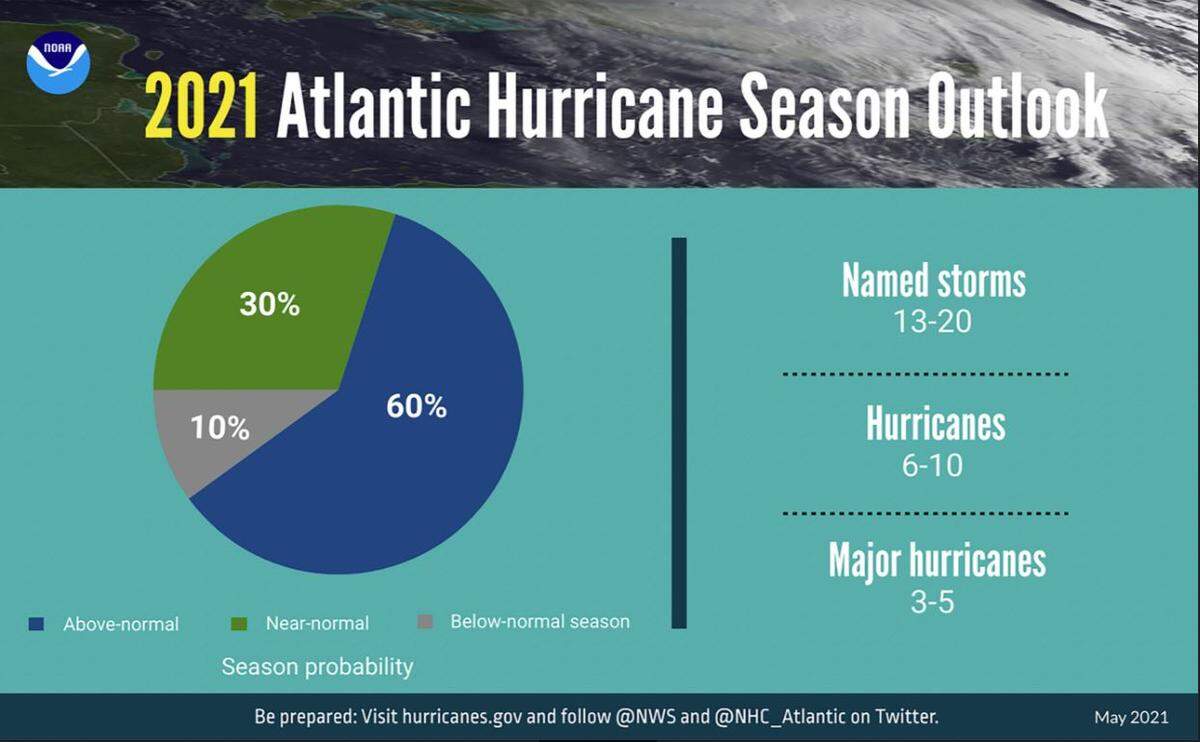
NOAA is predicting another active hurricane season, but not quite as bad as last year.
The agency predicts 13 to 20 named storms, 6 to 10 of which would strengthen to a hurricane and 3 to 5 that would become major hurricanes, which means Category 3 or higher.
Last year there were 30 named storms, 14 of which were hurricanes, and a record-breaking 7 of which were major hurricanes.
Will we have El Niño or La Niña this year?
NOAA in early May suggested that this season will likely see a weaker La Niña, or neither weather pattern.
El Niño is usually associated with warmer waters in the Pacific, which typically results in the Atlantic seeing a slowdown of hurricane activity. La Niña, on the other hand, tends to cause colder waters in the Pacific, which can whip up more hurricane activity in the Atlantic.
How will Florida hurricane shelters handle COVID-19? What if I’m sick?
In Miami-Dade County, evacuees will be screened for COVID-19 symptoms and exposure at the door, but workers will not ask people if they’ve been vaccinated.
Everyone will be requested to wear a mask inside Miami-Dade County shelters. Anyone who refuses will be sent to another area of the shelter with others who refuse. The masked and unmasked will also receive meals separately.
Evacuees ill with COVID-19 or recently exposed to the disease will be sent to hotels and motels.
What should I be doing right now?
Start prepping your hurricane kit if you haven’t already done so. The Florida Division of Emergency Management has an online checklist you can refer to with tips on what your hurricane kit should include.
Recommendations include enough canned or nonperishable food for at least seven days for each person and at least one gallon of water per person. Make sure you have enough food and water for your pet, too.
Your kit should also include flashlights, battery-operated or cranked radio, cash, a first-aid kit, and medicines. And since we’re still in the pandemic, it’s a good idea to have some extra masks, cleaning wipes and hand sanitizer, too.
If a storm is coming, where can I get updates on its track and if I’m in an evacuation zone?
▪ Local TV news stations, radio and newspapers, including MiamiHerald.com/storm
▪ The National Weather Service — weather.gov.
▪ The National Hurricane Center — nhc.noaa.gov
TIP: You can also follow your local media outlets, the National Weather Service and the National Hurricane Center on Twitter for updates. For South Florida specific updates from the National Weather Service, follow @NWSMiami on Twitter. The Miami Herald’s Twitter and Instagram account is @MiamiHerald.
If your police department, school, county or local elected leaders are active on social media, it’s a good idea to follow them, too. They usually post storm preparation tips, including where to get sandbags, in the days leading up to the storm, and after the storm, post updates on things like food drives and flooded roads.
Miami Herald staff writer Alex Harris contributed to this report.
This story was originally published June 1, 2021 at 8:31 AM.