‘Zombie Tropical Storm’ Paulette still alive. South Florida disturbance no longer tracked.
Forecasters have stopped monitoring a small disturbance that formed over South Florida over the weekend. Tropical Depression Beta and Hurricane Teddy are still out there. Back from the dead, Paulette again forms into a tropical storm then a post-tropical cyclone.
Paulette formed again late Monday southeast of the Azores, an island archipelago in the mid-Atlantic, though the storm’s tropical storm status is forecast to be short-lived. By 11 p.m. Tuesday, Paulette became a post-tropical cyclone for the second time/
As of the 8 p.m. Tuesday National Hurricane Center advisory, the disturbance that formed over South Florida on the weekend was no longer being tracked. It was forecast to head south to soak Cuba through Wednesday before making a U-turn and bringing soggy conditions back to South Florida on Thursday.
Elsewhere, Beta is continuing to douse the middle Texas coast to southern Louisiana with rain. Beta made landfall near the southern end of the Matagorda Peninsula in Texas late Monday night.
Forecasters are also continuing to watch Hurricane Teddy as it moves toward Canada. The storm’s large swells can be felt along the east coast of the United States and will likely cause dangerous surf and rip current conditions, according to the hurricane center.
Here’s what to know:
Beta’s rains could soak hurricane-hit regions
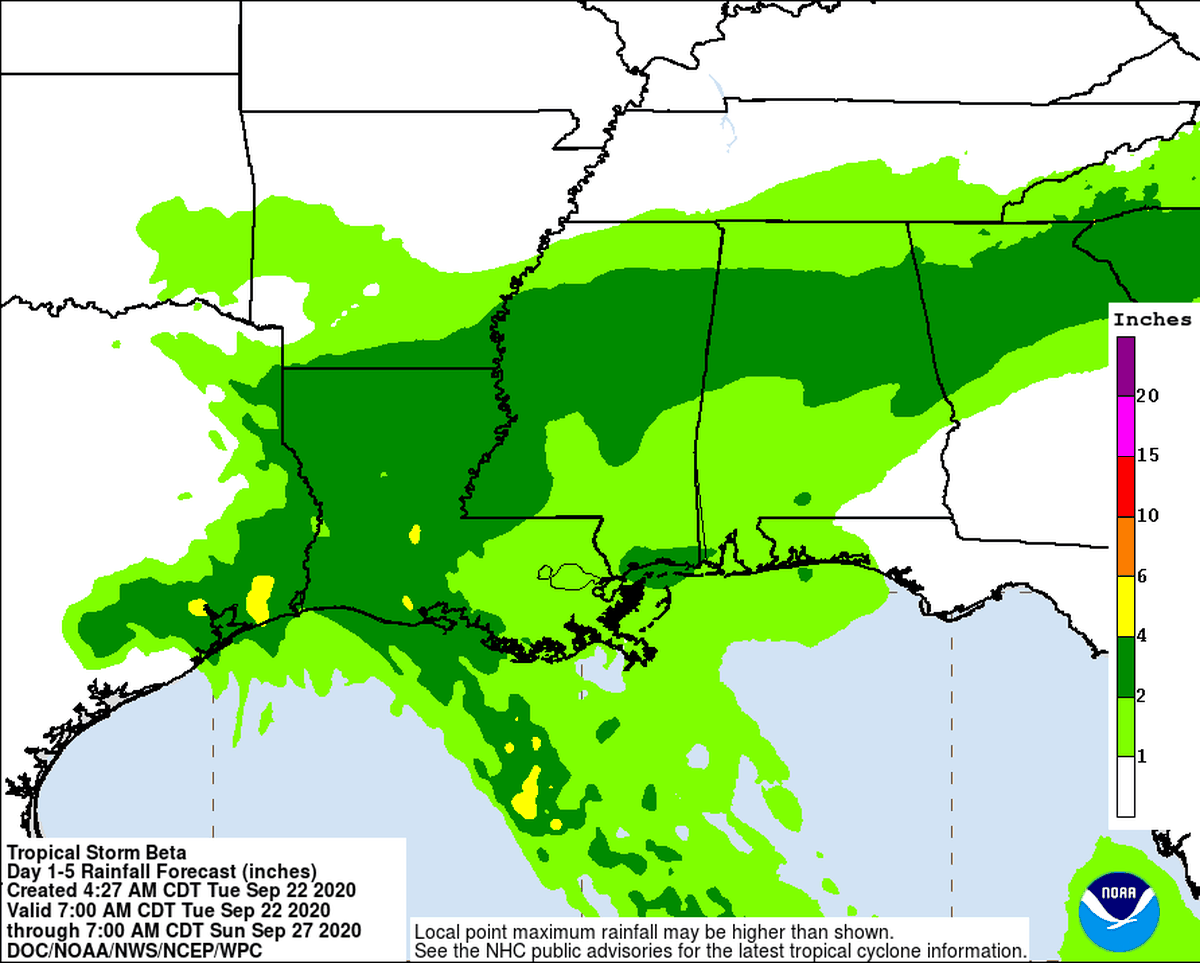
Beta weakened from a tropical storm into a tropical depression Tuesday morning then became a remnant by nights end.
Beta has been a rainmaker, with some of the heaviest rainfall, between 6 to 10 inches of rain, reported in southern parts of the Houston metro area in the past 24 hours, according to the Weather Channel.
Forecasters say it is continuing to be a heavy rainfall and flooding threat over portions of the upper Texas coast and into the lower Mississippi River Valley.
As of the 11 p.m advisory, Beta’ was moving northeast at 8 mph and its maximum sustained winds were at 30 mph.
Paulette’s brief revival
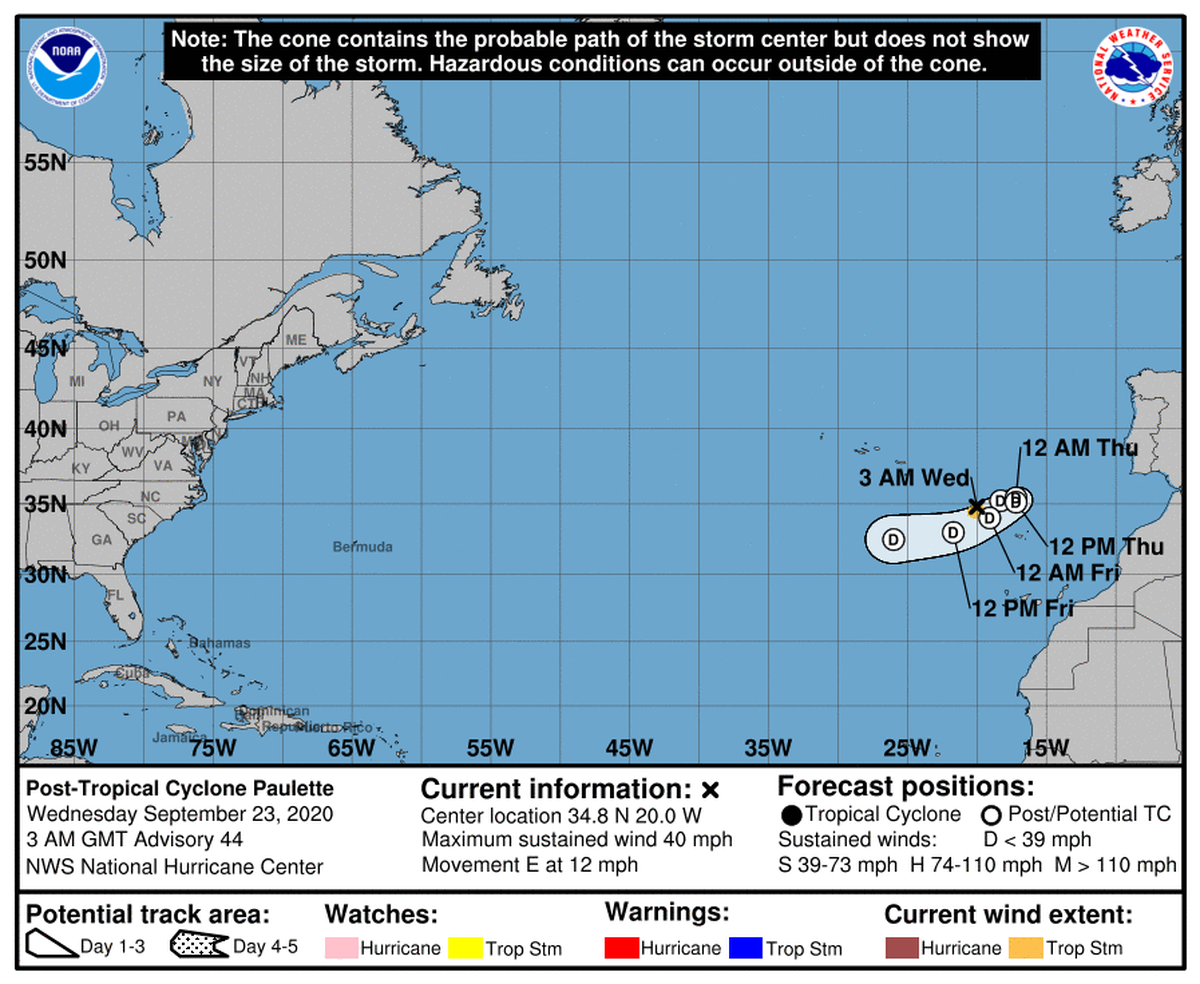
Tropical Storm Paulette formed again into a post-tropical cyclone late Tuesday east-southeast of the Azores and was on track to head east through Thursday before looping west, although forecasters doubted Paulette could survive that long.
As of the 11 p.m. update, Paulette’s maximum winds were at 40 mph with more weakening expected.
“Slow weakening is forecast, and the post-tropical cyclone is expected to become a remnant low by Wednesday morning,” forecasters wrote.
Where is Hurricane Teddy going?
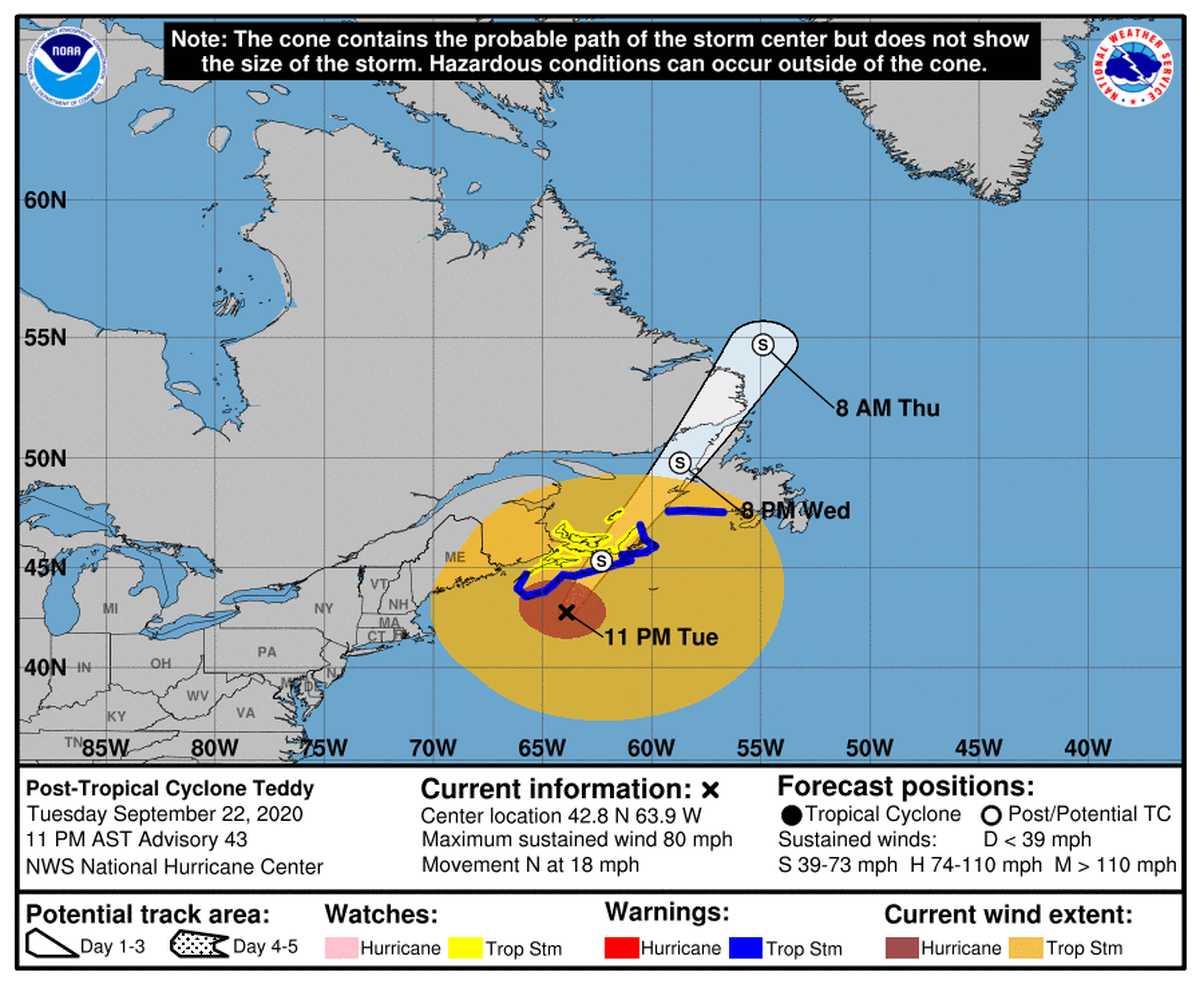
Teddy, a Category 1 hurricane, could bring destructive waves, wind and rain to eastern Nova Scotia through Wednesday, and the hurricane center warned that regions far from the storm’s center should be prepared for impacts.
“Although further weakening is likely tonight and Wednesday, Teddy should be a strong post-tropical cyclone when it moves near and over Nova Scotia,” forecasters wrote.
The storm’s maximum sustained winds lowered to 80 mph with higher gusts, as of the 11 p.m. update. Forecasters predict Teddy will be at or near hurricane-level strength by the time it moves near and over Nova Scotia, increasing the risk of direct impacts from wind, rain and storm surge, according to the hurricane center.
Teddy is about 125 miles south of Halifax, Nova Scotia and 465 miles south-southwest of Port Aux Basques, Newfoundland.
Tropical storm watches and warnings are in effect for portions of Nova Scotia, and heavy rainfall is expected across Atlantic Canada between Tuesday and Thursday.
Teddy’s large swells are expected to affect portions of Bermuda, the Leeward Islands, the Greater Antilles, the Bahamas, the east coast of the United States, and Atlantic Canada during the next few days and may possibly cause life-threatening surf and rip current conditions, according to the hurricane center.
Miami Herald staff writer Carli Teproff contributed to this report.
This story was originally published September 21, 2020 at 7:47 AM.