
Hurricane prep at Vizcaya: Protect 2,500 decorations, a 570-year-old rug, assorted statues
While many Floridians installed hurricane shutters, hammered plywood, stored patio chairs and stocked up on canned beans, caretakers at Vizcaya confronted the delicate task of protecting 2,500 priceless decorations, a 570-year-old rug, an 18th-century harp, assorted marble statues and 1,500 orchids.
Vizcaya is no ordinary house, so hurricane prep requires extraordinary measures.
F. Scott Fitzgerald could have been referring to International Harvester tycoon James Deering and his extravagant, eccentric recreation of an Italian villa when he said the very rich “are different from you and me.” Miami’s iconic bayfront estate, finished in 1922, three years before Deering’s death, is packed with furniture, art, ceramics and tapestries he collected from Europe and showed off to guests during Gilded Age parties.
Even with Hurricane Dorian projected Saturday to spare South Florida of the worst weather, the Storm Team at Vizcaya Museum and Gardens was still bracing for soggy conditions. They shielded Deering’s winter retreat from Irma’s winds and rain two years ago and are prepared for another intense mansion-sitting job.
“We learned a lot from Irma about the most vulnerable areas and objects,” said Marvin Mora, who spent 40 sleepless hours scrambling between Vizcaya’s 32 ornate rooms, mopping water, securing windows that flew open and leaning with all their might against bowing doors during the storm. “Four of us had to hold the Dining Room doors closed during the peak gusts, so we did a little emergency surgery, sawed a two-by-four board and nailed it across. That worked.”
But one of the oldest items in the estate’s collection got wet — the famous 15th-century, 27-by-8-foot wool Admiral Carpet, a gift to Spain’s King Ferdinand from his grandfather. It’s been covered with plastic.
In the Music Room, a 17th-century pope’s harpsichord and a harp crafted by Marie Antoinette’s instrument-maker have been draped with Dartek nylon preservation film and moved away from the window.
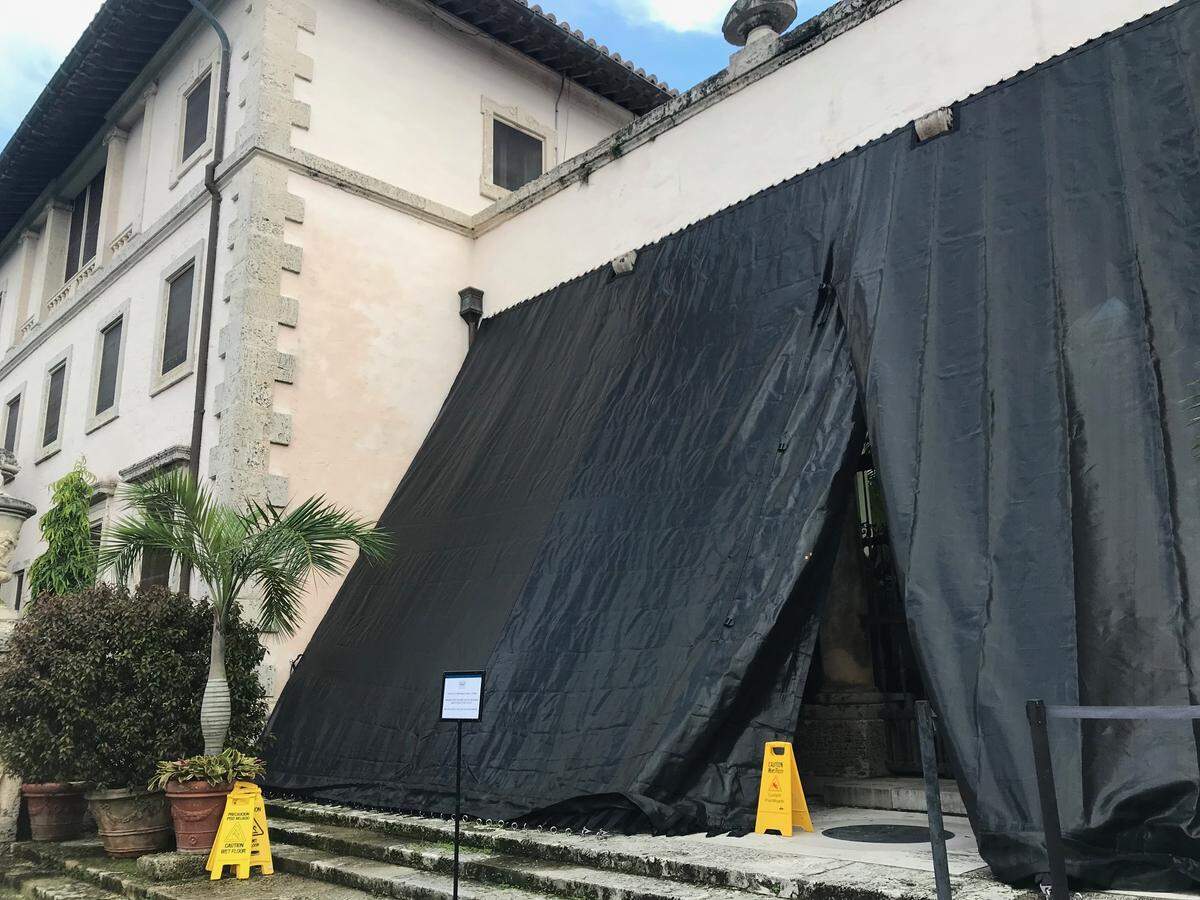
Each of the three glassed-in loggias has been protected by armor screens — anchored mesh curtains that can withstand 200-mph winds and block flying objects. The Enclosed Loggia on the south side of the house has floor-to-ceiling original leaded glass doors and windows embellished with Vizcaya’s caravel and seahorse symbols that open out to the gardens. Perforated metal screens installed as shutters on other windows have corroded and will be replaced next summer as part of a refurbishment project.
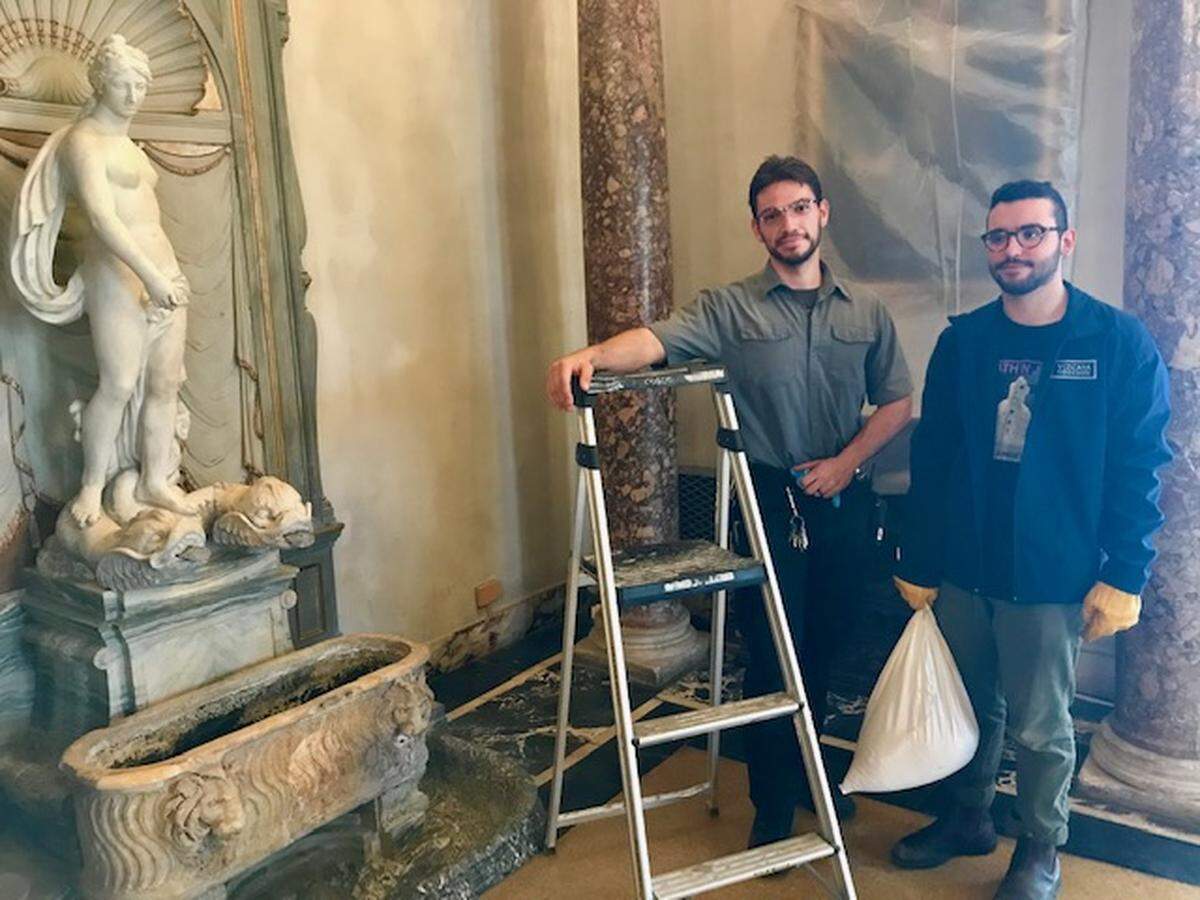
“We’re covering all the beds, textiles and paintings in case any spray gets in. We’re crating and removing many of the most valuable objects, including the library portrait of Deering by Anders Zorn,” David Miller, Vizcaya’s collection care technician, said Friday as he moved chairs toward the Dining Room fireplace. “We’ve taken down lanterns. We’re putting down more than 1,000 pounds of sandbags to prevent water intrusion. We’ve got dehumidifiers standing by to reduce moisture.”
During Irma, the storm surge flooded Vizcaya’s swimming pool and basement cafe and gift shop — which used to be Deering’s game room. A half dozen new pumps are installed in the basement, cracks have been patched and the flood doors, which operate like submarine hatches, have been reinforced.
Mora witnessed the rising of the sea during Irma as bay waters submerged Vizcaya’s famous stone barge up to its railings and rolled halfway up the terrace stairway.
“It was surreal,” recalled Mora, deputy security director. “It happened really fast.”
The 100-year-old barge, built as a breakwater, has become an unofficial barometer of sea rise in Miami. Virtual models of the barge were made with a 3-D laser scanner pre-Irma to aid in restoration when necessary.
Even before Dorian turned north, flooding was not expected to be extreme because the winds would have come from the west, said Ian Simpkins, Vizcaya’s deputy director of horticulture, who is in charge of prepping 10 acres of gardens. The Yacht Landing and Tea House were damaged during Irma. Saltwater killed grass and plants and deposited 70-80 cubic yards of seaweed and muck.
“The craziest thing is that 100 flip-flops washed up everywhere, and none of them matched,” Simpkins said. “We got a jet ski, mini-refrigerators and lots of trash that took six months to clear.”
About 40 large, old trees are on a preventative pruning schedule — a lesson learned after the winds of Katrina and Wilma blew down trees and branches that decapitated statuary in 2005. Not a single tree was lost when Irma’s 100-mph winds buffeted the gardens. Orchids, staghorn ferns and rare plants have been moved to the greenhouse. The pool and fountains are being drained.
“We’ve sandbagged strategic spots,” Simpkins said. “We’re in the process of acquiring a Tiger Dam system, which is 50-foot links of heavy-duty PVC tubes that you can inflate with bay water and anchor along flood-prone areas.”
Vizcaya’s gardens and hammock should prove resilient once again, Simpkins said.
“It’s the nature of gardens — a living thing meant to evolve and change, and where we live that change can be especially dramatic,” he said.
Vizcaya, a National Historic Landmark described as “a rock” by Executive Director Joel Hoffman, was meticulously constructed with Italian marble, native coral and poured cement. But the staff hurricane drill back in the Roaring 1920s wasn’t as sophisticated as it is today.
“It was an open-air house and there wasn’t much they could do besides hunker down,” Miller said. “Mr. Deering and his guests were never here during hurricane season, anyway.”
This story was originally published August 31, 2019 at 10:48 AM.