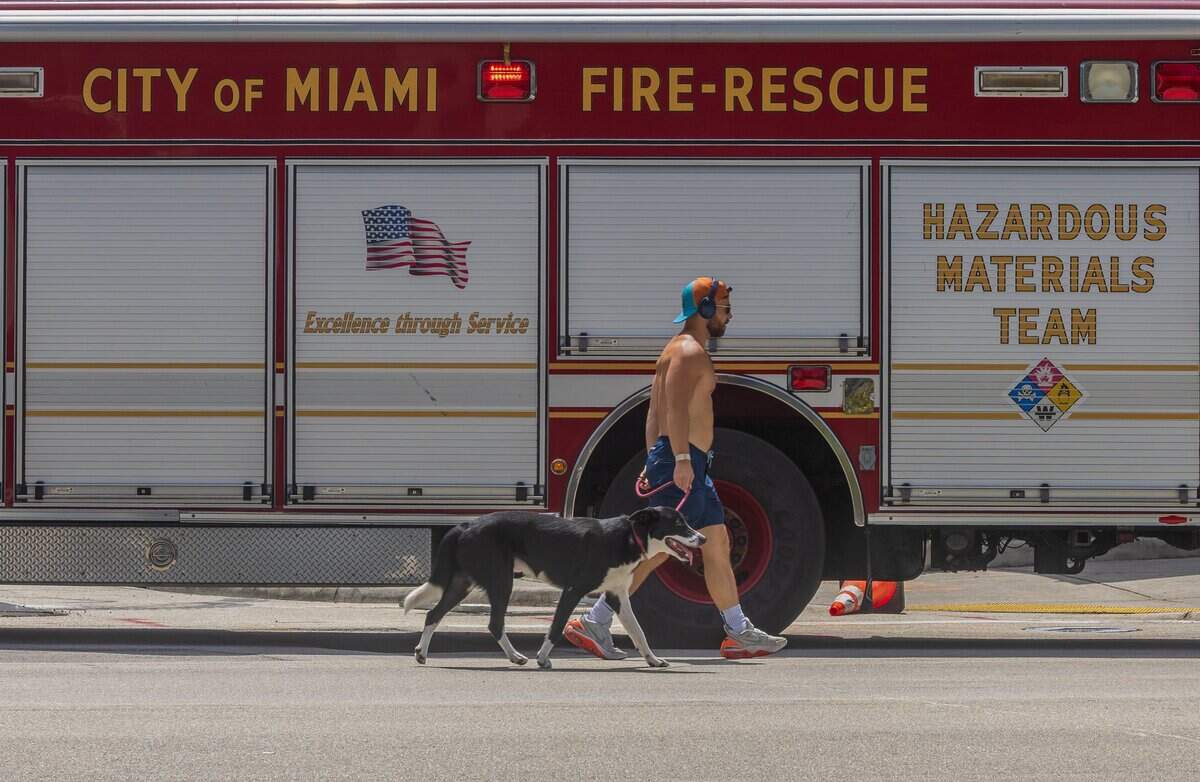
Weather alert: It could feel like 110 in Miami — but there’s also a change

The heat is back. But so is the rain.
For the fourth straight day, the National Weather Service has issued a heat advisory for South Florida. Friday’s advisory is in effect from 11 a.m. to 7 p.m. and covers Miami-Dade, Broward and Palm Beach counties.
The weather service says it could feel as hot as 110 degrees across the region.
The big difference? A 50% chance of rain in the region after 2 p.m., according to the weather service.
One word is all you need to know: “Steamy,” said CBS News Miami meteorologist Shane Hinton.
A break in the layers of Saharan dust that moved into Florida earlier this week is allowing moisture to seep in, Hinton reported.
The forecast high on Friday is 92, dropping to 82 at night.
But the extreme heat index — air temperature mixed with humidity — “may cause heat illnesses,” the weather service warns.
MORE: As World Cup arrives, Miami’s heat and humidity a concern for players, fans
What is a heat advisory?

The National Weather Service in Miami issues a heat advisory if the heat index is 105 degrees for at least a couple of hours. Before 2023, the weather service issued a heat advisory when the heat index hit 108 degrees. The goal is to spread awareness so that people protect themselves from extreme heat that leads to more than 30 deaths and hundreds of hospitalizations every year, according to county estimates.
What is the heat index?

The heat index is a measure of how hot it really feels when relative humidity is factored in with the actual air temperature, according to the weather service. This is how hot it “feels like” on your skin on steamy days.
How can you prevent heat illness?
Miami-Dade County has issued several hot weather survival tips, based on U.S. Centers for Disease Control and Prevention advice, and noted who is most at risk:
Who is most at risk of heat-related illnesses:
Older adults 65 and older, young children, people with chronic health conditions or mental illness, athletes who exercise outdoors, outdoor workers, people living unsheltered or with limited access to air conditioning, pregnant people, and pets.
What you should do:
▪ Stay cool by spending time in air-conditioned buildings.
▪ Avoid direct contact with the sun.
▪ Reduce physical activity and move to shaded areas.
▪ Do outdoor activities in the cooler morning or evening hours, and dampening your shirt or wrapping a wet scarf or bandana around your neck or forehead could also help.
▪ Stay hydrated and drink plenty of water or drinks with electrolytes if you’re sweating. Don’t wait until you’re thirsty to drink more. Use sunscreen, too, to protect against skin damage.
▪ Limit or avoid dehydrating caffeine and alcohol.
▪ Never leave infants, children or pets in a parked car, even if the windows are cracked open.
▪ Watch for signs of heat exhaustion or heat stroke. Seek medical care immediately if you know someone who experiences symptoms that could include high body temperature, headache, dizziness or nausea and confusion.