
Will it feel like 116? Forecasters issue new ‘excessive heat warning’ for South Florida

The National Weather Service has issued another “excessive heat warning” for South Florida.
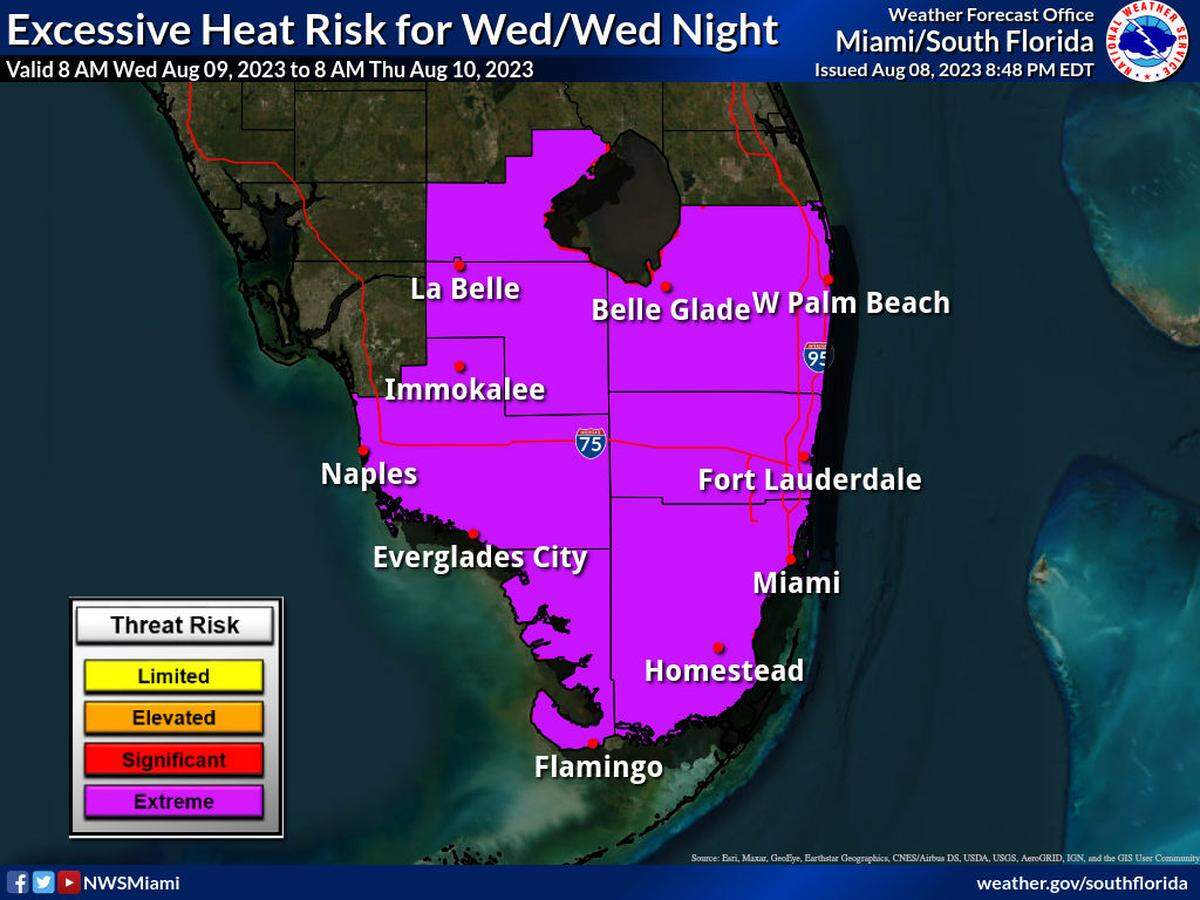
The warning runs from 11 a.m. to 7 p.m. Wednesday in Miami-Dade and Broward and 10 a.m. to 7 pm. in the Keys, according to the weather service. The region also was under a warning on Tuesday.
And it may not end here.
Forecasters say high temperatures and an even higher heat index could stick around the rest of the week. After an excessive heat warning ended Tuesday night, National Weather Service meteorologist Will Redman noted there’s a strong possibility that more will follow.
An excessive heat warning is issued when an area will have the heat index hits 105 degrees or higher within the next 12 hours. Wednesday’s warning includes Miami-Dade, Broward and the Keys, according to CBS News Miami meteorologist Lissette Gonzalez.
“We could keep these heat warnings going through Friday,” she said.
The weather service said Wednesday’s high temperatures will rise to the mid- to upper-90s, and could feel like 116.
Why is it so hot?
Redman said one cause of such high heats spawning watches and warnings could be the compounding of two weather events.
For South Florida, July is usually when drier weather causes excessive heats with August seeing temperatures pitching down.
“It is a little abnormal to be this dry,” he said.
However, a potential dust layer from Africa and a stronger than usual area of high pressure in the northeast United States could be creating a perfect breeding ground for extremely high temperatures, he said.

What’s a heat index?
The heat index indicates how hot it feels to the human body when relative humidity is factored with the actual air temperature.
The higher the index, the more life-threatening it becomes for people to be exposed to direct or indirect sunlight.
Even if the index is only between 90 to 103 degrees, you could suffer heat exhaustion if outside long enough.
Recently, South Florida has been in what the NWS calls the “danger” zone.
When the index hits between 103 to 124 degrees, people are even more likely to suffer heat exhaustion.
This story was originally published August 8, 2023 at 10:27 PM.
%20Cropped%20(2).jpg)