
Self-driving Waymo cars hit the highway in Miami, and anyone can now ride
Yes, that’s a Waymo zipping across Interstate 95.
For the first time since the robo ride-share service rolled out earlier this year in South Florida, Waymo cars have hit the highway.
That means faster trips for customers — and also a new reason to rubber-neck for drivers. Waymo says that driverless vehicles on the highway will travel at the posted speed limit and can be in any lane.
As of Wednesday, white Waymo cars are traveling on I-95, the Airport Expressway, State Road 836, I-395 and other highways within service boundaries. Until this point, they were restricted to weaving their way through city streets.
Also new: Waymo has opened its customer base to everyone who wants to summon a ride on the app.
Until Wednesday’s full opening for customers in Miami-Dade County, the self-driving vehicles with the spinning sensors on the roof had a waiting list of riders. Over the past three months, over 100,000 Miami riders gained access to Waymo service via the wait list.
Despite the new highway access, Waymo still doesn’t go everyone you may want it to go. Waymo’s boundaries don’t include service at Miami International Airport, for instance.
Currently, the northern boundary of Waymo’s service zone remains just north of Northwest 46th Street on the north and the Palmetto Expressway on the west. On the Miami Beach barrier island, service extends north to Bal Harbour. Riders can also go as far south as Dadeland. The zone covers much of the city of Miami, including downtown, Brickell, Wynwood and Edgewater, as well as Coral Gables, South Miami and swaths of unincorporated Miami-Dade.
But getting form here to there will be quicker on the highway — as long as highway traffic is moving, of course. Riders can let Waymo know in the app that they want to include highway travel in their trips.
“Our service is already becoming a trusted part of the local landscape,” said Shweta Shrivastava, Waymo’s senior director of product management. “By opening to the public, we’re helping more residents and visitors experience safe, comfortable rides that take the stress out of navigating these busy cities.”
MORE: We’re on our first driverless ride in Miami. See how it goes — and doesn’t go
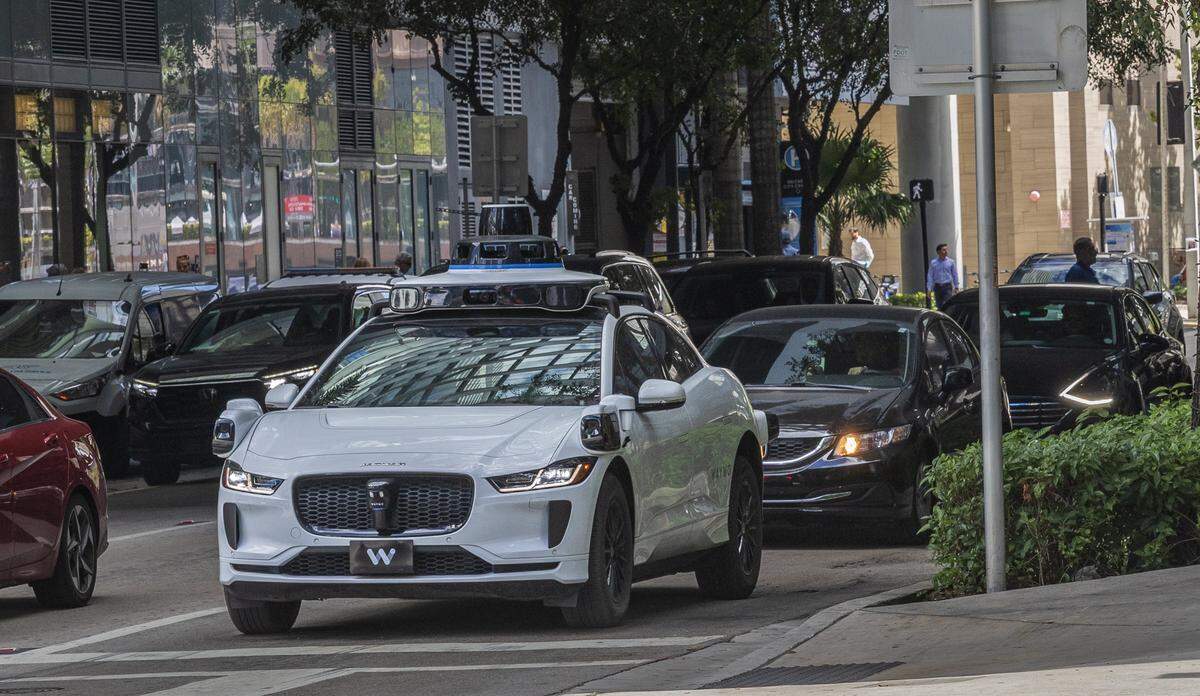
Waymo is based in California and is a subsidiary of Google’s parent company Alphabet. Waymo began testing in certain parts of Miami in January. The self-driving cars also are now running in Orlando — but Walt Disney World and Universal are not on the initial routes.
Before the highway clearance, a Waymo trip could be slow-going. During a March ride, a Waymo trip from an office park near Miami International Airport to Brickell that normally takes about 25 minutes took nearly an hour on the city streets.
Waymo is using lessons earned in other cities to program its cars for Miami highways, including testing and simulation. But the cars have hit some speed bumps in Miami and elsewhere, with viral videos showing cars stopped in the middle of the street.
Waymo also has more coming for Miami users. Miami is in line to participate in a pilot program between Waymo and Waze, a navigation app. Data from Waymo rides will be available to Waze users in the cities where Waymo operates to verify potholes and other road issues.
This story was originally published April 15, 2026 at 3:24 PM.
%20Cropped.jpg)