
Do you have to stop at a red light on a highway ramp? What Florida law says
AI-generated summary reviewed by our newsroom.
- Florida law requires drivers to stop at red lights on highway entrance ramps.
- Ramp signals manage highway congestion by regulating vehicle merge flow.
- Violating ramp signals may result in fines and license points under state law.
If you travel on Interstate 95 in South Florida, you’ve probably seen traffic lights flashing red and green on some highway entrance ramps.
Do you have to stop on red on a highway?
The answer is red it red, whether the traffic light is on a city street or an I-95 ramp.
The signals are designed to improve traffic flow on congested expressways. Here’s what to know about them:
What are ramp signals?
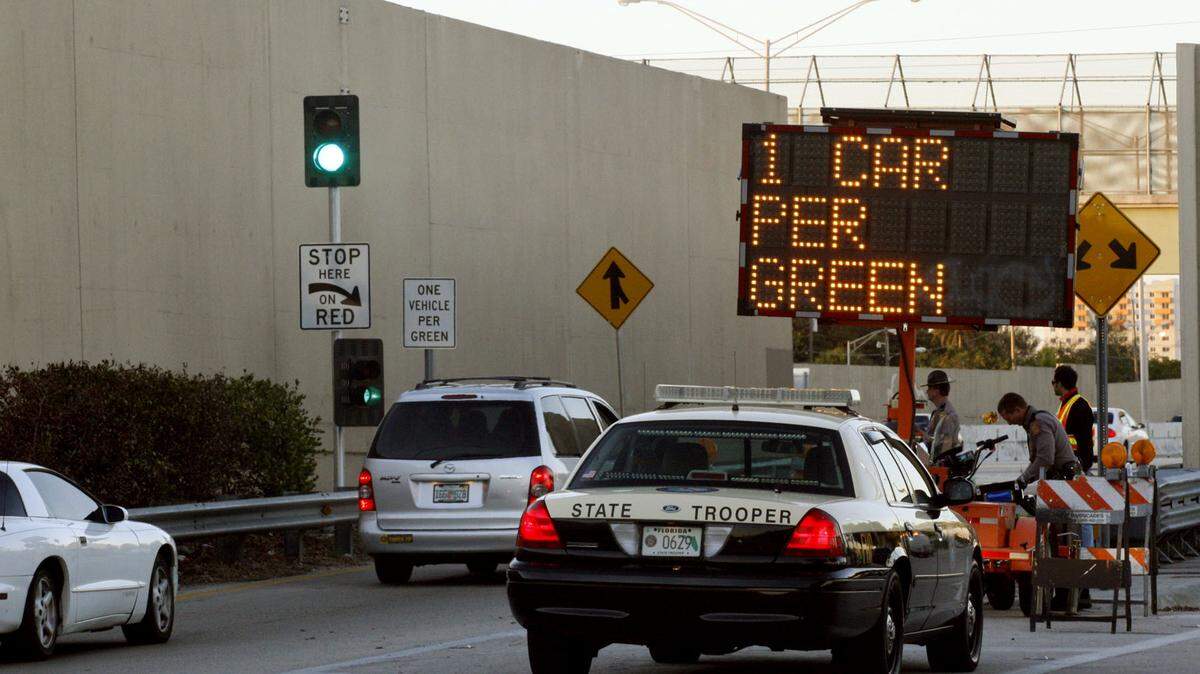
Purpose: The signals, installed by Florida Department of Transportation, are traffic lights at the foot of the entrance ramps that feed into the merge lanes on I-95. The purpose, the state says, is to reduce congestion along northbound and southbound I-95 in South Florida by controlling the rate cars drive onto the highway lanes from the ramps. Signals were also installed in Palm Beach County. Daniel Smith, transportation systems management and operations safety manager, said in an instructional video: “Ramp signaling is a traffic control method used to separate vehicles as they enter the highway from the on ramps to prevent merging conflicts.”
Activation: According to FDOT, ramp signals are activated by roadside sensors and can be manually operated by traffic controllers in real time during times of heavy congestion, such as weekday rush-hour — which, as frustrated Miami area drivers know, feels practically all day. They may also be activated to break up groups of merging vehicles into merging lanes to stagger the arrival in case of accidents clogging the lanes or other events, like hurricane evacuations or even a presidential visit, that affect the flow of cars on the expressway lanes. The goal is to reduce “bottlenecking.”
Where are the ramp signals?
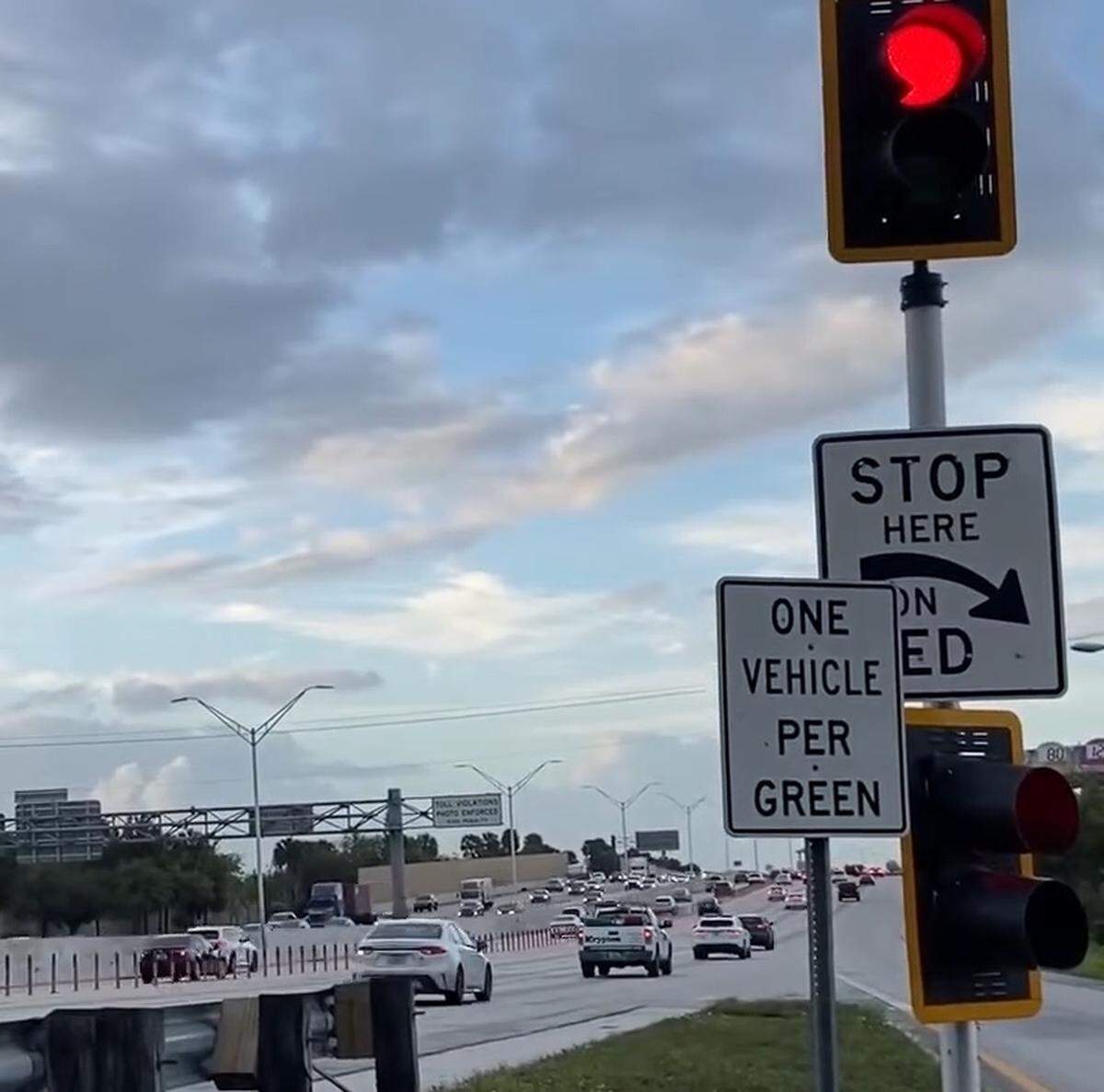
Miami-Dade locations: Many entrance ramps in Miami-Dade have signals. Locations include the southbound entrance points of I-95 from Northeast 203rd Street/Ives Dairy Road to Northwest 62nd Street, as well as northbound entrance points of Northeast 183rd Street/Miami Gardens Drive and Northeast 203rd Street/Ives Dairy Road.
Broward locations: Broward ramp signals include ramps at Hallandale Beach Boulevard, Pembroke Road, Hollywood Boulevard, Sheridan Street, Stirling Road, Griffin Road, State Road 84/Marina Mile Boulevard, Davie Boulevard, Broward Boulevard, Sunrise Boulevard, Oakland Park Boulevard, Commercial Boulevard and Cypress Creek Road.
How does ramp signaling work?
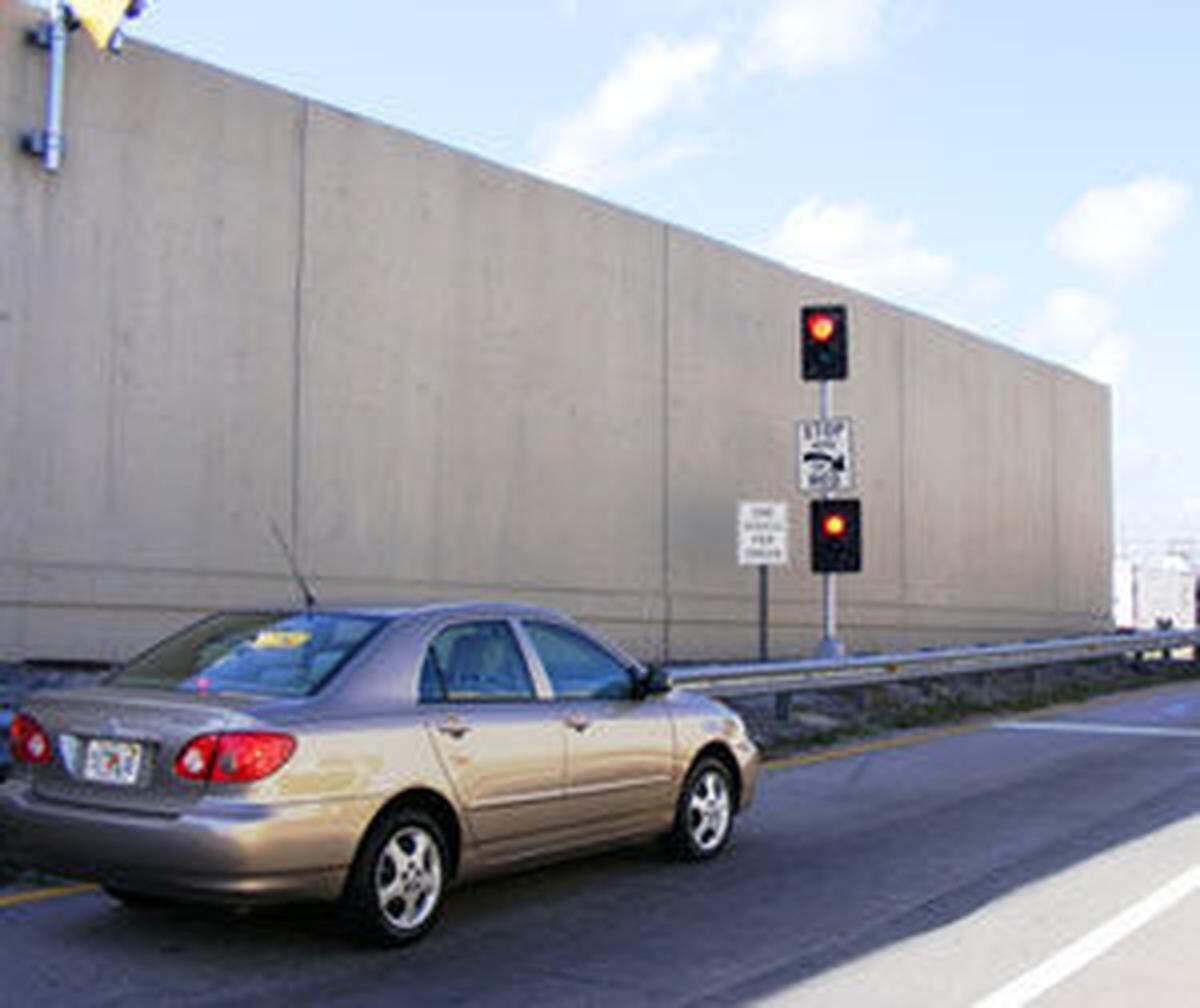
▪ Red light means stop: Pull up to the marked white line on the ramp entrance pavement before the “Stop Here on Red” sign and that activates the ramp meter light. The length of a red light can vary anywhere from 2 to 13 seconds depending on the level of congestion on the highway, according to FDOT. ▪ Green signal means you can go forward: Look for a space in the merge lane to the left and try and accelerate to the speed with which traffic is flowing. Don’t speed up to cut someone off. Motorists on the highway have the right-of-way. Also, don’t crawl into an available space as you risk getting rear ended and also cause a slow-down. A green signal generally shines for several seconds to let a couple cars at a time merge onto the interstate.
Speed on entrance ramp
On the entrance ramp, as it straightens into the acceleration lane, you should increase your speed if you have the green light, adjusting your speed to match the pace of cars on the highway, the Florida’s Driver’s Handbook says.
“Merge into traffic when you can do so safely. You must yield the right-of-way to traffic on the expressway. You cannot always count on other drivers moving over to give you room to enter, but do not stop on an acceleration lane unless traffic is too heavy and there is no space for you to enter safely,” the handbook says.
Backup on city streets?
Sensors: Traffic sensors can detect if the ramp is filling and clogging neighboring city streets off of the expressway. If the sensor is triggered, it could alert the ramp signal to speed up the red-green cycle and FDOT staff, monitoring visually, can also adjust cycle times, according to 95 Express.
Can you get a ticket if you go through the red?
Florida Statute 316.074 rules that you have to obey posted traffic signals. Failure to stop at a ramp signal when the light is red is considered a moving violation. According to 95 Express, you can face a fine and an assessment of points to your driver’s license for blowing through a ramp sign red.
This story was originally published August 12, 2025 at 6:15 AM.