
Can you get a ticket for eating or drinking in the car? What Florida law says

You head into the drive-thru, order the burger combo, unwrap it before you pull back into traffic.
Can you legally eat it while driving?
Florida law doesn’t prohibit eating while driving. But the law does crack down on what could happen if you eat and drive: careless or reckless driving that could start as a dietary distraction.
And what could be more distracting than a squirt of hot sauce on your pants while you navigate Miami’s roadways?
So, what about drinking?
As a driver, you can sip your Coke from the drive-thru — but you can’t crack open a beer or other alcoholic beverage. And neither can a passenger
Here’s what to know about eating and drinking in a vehicle in Florida:
Driving distractions
According to the Florida Department of Transportation, there are three types of distraction: manual, visual and cognitive:
▪ Manual distraction involves taking your hands off the wheel.
▪ Visual involves taking your eyes off the road.
▪ Cognitive involves taking your mind off of driving.
READ MORE: What time is the most dangerous to drive in Florida? It goes beyond the rush hour
Is eating while driving illegal in Florida?
The Florida Department of Transportation says that “activities such as eating, talking to passengers, reading, adjusting the radio or climate controls, dealing with children, and being fatigued or drowsy can be equally as distracting” as texting on a cellphone.
These activities aren’t illegal, but that doesn’t mean that they can’t land you in serious trouble.
Penalties for careless and reckless driving
▪ Careless driving: If trying to get the perfect bite of a burrito causes you to swerve, speed or otherwise drive dangerously, you can be cited for a moving violation under a careless driving statute. That could cost you up to $500 in fines.
▪ Reckless driving: If your distracted driving causes a crash, you could be charged with reckless driving. According to Florida law, reckless driving occurs when a driver operates a vehicle with “willful or wanton disregard for the safety of persons or property.”
▪ Penalties: If convicted, you could face up to 90 days in prison or a $500 fine for a first offense, and up to six months or a $1,000 fine for a subsequent offense.
Can drivers and their passengers drink in a vehicle?
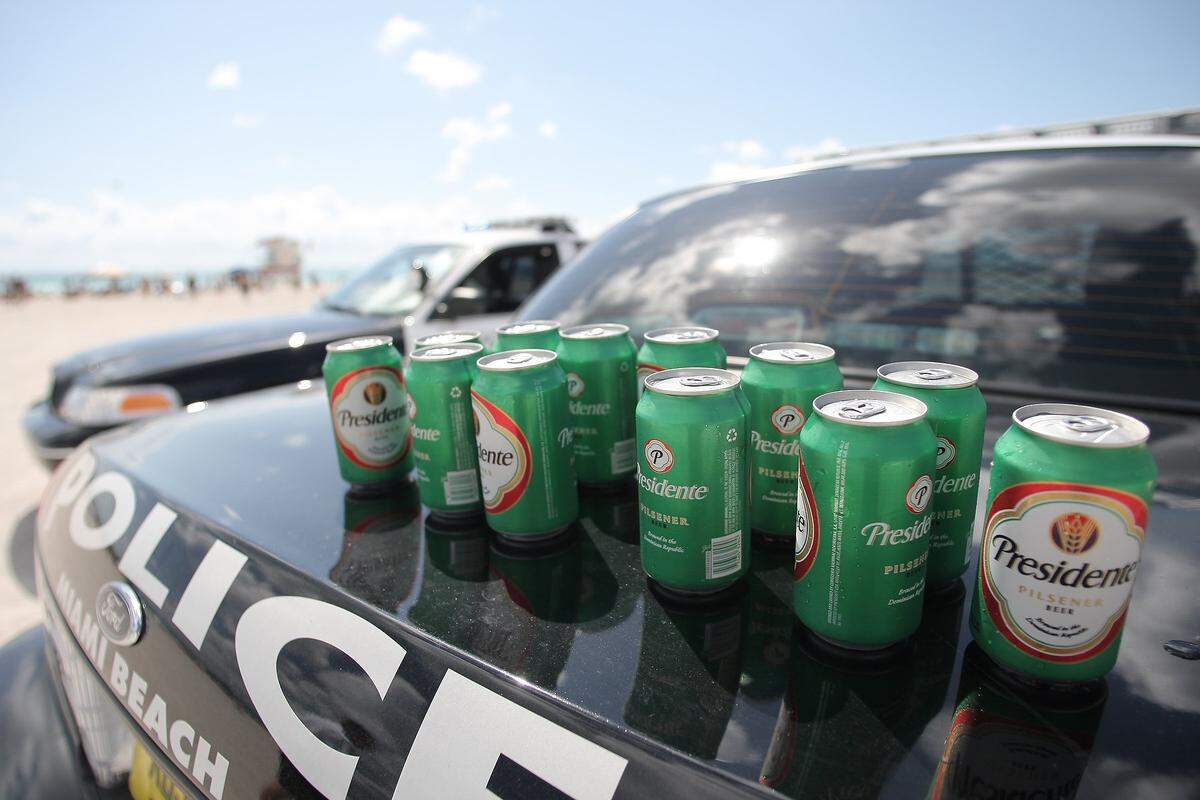
The law: Anyone in a car cannot legally drink alcohol or possess an open container of alcohol, according to Florida law.
Parked car: If you’re parked with an open container, are you breaking the law? It depends where. The law applies to places “open to travel by the public, including, but not limited to, a street highway, or alley.” So you can’t drink on any public road, even if you’re parked. If you’re parked at a private property, you’re allowed to have a drink while sitting in your parked vehicle. Just make sure that you’re not on a public road. When in doubt, find a place to drink that isn’t your car.
Exceptions: You can drink as a passenger in a commercial vehicle such as a bus or a taxi cab. Self-contained motor homes over 21 feet in length are also safe. Keep in mind that Uber and Lyft drivers don’t possess commercial driving licenses, so you would be in violation of the law if you drink as a passenger in a ride-share vehicle. And some public buses ban drinks of any kind on board.
Fines: If you violate the open container laws as a driver, you can be found guilty of a noncriminal moving traffic violation, punishable by a fine of up to $90 for a first offense. If you’re a passenger, the penalty is a fine of up to $60 for a first offense. Counties and municipalities can impose harsher restrictions as well. For example, Miami-Dade County’s ordinances state that a first offense carries a fine of $25 to $200, up to 10 days in the county jail, or both the fine and the jail time. A second offense brings fines between $50 and $250 and/or imprisonment for up to 10 days, and any subsequent offenses will be between $75 and $500 and/or imprisonment for up to 30 days.
Legal open containers in a vehicle: Containers with a broken seal can be kept in locked compartments that are inaccessible to the driver and passengers. That means you can put your alcohol in a locked glove compartment or in the trunk.