
Out-of-sync traffic signals worsen gridlock, but Miami-Dade says relief is on the way
Drivers in Miami-Dade County must confront their most despised stretch of road every day with nerves and soles of steel.
Whether it’s Kendall Drive, Biscayne Boulevard or U.S. 1, the gauntlet of stops and starts is ruled by moronic traffic lights that cause a recurring condition among hapless commuters: Unsynchronized-signal stress syndrome. Symptoms include elevated blood pressure, fear of leaving the garage and brake-foot fatigue.
For decades, traffic flow — or the lack thereof — on greater Miami’s grid of streets has been controlled by lights that seem to turn green or red on a whim and in complete disregard for their peer lights. It’s like a dance troupe performing without a choreographer.
The chaos triggers not only headaches but also long queues, blocked intersections and gridlock.
The thickening of Miami-Dade’s paved arteries has been exacerbated by an outdated signalization system that has not kept pace with changing traffic volume and patterns in a county where the population has grown by 244,568 — or nearly 10 percent — since 2010.
You know the trouble spots because you’ve been stuck at them. For example, all the intersections where Ponce de Leon Boulevard runs parallel to U.S. 1, and one light turns green only to taunt drivers with a successive red, trapping cars in between, forcing them to spill out onto Ponce and creating a horn-honking mess. Or the perpetual backup at Alton Road, 17th Street and surrounding intersections in Miami Beach, where the lights seem to be playing a game of chicken against each other.
You know specific vile lights because you have never, ever glided through them, even at the legal speed limit, even when you floor it. They’re always red when you get there.
You know how the lights turn green in a wave as you drive down Manhattan’s avenues, clearing the way like a row of opening gates? You know that doesn’t happen here.
But for motorists who approach certain stretches with visceral hate, there is hope at last, 16 years after Miami-Dade voters approved a half percent sales tax for transportation in which they cited “improving traffic signalization” as an urgent priority.
On some of the area’s most notoriously aggravating roads, “smart” cameras suspended above intersections are replacing dumb automatically timed cycle settings. Now computers will manage signal changes. They can alter the duration of green and red lights in reaction to what the camera sees. If the camera sees a torpid backup on U.S. 1, the computer can extend the green light. If an intersection is jammed, the computer can extend a red light to let it clear out.
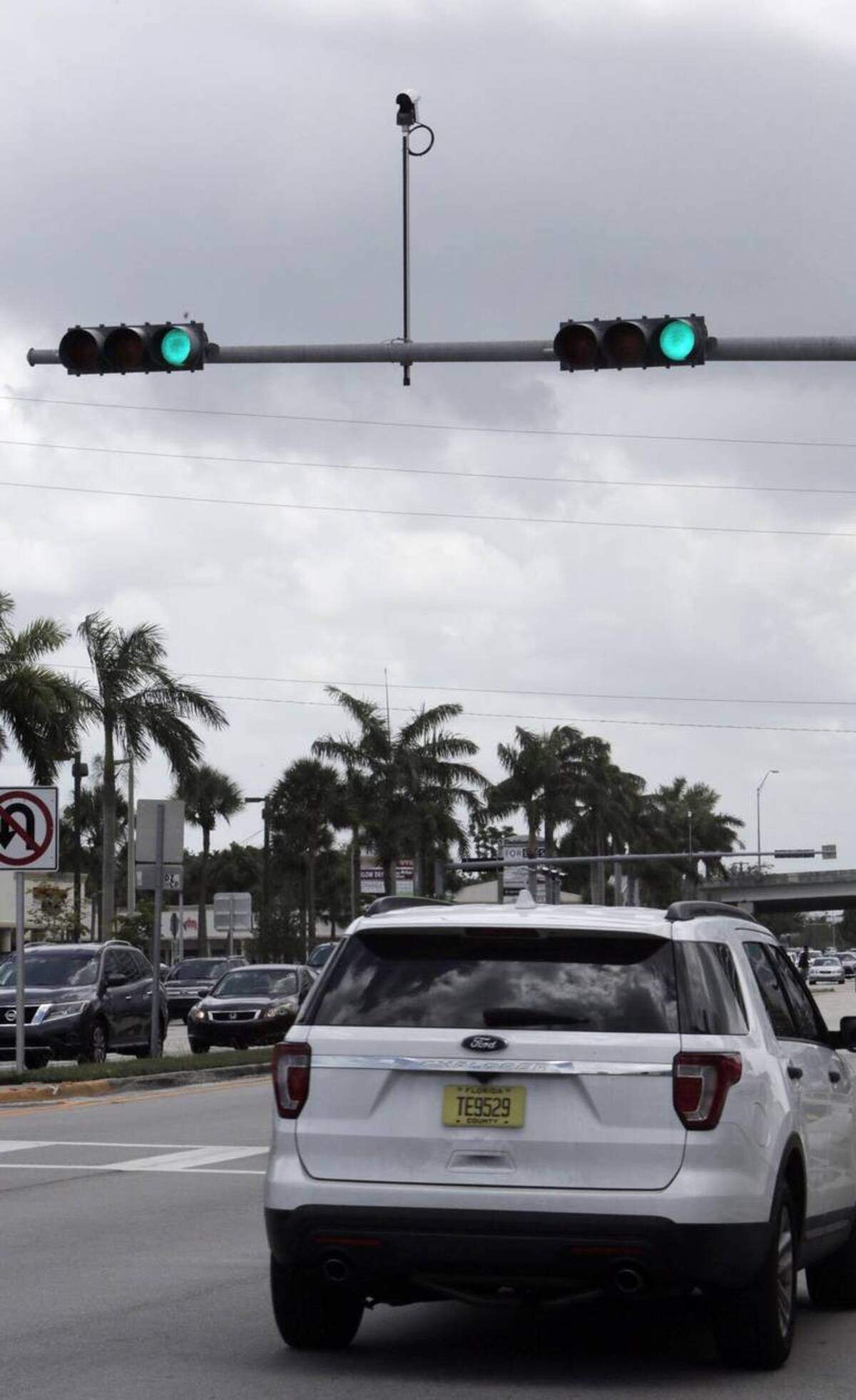
The idea is to sequence lights to maximize movement of platoons of vehicles through intersections and minimize stops at cross streets. Cameras and sensors calculate car speed and the new “adaptive” signals can change timing in response to traffic flow at different times of the day. The system is designed to accelerate travel time where there is most demand for crossing an intersection — that is, the busiest direction for traffic.
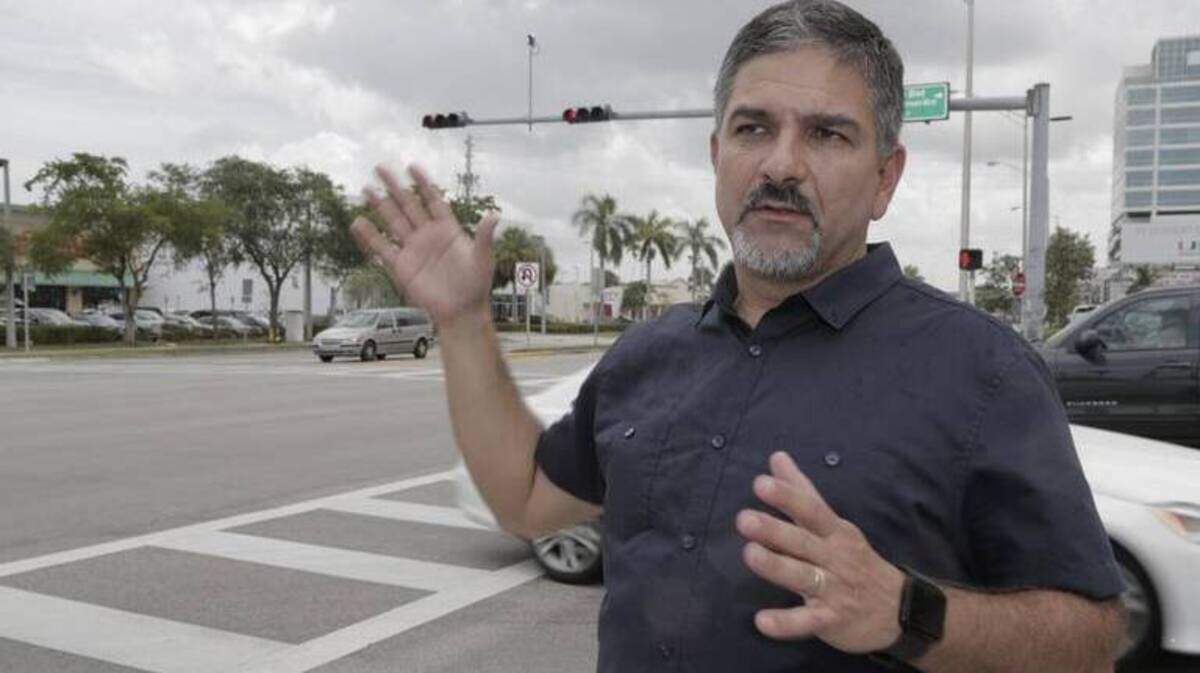
“The engineering technology keeps getting better,” said Frank Aira, chief of the Signals and Signs Division in the county’s Transportation and Public Works Department. “We can’t make cars disappear or fly, but we want to make your ride a little smoother, a little less disruptive.”
The county has implemented the first phase of its approximately $170 million, five-year plan to modernize 3,000 intersections, and the second phase should be operational by the end of the year.
The computers have proven to be almost too intelligent for Miami’s bad drivers. They are learning to cope with strange driving habits, aggressive maneuvers and Miamians’ “I’m-the-only-driver-on-the-road” mentality.
“As much as we can teach and program the computer system, Miami drivers do what they do, which is not abiding by rules, laws or logic,” Aira said. “It’s tortuous sometimes. How do you prepare a computer when you have a driver who does something unpredictable and you want to ask, ‘Why in the world are you stopping there?’”
In July the county launched the monitoring system linked to about 100 cameras at 34 intersections along an eight-mile section of U.S. 1, from the Dadeland area to I-95. Evaluation data for September showed a significant reduction in traffic sluggishness, “better than we expected,” Aira said.
“We were comparing it to last September, when we had Hurricane Irma, so even though it sounds great we want the engineers to look at October and time frames that go back two years to make sure the analysis is accurate,” he said. “Anecdotally, people say it’s moving better but we get complaints, too. We’ve made corrections and adjustments as the system learns and we learn the system.”
The system is also working on Miami Gardens Drive between Northwest 73rd Avenue and Northwest 87th Avenue, along a one-mile portion of Northwest 36th Street in Doral and on Biscayne Boulevard from Northeast 82nd Street to 15th Street.
“Some people say Biscayne Boulevard is moving better and others say, oh, no, don’t go near that,” Aira said. “We’ve encountered isolated spots where it’s doing something we didn’t anticipate. We’re trying to be proactive in fine tuning.”
The cameras have been working successfully on the South Dade busway, the 20-mile route that runs parallel to U.S. 1. Buses trigger a green light when they are within 1,000 feet of an intersection. The county reports that the average express bus trip from Dadeland South Metrorail station to Florida City has been reduced from 67 to 50 minutes.
During the next phase, the system will be activated in December on portions of Kendall Drive (avoiding the locations where the Florida Department of Transportation is working); on Northwest 163rd Street; on LeJeune Road from Southwest 16th Street to University Drive; on Southwest 27th Avenue from Coral Way to Bayshore Drive; on Flagler Street from Milam Dairy Road to Northwest 43rd Avenue; on portions of Indian Creek Drive in Miami Beach and on Northwest 36th Street from the 7100 block to Florida’s Turnpike.
Aira cautions drivers not to expect miracles.
“People are not going to say, ‘Wow, I saved 10 minutes,’ but they are going to find their drive to be less of a stop-and-go experience,” he said. “Improvements are incremental rather than giant steps. A signal is no more than a referee trying to balance who gets to go. On highways there are no signals and we still have traffic. Saturation is an obstacle.”
One thing the old system is known for is long, inefficient cycles — up to three minutes along U.S. 1 for a full cycle. The county is examining more frequent use of half cycles, “but keep in mind you’re introducing 4-5 seconds of delay on each change because you have to give a minimum amount of yellow light time plus red light clearance time, so there’s always a tradeoff,” Aira said.
Los Angeles has synchronized 100 percent of its signals to minimize congestion and prioritize its light rail and rapid bus services.
But there is a downside to expensive light-syncing projects, according to some transportation experts and urban planners. While the benefits on busy corridors bottlenecked by capacity problems are marginal, making travel slightly easier can induce demand, adding up to more and longer car trips, more traffic, more sprawl, more fuel consumption, more emissions and less money from the government budget allocated to improving other transportation modes that reduce car dependency.
“This induced demand is the reason we cannot build (widen) our way out of congestion, because widening a road induces more car trips that would not have occurred had we not widened,” writes Dom Nozzi, a transportation consultant and former planner in Gainesville and Boulder, Colo. “If it is agreed that we cannot build our way out of congestion (or loosen our belt to solve obesity), why do some of us think we can synchronize our way out of congestion?
“Traffic synchronization may be popular… but the unintended consequences point out that synchronization is highly counterproductive to the objective of a more sustainable, pleasant community, less pollution, less gas consumption and more transportation choices.”
In South Florida, drivers have been demanding relief from nonsensical signals for years, whether it’s 79th Street and Biscayne Boulevard or Southwest 117th Avenue in Kendall or Northwest 107th Avenue near State Road 836 or Bird Road from U.S. 1 to the Everglades. Where is your pet peeve located?
Aira, who lives in southwest Miami-Dade not far from Dadeland, is constantly taking notes and listening to complaints.
“My friends and my wife are my biggest scouts,” he said. “They’ll call and say, ‘I’m here and this needs to be fixed,’ or I’ll observe uncoordinated lights, a blocked cross street or a regular backup and we try to get on those problems right away.
“It’s a constant challenge. I’m hoping as the technology improves our drivers will improve, too, and be more mindful of other drivers. That would make a huge difference.”
This story was originally published November 12, 2018 at 11:58 AM.