
Trump had a lot to say when he moved to South Florida. He even wanted to move an airport
Donald Trump wants the Gulf of Mexico to be called the Gulf of America.
As a new Florida resident, he once wanted to move an airport.
After Trump bought Mar-a-Lago for $10 million in 1985, he abhorred the noisy jets flying over the mansion from nearby Palm Beach International Airport, right across the Intracoastal.
Here is a look at Trump’s first years in South Florida, when he set out to remake Mar-a-Lago into a resort and quiet the planes flying overhead.
The Miami Herald hung out with Trump and had a sit-down interview with him back in those early days of his living in South Florida. He had a lot to say, as did the people who knew him.
From the Miami Herald’s archives, here is Michael Crook’s report from March 1989 in Tropic magazine:
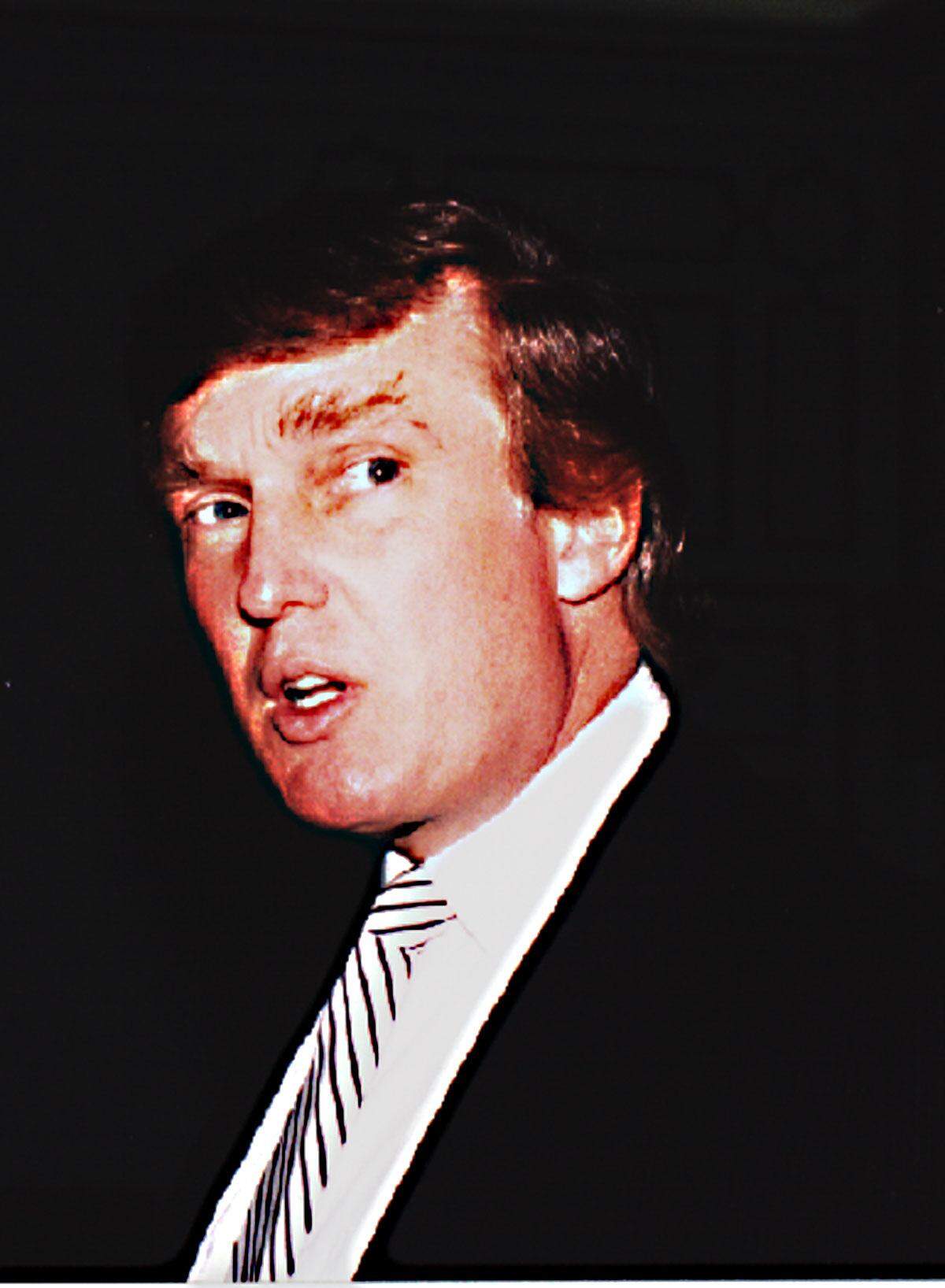
Donald Trump in Palm Beach: Hitting a roar nerve
First published March 19, 1989
The sun has disappeared beyond the middle-class condos of West Palm Beach and the western sky is painted tangerine. The air is warm and soft, sensual like silk drapery.
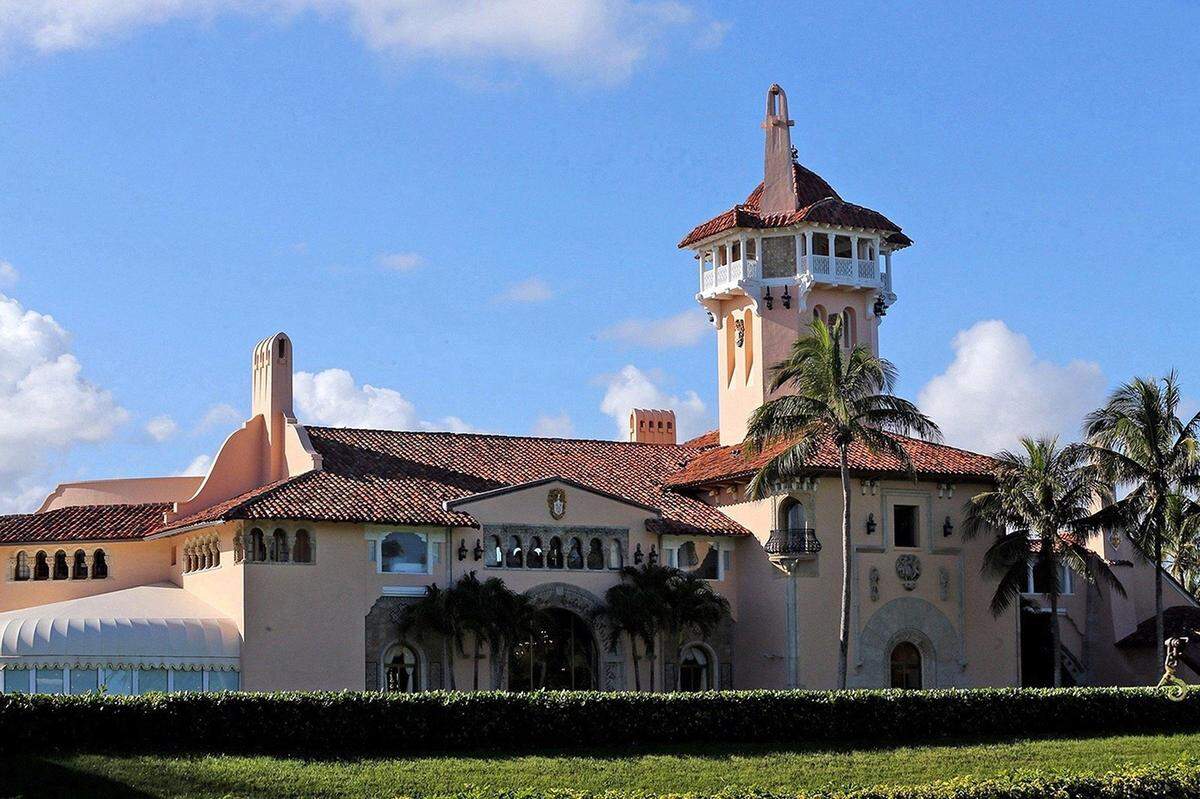
From the lake’s eastern shore, a lush green golf course bumps and rolls toward the swimming pool and fountains at the feet of the Hispano-Moresque mansion known as Mar-a-Lago, the historic hub of Palm Beach society, a gargantuan single-family home, a monument to ostentation. Two stairways that, like the entire house, seem hewn from living rock, sweep upward elegantly to the patio.
There on the round expanse of polished, inlaid pebble, dozens of men and women are mingling, spike heels clacking on the irregular surface, ordering drinks from tuxedoed bartenders, soaking up this dreamlike atmosphere. The pleasant, quirky notes of an accordion join the strains of violin, wafting upward toward the darkening sky, accenting the polite chatter of guests hoping for a handshake and a word with America’s latest King Midas and his Nordic queen of a wife. Servants circulate trays of boiled shrimp, Swedish meatballs and bacon-wrapped chicken livers.
Canape, sir? Canape?
A foreboding rumble lurches in from the west like an ugly, uninvited drunk. That sound.
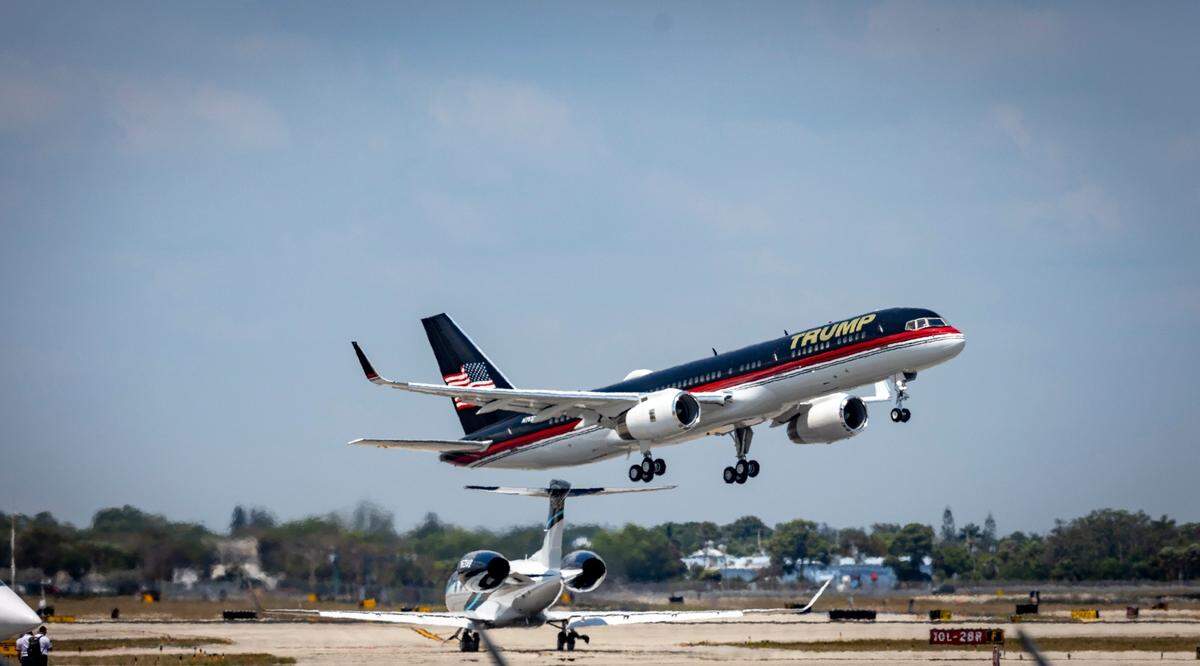
The ragged metallic roaring scream of a Boeing 727 ascending eastward, a high-pitched whine building to a thundering roar, fading to a drone. Directly over Donald Trump’s head.
Conversation halts and the moment hangs fat and ripe. At the edge of the terrace, Trump turns to a short elderly man in a dark suit, leaning toward him conspiratorially.
“Sonsabitches.”
The Queens-born billionaire builder spits the epithet, sounding very much like he means it. Our host immediately realizes he’s been heard, and turns to those around him, smiling mischievously.
“I was hoping they’d send one of them over during the party,” he announces. “Can you believe the stupidity?” In the way he says it, stoopiddidy, one hears a hint of that nasal Queens dialect, the rushed cadence of an Archie Bunker educated at Fordham and Wharton, peppered with warped vowel sounds and dropped r’s.
The stupidity. It seems to astound Trump that Those County Commissioners and Those Airport Managers would have the bad manners, the lousy business sense, to launch screeching jets over such prime real estate -- the premier piece of residential real estate, to be specific, in the United States -- during an anti-noise fund-raiser! Idiots.
The jet fades out to sea. Trump stiffens with resolve. “Airport noise, we will win,” he says, his chin jutting outward, his lower lip curling in the familiar Trump pout. “That’s just another battle. I mean, my life is a succession of battles and wars and you know, fortunately, I win most of them. I just fight hard.”
The genteel tranquility of his $10 million estate is shattered by the deafening scream of jet traffic with the regularity of commercial airline schedules. His wife, Ivana, worries for their three young children and complains that her morning sleep is sometimes interrupted.
Now that’s getting personal.
Trump came up with a solution. He’s proposed it officially. It made sense, to him.
Move the airport.
This was regarded as a tad presumptuous, even for Trump. Ever since he proposed it, local politicians, and the great mass of the 880,000 Palm Beach County residents who are somewhat less fortunate than he, have had zero tolerance for Donald Trump. Moving the airport, the airport managers dryly observe, would cost $800 million, more than enough money to buy up all the homes in the flight path and bulldoze them -- including Mar-a- Lago.
If you can make it there, you can make it anywhere.
- New York, New York by Betty Comden and Adolph Green
If anyone has ever made it in New York, it is Donald Trump. In the city of the hardest noses, the biggest deals, the toughest SOBs in the business, Donald Trump is hardest, biggest, and toughest of all. The King.
Which is why this cocktail party out in the provinces -- among outlanders neither hard, nor big nor tough as the folks Trump eats for brunch back in Midtown -- is so puzzling and so fascinating.
What was originally scheduled last year as a Victory Party has become a sad little exercise in wishful thinking. The planned guests-of-honor -- two Palm Beach County Commission candidates believed sympathetic to the cause -- never showed. They had been endorsed by Trump’s “Noise Pollution Action Fund PAC,” but both candidates were beaten at the polls by an anti- Trump backlash. The two men, tucked safely back into private life, shunned the event, as did all the county commissioners. Local politicians avoid Trump as if he were a cash bar. But the party went on, albeit cloaked anew as a fund-raiser for a kinder, gentler organization, the Good Neighbor Council for Aircraft Noise Control.
Now even his allies try desperately to dissociate their cause from Trump, because he has gained little more than ridicule for the crusade. When they referred to the party in advance publicity, they tried to make it sound like they had just rented the place for the night: “It’s not a Trump party. It’s a Mar-a-Lago party.”
The irony, of course, is that the source of the embarrassment is Trump. The man credited with restoring the magic (read: profitability) to Manhattan real estate. The man who always gets the best tables at the city’s best restaurants. The entrepreneur who rakes in millions from his gaming tables in Atlantic City; who once offered to negotiate America’s nuclear treaties with the Soviets; who says that if he deigned to run for president of the United States, he would be elected. The czar of chutzpah.
But on this southern front of the Trump empire, Palm Beach County, Donald Trump is flirting with ignoble defeat.
He’s losing, in fact, on several fronts.
Across the lake, on the plebeian side, up the shoreline a mile or so, in the heart of downtown West Palm Beach, stand twin 32-story towers dubbed Trump Plaza of the Palm Beaches. Again and again, Trump identifies the $40 million condominium complex as “the most successful project in South Florida.”
The sharp point of fact deflates the hype: Sumptuous Trump Plaza apartments sell at the pace of escargots, and objective real estate experts won’t place it anywhere on their “success” lists. They’ve called it one of the worst failures in South Florida’s swollen condo market.
As if that weren’t enough, Trump can’t even bring his rich- boy toys home when he wants. His personal airplane, a noisy 727, is banned from takeoff and landing between the hours of 10 p.m. and 7 a.m. The Palm Beach Town Council will brook no helicopter landings, so that rules out Trump’s black Puma chopper. The Intracoastal Waterway through Lake Worth is too shallow for his $30 million yacht, the Trump Princess, so he must dock it alongside -- get this -- a Best Western motel in Fort Lauderdale.
And even when he wins here, he manages to lose money. Annoyed that the Palm Beach County property appraiser put the value of his 118-room one-of-a-kind mansion at $11.5 million -- $1.5 million more than the purchase price. Trump went to court. He won, yes, lopping $86,000 off his annual property tax bill -- enough to hire three school teachers or a circuit judge -- but the bill from his attorneys made the whole deal a net loss.
“It was the principle,” Trump grouses.
Trump is obviously warming up to the idea of a good fight. Enough of negotiation and conciliation, he says. No more Mr. Nice Guy. These people just don’t know what it is to tangle with Donald Trump. This he promises: They’ll find out.
Trump is six-foot-two, blond, blue-eyed and just 43 years old. For this cocktail party he has chosen a tailored navy-blue suit, a starched cotton white shirt, an understated burgundy necktie and Gucci shoes. Ivana persuaded him to drop his matching plum-colored suits and shoes back in the late ‘70s. He looks like a man who spends no time in the sun. His pale face and flabby jowls belie too much time spent under fluorescent office lighting, too little in the gym. He lacks the deep, brown skin and well-toned musculature of the Palm Beach leisure class, the folks with plenty of time to drowse poolside after cranking on the Nautilus.
He does not drink or smoke, which only serve to make him look more out of place among gin-sipping strangers. He confesses that he has little patience for this party pap.
“And jeez, you know, it’s something else every night,” he says.
.JPG "9962201575 (2).JPG")
The man looks uncomfortable. He bears the preoccupied look of an introvert who doesn’t know whom he should talk to next or whether he ought to just leave quietly. There is on his face no sign of the experienced socialite, no broad, welcoming smile, no flashing eyes that say, “You’re my most special guest this evening,” only the pout and the large chin. At times he simply stands alone, aloof, not making any pretense of mingling. Then he snaps out of it and moves toward a conversational cluster and stands still, waiting to be noticed. He always is, and the cluster opens to embrace him.
Ivana is a vision in white, wearing a clinging designer creation that has her admirers agog. “What an incredible figure,” stage-whispers one of the women clustered around her. Ivana’s ultra-blond hair is swept back to just a grade shy of severe, and her skin is the color of dry ice, so white that one expects her hand to be cold to the touch. But it’s not. Her handshake is warm and firm. At 38, she is the new mistress of Mar-a-Lago, a place steeped in the social history of Palm Beach.
Marjorie Merriweather Post, whose family fortune derived from the sale of breakfast cereals, started wintering in Palm Beach in 1909. Post (then Mrs. Edward F. Hutton) hunted a home site for several years, crawling through underbrush and swamp, settling finally on 17 acres at the nexus of what is now the Southern Boulevard bridge and South Ocean Boulevard.
Mar-a-Lago was opened officially in January 1927 after four years of construction. The house is crescent-shaped with the open side facing Lake Worth. A 75-foot tower tops the structure, offering a magnificent view for miles in all directions. There are 58 bedrooms, 33 bathrooms, three bomb shelters and a theater.
For many years, an invitation to Mar-a-Lago was a coveted reminder that one had joined the most exclusive of closed societies, the upper crust of Palm Beach. Socialite Helene Tuchbreiter recalls the monthly square-dancing parties in Post’s dance pavilion. It wasn’t so horribly long ago, 1965 perhaps, when Post told Tuchbreiter, “I want you to call me Marjorie.”
“I told her that would be like calling the pope John,” she said in a fond, melancholy tone. “Ohh, thousands of years ago,” she said. “There will never be another Queen of Palm Beach.”
Now the separate universe of Palm Beach society is all transformation and tumult. The aging doyennes of the charity- ball set are passing away, the old-money families are falling on tighter times, and America’s nouveau riches are rediscovering the chic resort town. Even John Lennon owned a home here once.
“Of course, everyone was a newcomer at one time,” Tuchbreiter said. “But they don’t seem to be as attractive as they used to be. There are a lot of people who, it’s so questionable how they got their money.”
There’s no secret where Trump got his money. He joined his father’s development business, renamed it The Trump Organization, bought low and sold high. Very high. Today his net worth is estimated to be $3 billion. The money is so new it makes your hands green.
But new money isn’t the curse it once was in Palm Beach. The days when people lived and died by the Social Register are quaint history. To ask a socialite how Donald Trump has been “received in Palm Beach society” is to risk scorn for your naivete. “The phrase, Palm Beach society, you must put that in quotes,” Tuchbreiter urged. “There really is no Palm Beach society any more.”
On the other hand, the arrival — kersplash! — of a notoriously aggressive, spectacularly acquisitive, pop capitalist did not pass without some apprehension. The glorious few who still worry about the decline of Palm Beach society speculated wildly that Trump was planning to legalize gambling and build a casino, or — the truly frightening possibility — subdivide his acreage and sell houses.
Still, there was surprisingly little in the way of nose- upturning or bared claws. “I don’t indulge in vicious gossip,” Tuchbreiter demurred, when asked about Ivana Trump. Then: “But the only thing I’ve ever heard was that somebody ought to teach her how to dress, you know, the strapless dress with the boobs coming up? Now that’s not mean. It’s an observation.”
In 1985 Trump happened to be staying at The Breakers in Palm Beach when he decided to bring home a little souvenir of his Florida vacation.
Trump Buys Mar-a-Lago for $10 Million Cash, the headlines screamed. Everybody had fun imagining Trump pulling the millions out of his sock drawer. Actually, Trump invested $2,811 cash. Lunch money. In his inimitable style, he persuaded his lenders to keep the fact of the mortgage a secret. Say what you want, Donald Trump has good credit.
To the boy wonder of American capitalism, the estate represented much more than an investment, though. It was a personal statement, a jewel in his crown. An architect told him it was the best private residence in America, even more outrageous in opulence than William Randolph Hearst’s fantasy palace, San Simeon, in California, or Cornelius Vanderbilt’s Rhode Island estate, The Breakers.
“I thought I was buying a museum,” he told Palm Beach Life magazine. “I never thought it was going to be a particularly comfortable place, but I thought it was so incredible as a statement that it would be wonderful to own.” The rights to subdivide Mar-a-Lago have expired, and Trump brags profusely of its costly restoration.
“I love Mar-a-Lago,” he said. “It’s in impeccable shape. Years ago, you would have said this is a place that hasn’t been lived in. There was dust all over the place. This was a very expensive and painstaking task to put it together.”
In 1986, the Trumps agreed to host the annual Palm Beach Preservation Foundation charity ball at Mar-a-Lago, then promptly committed what some called a faux pas. They roped off the whole house, except the entrance hall, living room and patio, and staged the event in a tent. No dancing in the pavilion, as the custom had been.
A local gossip column quoted one “veteran partygoer” as saying the dining room was roped off and guarded by “two goons.”
But the Preservation Foundation fairly oozes understanding. “When the house was not occupied, when it was owned by the Post Foundation, it was possible to open the dance pavilion without discommoding anyone in the house,” said Polly Earl, executive director of the Preservation Foundation. With the Trumps ensconced, “it became just too much dislocation.”
Said Earl: “The Preservation Foundation is very grateful that the Trumps have chosen to continue this tradition.”
For even the least genteel arriviste, owning Mar-a-Lago and endearing oneself to an important Palm Beach charity would guarantee what is called entree, a place on all the right invitation lists and membership at one of the social clubs.
But the Trumps, a two-career couple (she manages a Trump- owned hotel and a Trump-owned casino) with a home in Greenwich, Conn., and three floors of Trump Tower in Manhattan, couldn’t care less. Like other newly minted multimillionaires who own a Palm Beach estate, they fly in, spend a night, and go back to work on Monday.
“These newcomers, the deal-makers, they have their planes, their yachts, their helicopters, and they fly down here for the weekend with their friends and then go home,” said Agnes Ash, publisher of The Palm Beach Daily News, aka the “The Shiny Sheet,” nicknamed for its slick, no-smudge paper.
Said Tuchbreiter: “I don’t see any great surge to get involved. I don’t know that I’ve ever noticed any sense of Trump attempting to get into what they call ‘the stream.’ They come and go and tend to their own business.”
Trump confirms her impression. “I have a house, I come down on weekends,” he says. “Every club wants me to join, they’re dying for me to join, but the problem is, I’m only here one night a week and when I’m here I want to eat in this dining room. I’m looking just to come down, have a pleasant weekend, make telephone calls, do what I have to do, and then on Sunday I pick it up and I have to leave.”
Besides, there is the matter of Donald Trump’s noticeable discomfort in social settings. Tuchbreiter recalled meeting him at another Mar-a-Lago affair, some cocktail party or another. “I felt he was a little insecure. Of course, he’s not insecure when he manipulates the dollar, but he looked a little uncomfortable.” A forthright woman, she once told Trump just that. “You look like you’re unhappy all the time,” she said.
Trump asked her why. “I said, ‘Well, you never smile.’ “
The man is smiling now. Another jet just blew by, and his pep rally rhetoric about winning “the fight’ has drawn a round of applause from his guests, gathered around him on the patio. Ivana watches her husband raptly from the crowd, her expression reminiscent of Nancy Reagan during presidential addresses, and she winks at him, twice.
“I’ll tell you what, I don’t like losing in life, and we’re not gonna lose this issue,” he tells them.
“You know, I’ve heard that a lot of politicians who were invited didn’t come tonight because they weren’t sure how popular this issue is, but I’ll tell you, if I were a politician here I’d make this my No. 1 issue and I’d be elected president because, really, that’s what could happen.”
OK, but president of what? At the precinct houses of Palm Beach County last November, the voters made it quite clear how Trump would fare at the polls.
When Trump’s Noise Pollution Action Fund endorsed two well- financed, favored-to-win candidates for County Commission last November, the story was played prominently in the local media. James Quigley, a seasoned local politician, outspent an unknown accountant six-to-one. Robert Wexler, a young, handsome lawyer, was running strong against a history teacher.
That teacher, Ron Howard, immediately tapped into the prevailing sentiment among the voters. They were proud of their spanking-new $62 million Palm Beach International Airport terminal, just opened in October, and still shaking their heads over Trump’s demand that the airport be packed up and moved southwest.
Howard’s campaign took on a new slogan: “Should a billionaire always get his way?”
He is now a county commissioner. Carole Phillips, the political novice who took on Quigley, branding him “the candidate of the developers,” is a county commissioner as well. Most politicians and observers agree that the stigma of associating with Donald Trump slew the Quigley-Wexler campaigns. There is even a colloquialism for those who curry favor among the moneyed on the island of Palm Beach.
“The perception was that they crossed the bridge,” said Bob Johnston, local front man for the Home Builders and Contractors Association. “And these were people who didn’t need the money. Their campaigns already had the money.”
Wexler regrets one thing: that his campaign had no time to check on who was behind the Noise Pollution Action Fund, as the press did so quickly after he was endorsed — too late in the campaign for Wexler to escape the taint.
“I knew nothing about the makeup of the group,” Wexler said after his defeat. “I don’t particularly care for any of his antics.”
Some see an obvious parallel in Trump’s home town, New York City. The Washington Post has reported that Trump may spend as much as $2 million to unseat his arch-foe, Mayor Edward I. Koch.
Trump on Koch: The mayor is “a jerk,” “a loser,” “an idiot,” “incompetent,” “a piece of garbage,” and “the worst mayor in the history of the city.”
Koch on Trump: The developer is “greedy,” “piggy,” “a lightweight,” and a man determined to “stroke his own ego.”
And the mayor believes Trump may be more valuable as political enemy than ally.
“It would probably add to my vote,” Koch told The Washington Post. “I don’t think people like him.” Through an aide, Koch declined to comment on Trump’s political fortunes in Palm Beach County, saying he sticks to local issues.
Trump objects strongly to attaching the word “stigma” to his surname.
“I don’t think there’s a stigma,” he said. “When you say stigma, I write a book and it becomes the biggest selling book in 10 years. I buy a development that sold one unit and I sell $35 million worth of units in a short period of time in a development which was considered a catastrophe. In New York City nobody does anywhere near what Trump does.” He often speaks of himself as if he’s someone he read about in the papers. “So your word, stigma, I have to correct you.”
“I don’t even know the two candidates that ran. I never met them, I never spoke to them, OK? I never spoke to them. It’s one thing if I was campaigning for them. Hey, George Bush endorses candidates and if they lose, you don’t say it was the George Bush stigma.
“If I were running down here and you did a poll on Donald Trump, I think you’d find that Donald Trump’s a pretty popular guy. I mean I see it, I see it when I come to the airport, the people are waiting, they’re shouting, they’re screaming, they like Trump. I’ve been good for this area and I’ve been good for a lot of other areas. To use the word stigma, I think, is very unfair.
Ask his allies, the folks who suffer through the decibel storms in their homes across the lake in West Palm Beach, the ones who live there more than one night a week, whether there is a Trump stigma.
“People say, that jerk, he’s got a lot of money, he can just move out,” said Bob Honchar. “When he gets involved, he draws the attention instead of the issue.”
George Petty understands. “We got, I guess, sidetracked because they succeeded in making Trump the issue instead of noise,” Petty said. “When he’s involved, he attracts lightning.” Petty, a Canadian-born paper magnate and part-time Palm Beacher, has taken over the reins of the anti-aircraft movement. Now he is deliberately edging the group away from his neighbor, Donald Trump.
“I told him, ‘We need publicity, Donald, but so far with you, all the publicity’s been bad.’ “
The critical press and the election failures put Petty in an awkward position. He’d already promised a Mar-a-Lago victory bash for the anti-noise forces and Mar-a-Lago meant Trump. Going ahead was the honorable thing to do, he said, but with a jaundiced eye focused on the cause’s public image, Petty announced to the media: “This is independent of Trump.” He hastily added: “Now, I don’t want to overdo that. I have to be diplomatic. I mean after all, it’s his house we’re going to. I hope he will see fit to help us down the road, but let’s face it, he’s the No. 1,” groping, groping here, “for want of a better word, media celebrity in the world today.”
The day before the party, Petty’s Good Neighbor Council for Aircraft Noise Control issued an ultimatum to the County Commission: Fire your airport managers, ban the noisiest of commercial jets from Palm Beach International and spread the overflights around the neighborhoods circling the airport, or we’ll sue. It’s not just the noise, but all the soot that fouls the air and coats the pool furniture.
The county’s response?
The “soot” is actually car exhaust. And all the noise levels in Palm Beach are within federal and state guidelines. In neighborhoods where the noise exceeds the limits, the county and federal governments are buying up houses and destroying them. Besides, “We have a lot of problems in Palm Beach County and we don’t solve them by throwing flamboyant cocktail parties and dropping bombshells at press conferences,” said County Commission Chairman Carol Elmquist.
We’re back on the patio, listening to Trump, who is gamely playing along with Petty’s image strategy. “Donald Trump is not the issue,” Trump says. “Noise is the issue. I’m a tremendous asset to this movement because now all of a sudden it’s become a hot media event. I’m also a huge liability for the movement because every time they write a story, it’s Donald Trump Wants to Move the Airport.”
Petty: “We don’t want to move the airport.”
Trump: “I still think, and this is just my opinion and not necessarily anybody else’s opinion, is that the ultimate solution is to move the airport to a less congested area, and the value of the real estate that they have there is so incredible that it would more than pay for the new airport and you’d have plenty of money left over. It would be one of the great real estate deals of all time.”
Now he’s deftly drawing Trump Plaza of the Palm Beaches into this noise discussion.
“Trump Plaza is so far away from the airport that it’s not affected by the noise. It’s a tremendously successful development in Palm Beach,” he means West Palm Beach, “that I bought from a bank, that wasn’t successful with it, and so I have a great spirit for West Palm Beach as well as Palm Beach.”
Donald Trump is a man who likes to keep his hand in. A year after he bought his mansion between lake and sea, he heard about The Plaza condominium, a twin-tower, 32-story project on the shores of West Palm Beach. The luxury condo had fallen into foreclosure, so Trump picked it up for a song: $40 million, at cost, less than half what a bank had paid to build it. It gave him, as he said two years ago, “something to do on the weekends.”
Trump Plaza of the Palm Beaches has 221 apartments, only 79 of which had been recorded as sold by the end of January. Total sales were recorded at $29.5 million, but some sales may have been unrecorded; Trump claims $35 million. Whatever the figure, vacancies remain high. Nobody outside The Trump Organization is calling the project a success.
Trump is having none of this negativity.
“It’s moving well,” he said. “What has happened, I’ve been very careful with the selling. I don’t want to sell that job on a very rapid basis. My attitude in Trump Plaza is that every time I sell an apartment, I’m angry, because I know in four years, they’re going to be selling, you know, my opinion, for four or five times as much.”
From his ghostwritten book, Trump: The Art of the Deal, come these words:
Perhaps the most misunderstood concept in all of real estate is that the key to success is location, location, location. Usually, that’s said by people who don’t know what they’re talking about. First of all, you don’t necessarily need the best location. What you need is the best deal. Just as you can create leverage, you can enhance a location, through promotion and through psychology.
Psychology: Suddenly in January came a radical change in the advertising strategy for Trump Plaza of the Palm Beaches. The newspaper ads typically had touted the project’s value, prices and amenities. But a three-day blitz of full-page ads over Super Bowl weekend in The Miami Herald and two other South Florida papers bore Trump’s personal touch.
“I love the special magic of Palm Beach,” the copy read. “That’s why I have a home here. And that’s why I’ve lavished special attention on Trump Plaza of the Palm Beaches. I personally look forward to a continued warm relationship with the residents and businesses of Palm Beach.” Um, West Palm Beach.
In what his organization maintained was not a marketing ploy, Trump offered a free ride and lunch on the mega-yacht Trump Princess to everyone who has bought a Plaza condo. Some of the ladies shopped for nautical attire, especially for the occasion. Trump didn’t go, but Trump Plaza got some mileage.
Now the newspaper ads point out that “Trump Plaza residents receive invitations to board the magnificent Trump Princess when she’s in port.” Still, sales are lagging.
What’s the problem? The towers are sandwiched between office complexes and a deteriorating downtown dotted with tar paper roofs sprawls outside its back windows.
Mike Cannon, president of Appraisal and Real Estate Economic Associates, explains: “Location, location, location.”
Guests casually line up to claim their cars from the valet as the party winds down. “Let’s get ‘em outa here,” a man standing in the living room barks into a walkie-talkie.
Trump leads a reporter into the dining room to The Table — a two-ton marble monster 12-feet long, made in the Medici Marble Works of Florence, inlaid with Persian lapis lazuli, peachstone, red and green jasper, white shell, yellow chalcedony and Oriental alabaster — for a one-on-one interview. At last he appears comfortable. There is something to accomplish, now. Publicity looms.
In The Art of the Deal, Trump talks about publicity:
The funny thing is that even a critical story, which may be hurtful personally, can be very valuable to your business.
And how to deal with journalists: The other thing I do when I talk with reporters is to be straight. I try not to deceive them or be defensive, because those are precisely the ways most people get themselves into trouble with the press. Instead, when a reporter asks me a tough question, I try to frame a positive answer, even if that means shifting the ground.
The interview begins with the question: The ad blitz, the party, the appearance at the Super Bowl with Don Johnson, a sudden decision to join the Chamber of Commerce of the Palm Beaches, offering rides on the Trump Princess — are these all parts of a calculated effort to turn the anti-Trump tide in Palm Beach County?
“Well that’s a very good question, I haven’t really been asked that question,” he says. The ground shifts perceptibly.
“I’ve always loved South Florida. I’ve been to South Florida a lot as a young child growing up, my parents would go, frankly, take me to Miami Beach. I’m very familiar with Miami and Miami Beach, I’m very familiar now with Palm Beach, but I have a warm spot for this area. I mean I’ve always had a warm spot and I think what I’m doing tonight is perhaps an example. I mean I open up my home, 250 people come over for a common cause, there are thousands of people who would like to come . . .
“I mean an easier solution for me, I could get out, you sell, you sell to somebody else and let them go and do the fight. But I feel the fight is a worthy fight and I enjoy winning fights.”
So, Trump doesn’t feel besieged? This isn’t a conscious effort to shore up the southern battlements?
“No, I think I may be instinctive in what I do, but I think that it really is unrelated. I’ve been here, I love living here, I went to the Super Bowl, it was fantastic the way I was treated, as you probably have heard, I was with Don Johnson. He’s a great guy. He’s a friend of mine.”
Following that awkward night in January, the County Commission ignored the threat of litigation until the Good Neighbor Council finally filed suit late in February, claiming their property values and quality of life were being compromised. The case is pending.
Trump continues to be treated with irreverence in the local press.
In a weekly politics column published Jan. 29, in the Palm Beach County edition of The Herald three days after the Mar-a- Lago party, staff writer Dexter Filkins wrote:
“Whenever I hear Palm Beachers complain about airport noise, I’m overcome with Schadenfreude. That’s a German word that means finding pleasure in the misfortunes of others. The rumbling of the jets has the ring of social justice. Right over Don Trump’s house, even!”
Less than a week later, Trump ordered the cancellation of $150,000 in Trump Plaza advertising scheduled to run in The Miami Herald for the rest of tourist season. He gave no explanation.
Joann Zollo, the Herald advertising representative who handles Trump Plaza business: “Apparently Donald Trump had read a story that was very negative. The ad agency didn’t even know which story it was that made him mad.” The decision now appears permanent, Zollo said, and nobody in The Trump Organization will return her calls.
“The irony of it is, if you read his book, I borrowed it from a friend, he says even bad publicity can be good for business.”
The interview is drawing to a close. The reporter reminds Trump that his neighbor Petty claims his mansion, a quarter-mile up the road, “is unsalable” to any buyer who knows about the aircraft noise. How about Mar-a-Lago?
“I haven’t thought about it in those terms,” he says flatly.
The irony of the quintessential real estate expert buying a home in the flight path of an international airport, then complaining about the noise, is not lost on the rest of Palm Beach County. Would Trump disagree with those who say he’s just being a spoiled kid, angry because he’s not getting his way in Palm Beach County?
“Hey, everybody’s gonna say that, you know. How haven’t I gotten my way? Hey, in all fairness I was a nice guy until now. I’ve never gotten anything in my life by being the sweetest guy in the world. Now this is the new movement. Let’s see what happens, I mean, come back and tell me in two years I didn’t get my way.”